
You enter through Marino Ballena's northern access, following the trail until the forest opens onto a wide, clean beach. The sand runs finer here than at Uvita's whale tail—fewer shells, more uniformity—and the slope is gentle enough that low tide exposes fifty meters of beach. Driftwood logs punctuate the upper beach like sculpture, bleached bone-white and smooth from years of waves.
“The longest unbroken beach inside Marino Ballena National Park, offering both accessibility and the possibility of complete solitude within meters.”
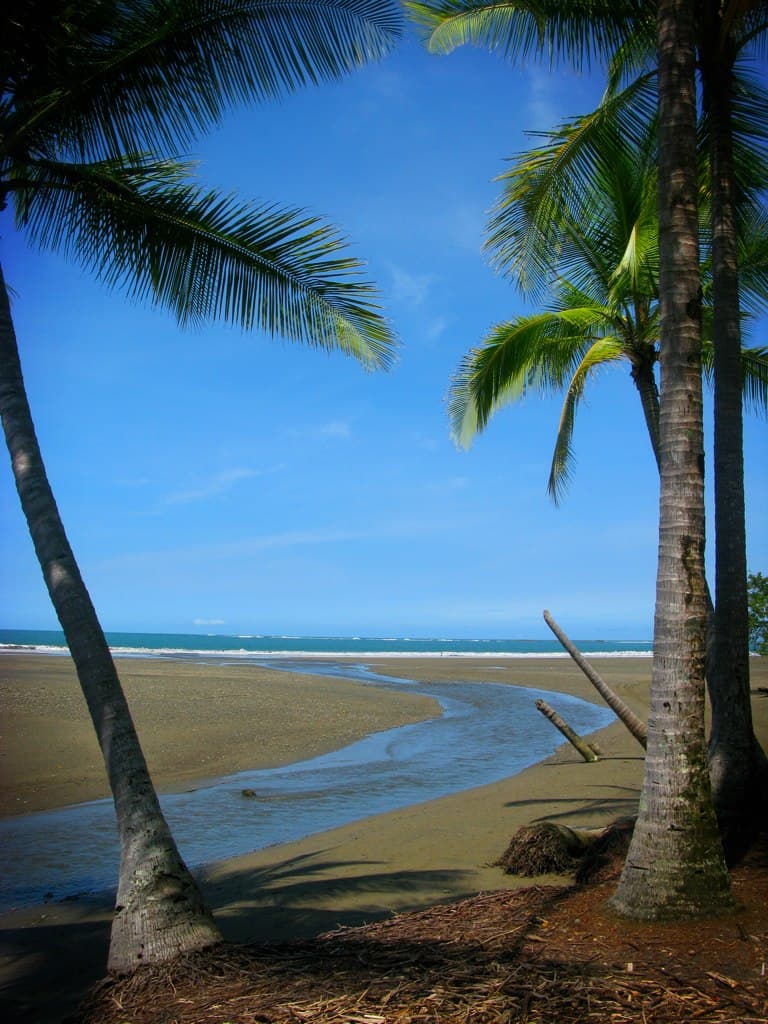 Credit: Flickr
Playa Ballena — photo by jbarnesflickr
The water stays calmer than the exposed Pacific coast, protected somewhat by the offshore reef systems that give Marino Ballena its name. You can swim without fighting serious surf, though the currents still demand respect. Families spread blankets in the almond-tree shade, and snorkelers wade out to the rocky zones where parrotfish graze and sergeant majors flash their stripes. During whale season, tour boats anchor offshore and passengers lean over railings, waiting for the breach that may or may not come.
The beach empties as you walk south, away from the main access point. You'll pass tide pools trapped among volcanic rocks, hermit crabs dragging mismatched shells, and the occasional stranded jellyfish pulsing weakly in a puddle. The sound changes the farther you walk—less family chatter, more wave rhythm and bird calls. By the time you reach the far southern end, you might have this entire stretch to yourself, which feels impossible given the beach's proximity to the highway and Uvita village.


