
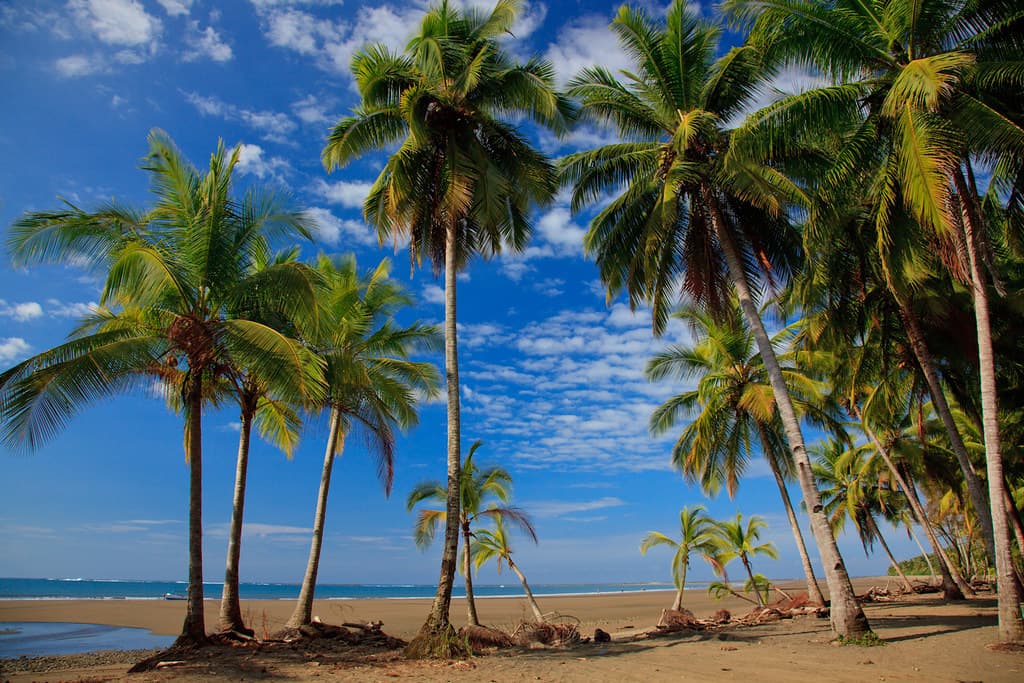
The paved road terminates at a gravel lot where vendors sell coconuts hacked open with machetes and rent beach chairs to visitors who forgot their own. A short walk through groomed trails deposits you onto blonde sand that shelves gently into bathwater-warm shallows protected by offshore reefs. This is where the national park begins, and the difference shows immediately: no litter, maintained facilities, and marked trails that wind through coastal forest alive with howler monkeys announcing territorial claims from the canopy.
“Colonia offers the rare combination of national park protection, family-friendly infrastructure, and one of Costa Rica's most Instagrammed natural formations.”
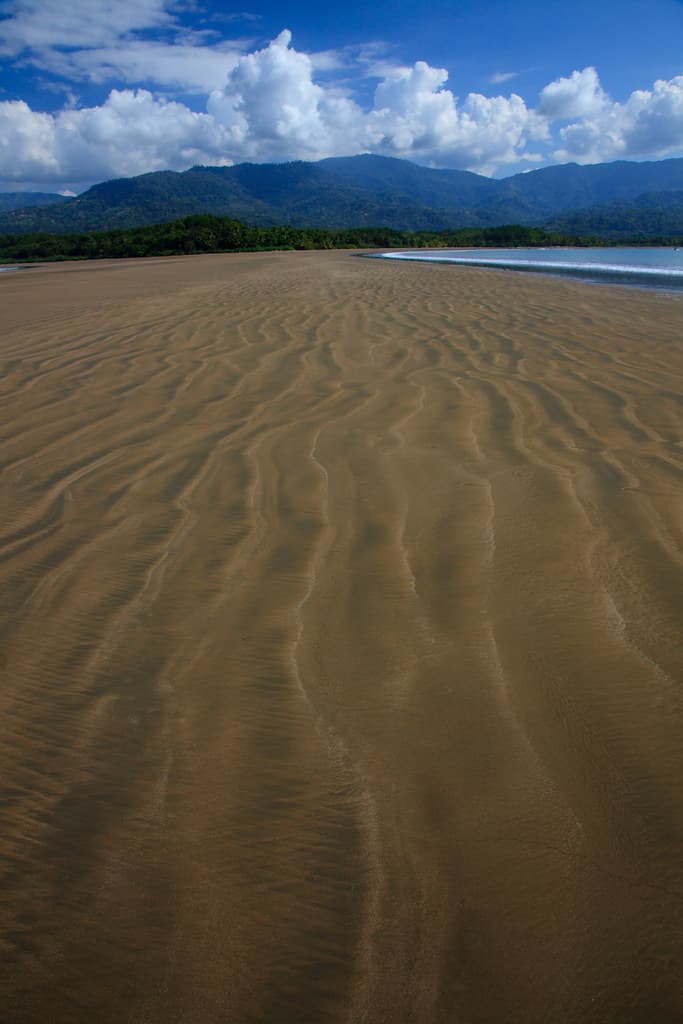 Credit: Flickr
Playa Colonia — photo by Joe Dsilva
At mid-to-low tide, the famous tombolo emerges—a curved sandbar extending hundreds of meters offshore in the shape of a humpback's tail, the geological feature that inspired the park's name. You can walk the spine of sand with ankle-deep water on both sides, watching herons stalk the tidal flats and hermit crabs conduct their endless real-estate swaps among abandoned shells. Snorkelers work the coral heads on the tombolo's eastern edge, where parrotfish crunch through brain coral and sergeant majors defend their territories against anyone who ventures too close.
Sunset at Colonia operates on a reliable schedule: the sun drops behind Caño Island on the horizon, painting the sky in bands of saffron and rose while the water turns molten. Families pack up coolers, rinse sand from toddlers under the outdoor showers, and queue at the exit gate as the light fades. By the time Venus appears, the beach returns to the night herons and ghost crabs, the tombolo already disappearing beneath the incoming tide.


