

Counting the waves…
Counting the waves…
A refined fusion of water purity, environmental stability, and communal vibrancy for Vrulje Beach.
View MethodologyAnalyzed via live sensors and environmental data.
Wave height, wind, and atmospheric stability.
Live footfall and crowd balance metrics.
Community reviews and curated sentiment.
“You'll anchor in the bay off Vrulje, a cluster of stone houses and one of the few signs of settlement in this bare, beautiful national park. The beach is a narrow ribbon of wave-polished stones, shadeless and bracingly…”
Limited recent visitor reports — live OBI telemetry is your best guide for current conditions.
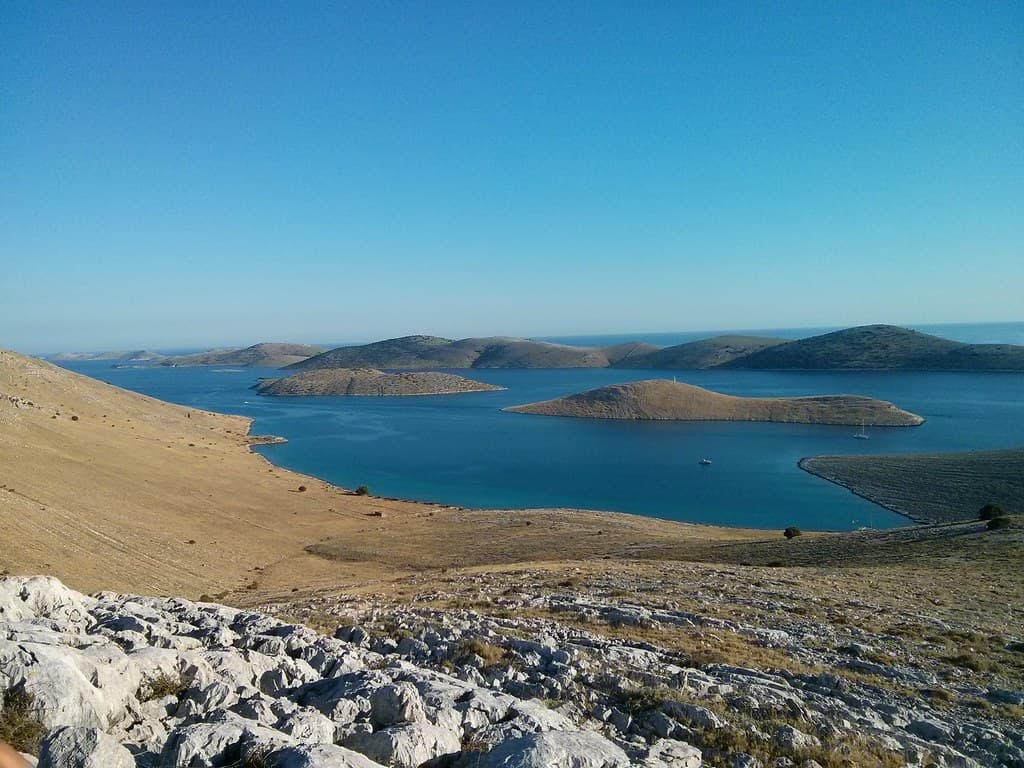
The Kornati Islands rise from the Adriatic like the vertebrae of some ancient creature, all pale limestone and sparse maquis, striped with drystone walls built by farmers who abandoned them decades ago. Vrulje clings to a protected inlet on Kornat, the largest island in the chain. As you approach by boat, you'll see a handful of stone cottages—some restored as seasonal konobas, others slowly collapsing into ivy and wild fig.
The beach itself is humble: a fifteen-meter strip of rounded pebbles, gray and white, that rattle with each wave. The water offshore is a gradient of blues so precise it looks digitally enhanced—pale aquamarine over sand, deepening to cobalt where the seabed drops away. You'll wade in and the stones massage your soles, smooth and warm from the sun. Schools of salema porgy flash silver as they scatter, and if you swim out toward the channel, the current tugs gently, reminding you this is open water.
Grouper hide in deeper crevices
Grilled fish under grape arbors
Stone walls against blue sky
Prime Visitation
Less Crowds|Best Weather
Where it is
Vrulje Beach
Kornati Islands, Šibenik-Knin County, Croatia
43.828600°, 15.261500°
Weather
Loading…
Swell
—
Temp
Warm · Restorative
UV Index
Moderate
Wind
—
Tidal State
Last known
Max Sunlight
—
Ideal Shade
—
May - Sep (Peak)
Jan - Dec (Off-season)
Less Crowds|Best Weather
Select a category to load nearby places.
Unlock restaurants, luxury stays and curated maritime experiences within 2km
Swimming at Vrulje Beach is generally safe in calm conditions, with clear visibility ideal for snorkeling. The pebble beach provides easier entry than sharp rocks found elsewhere in Kornati. Underwater, you'll find typical Adriatic marine life and interesting rock formations. However, there are no lifeguards or rescue services in this remote location. Water shoes are advisable due to pebbles and occasional sea urchins. Check weather forecasts before visiting, as conditions can deteriorate quickly. Stay close to shore and be aware of boat traffic, as this is a popular anchorage for sailors exploring the national park.
The optimal time to visit Vrulje Beach is from late May through early October, when weather is settled and the Kornati National Park is most accessible. July and August offer the warmest water and best snorkeling visibility but bring more sailing yachts to the anchorage. June and September provide excellent conditions with fewer visitors and better value on boat charters. Avoid periods of strong maestral (northwesterly wind) or bura winds, which can make the journey uncomfortable. Spring and autumn offer pleasant temperatures for those less focused on swimming, though services are more limited outside peak summer months.
Reaching Vrulje Beach requires a boat, as the Kornati Islands have no public ferry service or road access. Options include joining an organized day trip from Zadar, Šibenik, or Murter, which often include Kornati in their itineraries. Alternatively, charter a private boat or skippered yacht, or join a sailing flotilla. If you're an experienced sailor, you can rent a bareboat, though you'll need to purchase a Kornati National Park ticket and follow park regulations. The journey from the mainland takes approximately 1-2 hours depending on departure point and vessel speed.
Vrulje Beach itself has no facilities, but it's located near Vrulje settlement, which has a handful of traditional konobas (taverns) serving fresh seafood to visiting sailors during the season. These family-run restaurants typically require reservations and offer limited menus based on daily catch and availability. There are no shops or accommodations—visitors arrive and depart by boat the same day or sleep on their vessels. Bring cash, as card payments may not be accepted. The nearest full services are on the mainland. Remember you're in a national park with strict environmental protections, so pack out all waste.
Vrulje Beach stands out as one of the few beaches in the Kornati National Park near a settlement, offering a rare combination of wilderness and minimal infrastructure. While most Kornati anchorages are completely uninhabited, Vrulje provides access to traditional konobas without sacrificing the archipelago's wild character. The snorkeling here reveals the distinctive underwater landscape that makes Kornati famous—crystal-clear waters with excellent visibility and diverse marine life. The beach serves as a cultural touchpoint in an otherwise uninhabited park, where you can meet local restaurant families who maintain seasonal presence in this remote paradise.
Photos