
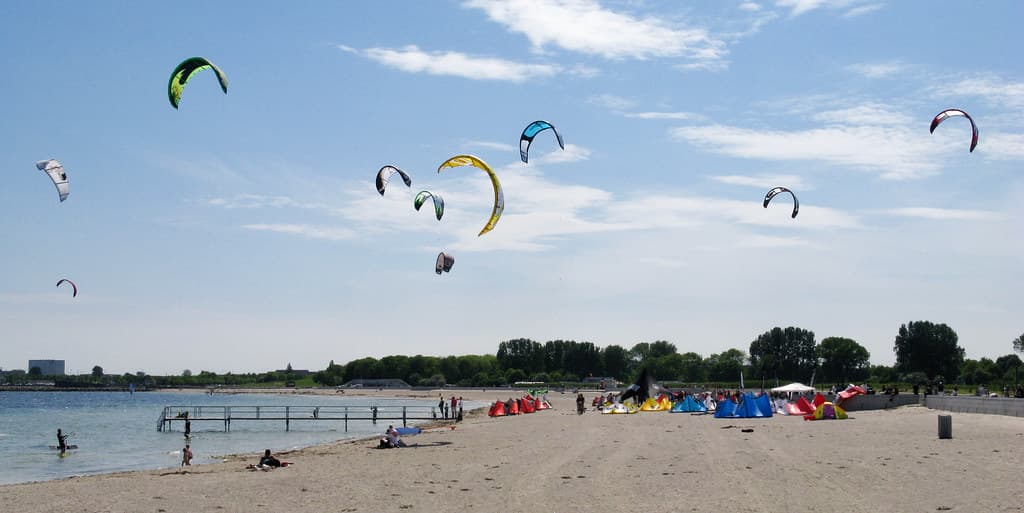
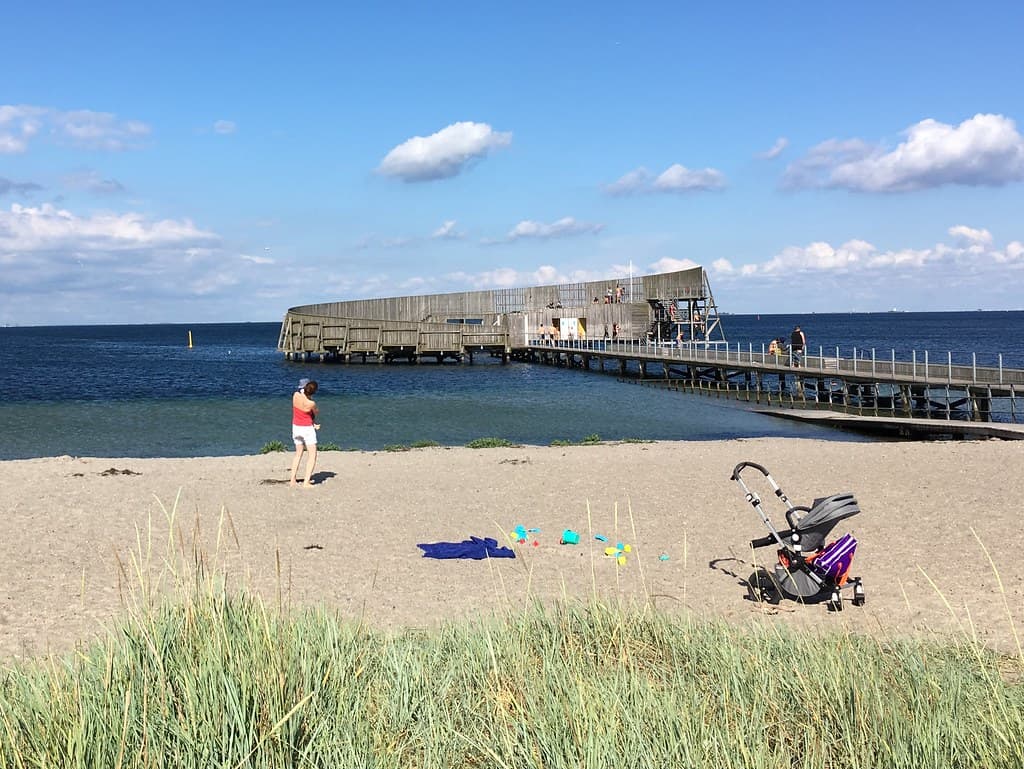
The sand here is pale and fine-grained, almost beige under the shifting Nordic sky, and it runs uninterrupted for nearly a kilometer along Dragør's southern edge. You spread your towel where grass meets beach, the dune grasses hissing softly as wind rolls off the strait. Across the water, Sweden's coastline sits low and gray, a smudge you squint at between naps. Families arrive mid-morning with thermoses and windbreaks; by early afternoon the beach fills but never crowds, each group staking a polite distance in that distinctly Scandinavian way.
“Sydstranden offers unobstructed Øresund views and village tranquility within cycling distance of Copenhagen's center, a rarity along Zealand's urbanized coast.”
 Credit: Flickr
Sydstranden Dragør — photo by Steven Vance
The water is shallow and cool—around 18°C even in July—so children wade out thirty meters before it reaches their waists. You watch a father teaching his daughter to skim stones, the plip-plip-plip carrying across the calm. Behind you, Dragør's old harbor district glows butter-yellow in the slanting light, its maritime charm intact since herring boats crowded these waters centuries ago. No beach clubs, no loudspeakers, just the low chatter of Danish and the occasional cry of gulls working the tideline.
When the afternoon breeze picks up, you pull on a linen shirt and walk the strand southward, past driftwood bleached silver and piles of bladderwrack drying in the sun. The openness here—sky meeting sea with nothing in between—feels generous, a spaciousness that makes the city's density seem very far away. By evening, the light turns amber and long, and you understand why locals guard this stretch so quietly.


