
The sand here stretches wide and flat along Køge Bay, interrupted only by wooden breakwaters that create shallow pools warmed by June sun. You lay your towel near the lifeguard tower, where toddlers dig moats and teenagers Bluetooth speakers compete with gull cries. The water temperature hovers around 18°C in summer—bracing at first, then exhilarating as you wade out over the gentle slope. Locals arrive after work, cycling from Greve Station with beach bags balanced on handlebars, claiming their usual spots near the harbour where sailboats bob against cleats.
“A working harbour and commuter-rail beach where suburban Danes practice the art of everyday coastal living, fifteen minutes from the capital.”
 Credit: Flickr
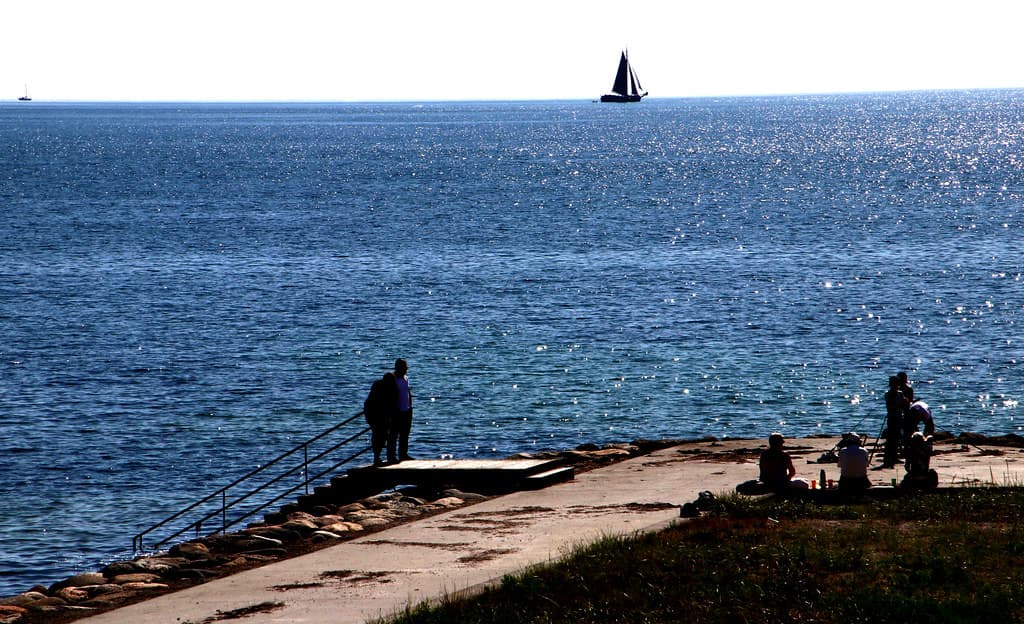
Hundige Strand — photo by Giåm
Hundige Harbour anchors the southern end, its wooden pier dotted with anglers casting for Baltic herring and small cafés serving soft-serve that drips down your wrist before you can finish. The beach lacks dramatic dunes or rocky drama; instead it offers the honest pleasures of Danish suburban summer—grass lawn transitioning to sand, public showers that run cold, a snack kiosk selling Cocio chocolate milk. Cyclists glide past on the coastal path toward Mosede Fort, their panniers stuffed with picnic supplies.
As evening stretches toward ten o'clock, the light turns amber across the bay. Families pack up sand toys while couples claim the breakwaters, dangling legs over sun-warmed concrete. The S-train rumbles in the distance, ready to shuttle beachgoers back to Copenhagen's cobblestones, but you linger, toes buried in cooling sand, postponing the return to the city.


