Counting the waves…
Counting the waves…
A refined fusion of water purity, environmental stability, and communal vibrancy for Hornbæk Beach.
View MethodologyAnalyzed via live sensors and environmental data.
Wave height, wind, and atmospheric stability.
Live footfall and crowd balance metrics.
Community reviews and curated sentiment.
“You'll hear Danish laughter carry across the dunes before you see the Baltic. Hornbæk's long stretch of pale sand has anchored North Zealand summers for more than a century, drawing families who stake out spots behind…”
Limited recent visitor reports — live OBI telemetry is your best guide for current conditions.
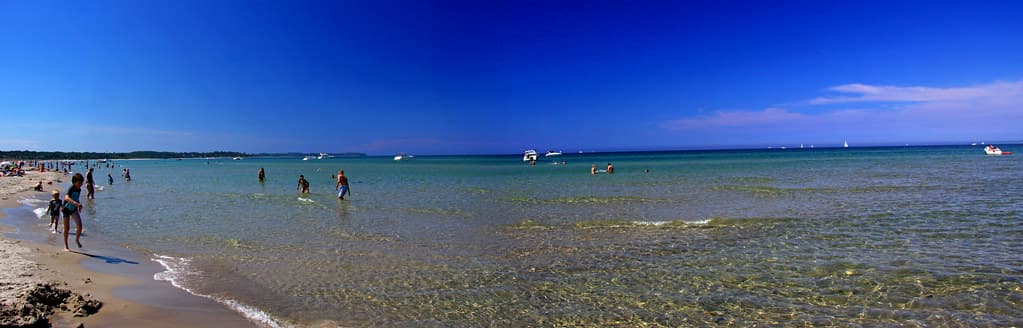
The beach announces itself through the marram grass—first in whispers, then in full view as you crest the dunes and the Baltic opens before you in shades of steel and silver. Hornbæk's sand runs wide and clean for nearly three kilometers, bordered by a natural amphitheater of dunes that locals have protected since the resort town took shape in the late 19th century. You'll notice the windbreaks first: striped canvas shelters dotting the upper beach where families unpack picnic baskets and children dig moats with bright plastic spades, a Danish summer tableau unchanged across generations.
The water stays cool even in July—expect 17 to 19 degrees Celsius—but that doesn't stop the swimming. You'll wade in gradually over firm sand, the bottom gentle enough for toddlers yet deep enough twenty meters out for a proper swim. Mornings bring a particular clarity: fewer footprints, sharper light on the dune grasses, the occasional kite surfer rigging up near the western end where the beach curves toward Gilleleje.
 Credit: Unsplash
Two people walking on a grassy coastal path beside a rocky shoreline
 Credit: Unsplash
Two people walking along a stone path by the sea with a bird flying
Gentle slope, lifeguard-patrolled summer
Rent canvas shelters near entrance
Six kilometers west along shore
Prime Visitation
Best Weather|Less Crowds
Where it is
Hornbæk Beach
Helsingør, Capital Region of Denmark, Denmark
56.097900°, 12.452200°
Weather
Loading…
Swell
—
Temp
Warm · Restorative
UV Index
Moderate
Wind
—
Tidal State
Last known
Max Sunlight
—
Ideal Shade
—
May - Sep (Peak)
Jan - Dec (Off-season)
Best Weather|Less Crowds
Select a category to load nearby places.
Unlock restaurants, luxury stays and curated maritime experiences within 2km
Hornbæk Beach is generally safe for families, with shallow, gradual waters ideal for children. The wide sandy shore provides plenty of space for safe play. During summer, lifeguards typically patrol the main beach areas. However, as with all North Zealand beaches, be aware of occasional currents and check local conditions. The calm waters of the Øresund strait are usually gentler than open-sea beaches. Always supervise children near the water, and look for posted safety flags indicating current conditions.
Late May through August offers the warmest weather and best swimming conditions, with water temperatures reaching 17-20°C. July and early August are peak season with lively beach atmosphere but also the largest crowds. For a quieter experience with still-pleasant weather, visit in May, June, or September. Weekdays are significantly less crowded than weekends. Spring and autumn offer beautiful walking conditions along the dunes, though swimming is chilly. The beach has a distinct summer resort character, so visit during warm months for the full experience.
From Copenhagen, take a train to Helsingør (about 45 minutes), then catch the local bus 340 to Hornbæk (approximately 15 minutes). The entire journey takes about 75 minutes. Alternatively, drive via Route 19 north from Copenhagen, following signs to Helsingør and then Hornbæk—roughly 60 kilometers taking about an hour. In summer, direct bus services may run from Copenhagen. From Hornbæk town center, the beach is a short walk. Bicycle routes along the coast are popular, and bike rentals are available in the area.
Hornbæk town offers numerous dining options within walking distance of the beach, from casual cafés and ice cream shops to restaurants serving fresh seafood and traditional Danish cuisine. The pedestrian shopping street has bakeries and grocery stores for picnic supplies. Accommodation ranges from hotels and seaside inns to holiday homes and apartments available for weekly rental—the traditional option for Danish summer holidays. Several campsites operate in the area. Book well ahead for July, especially weekends, as this popular resort fills quickly during peak season.
Hornbæk is one of Denmark's most iconic resort beaches, with a distinctive old-fashioned seaside charm dating back over a century. The impressive dune landscape provides natural beauty and shelter, while the wide, fine-sand beach offers ample space even during busy periods. The combination of excellent beach facilities, proximity to Copenhagen, and the attractive town creates a classic Danish summer experience. Historic beach houses and changing cabins line the shore, and the strong 'summer vibes' atmosphere makes it particularly popular with younger visitors and families seeking a lively beach community.
Photos