
You'll find Strandmøllen Beach wedged between two quieter coastal villages, a twenty-minute S-train ride from Copenhagen's central station followed by a short walk past summer cottages with slate roofs and hydrangea hedges. The beach itself runs narrow—pebbles in shades of granite and rust that shift and click with each receding wave. No lifeguard towers, no rental umbrellas, just a thin ribbon of shoreline where locals spread blankets directly on the stones and wade into water that stays bracing even in July.
“This pebbled sliver delivers unobstructed Øresund views and woodland backing without the crowds that pack Copenhagen's southern beaches.”
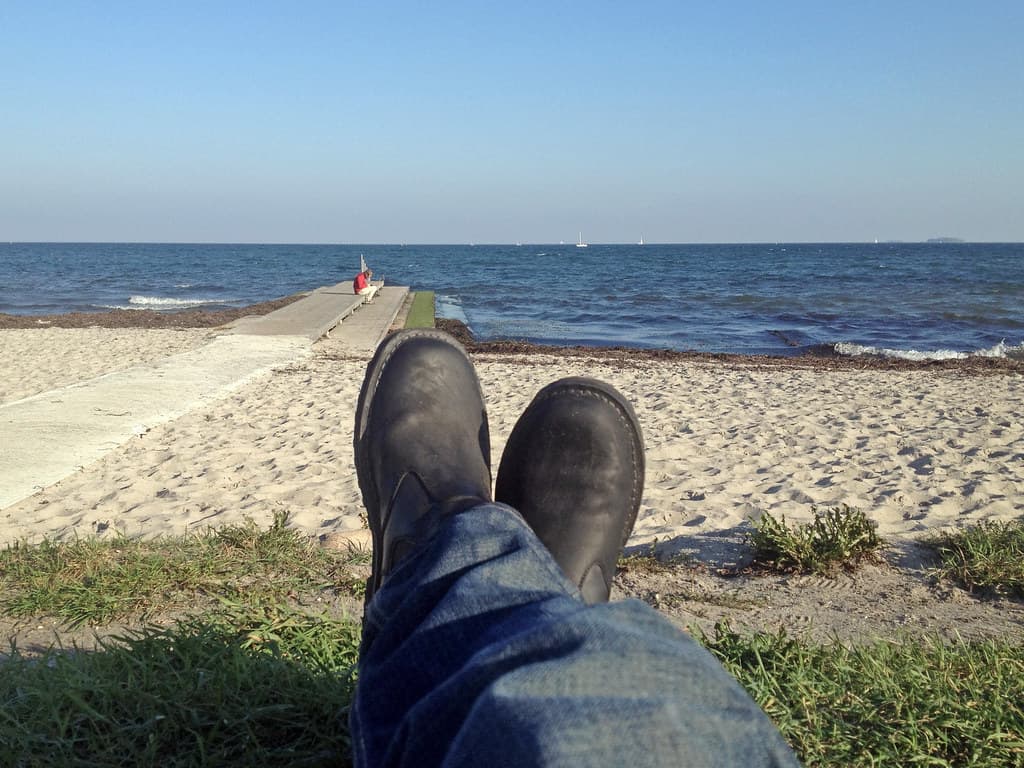 Credit: Flickr
Strandmøllen Beach — photo by virtualwayfarer
The Øresund Strait stretches before you, its surface constantly rearranged by wind and ferry wakes. On clear afternoons, the Swedish coast materializes across the channel, a smudged line of green and ochre. Beech trees from the inland Jægersborg Dyrehave lean toward the water, their canopy providing pockets of shade when the sun breaks through Denmark's frequent cloud cover. The beach reveals itself best at low tide, when the waterline retreats to expose kelp-draped rocks and tidal pools hosting hermit crabs and blennies.
Come during the shoulder seasons—late May or early September—when the air holds that particular Scandinavian clarity and you can hear individual waves over the distant hum of the coastal road. The pebbles make for poor sunbathing but excellent beachcombing, each stone a smooth memento polished by centuries of Baltic currents.


