
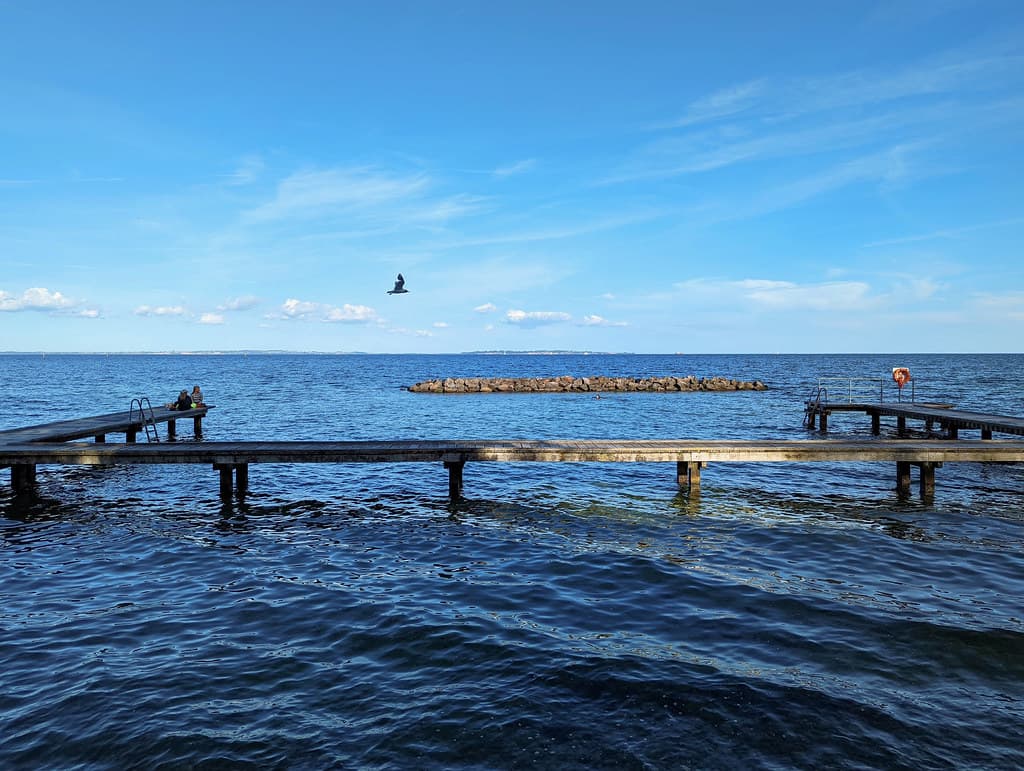
The train from Copenhagen deposits you at Nivå station, and a ten-minute stroll through orderly residential streets opens onto this generous parkland where beach, lawn, and marina exist in rare equilibrium. You spread your towel on blonde sand that shelves gently into the Øresund, the strait so calm most mornings you can hear halyards clinking against masts in the adjacent harbor. Families colonize the grass terraces behind the beach, unfolding picnic blankets under mature trees while toddlers shuttle between shade and shoreline.
“One of the few Danish beaches where marina, parkland, and swimming strand merge seamlessly along the sheltered Øresund coast.”
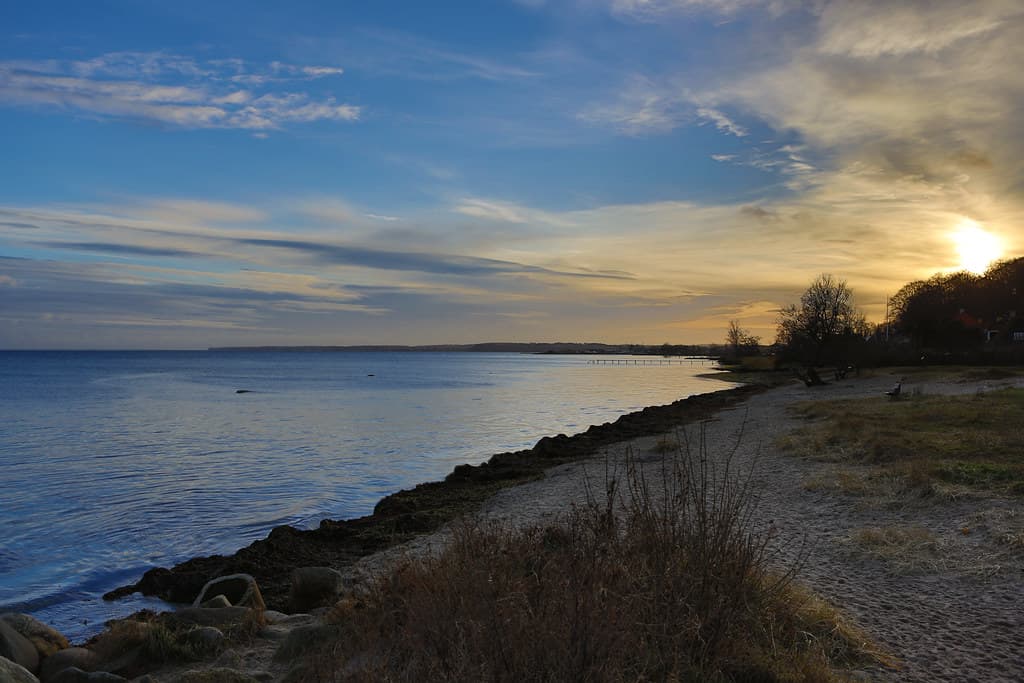 Credit: Flickr
Nivå Strandpark — photo by Lars Plougmann
The water here lacks the surf drama of Denmark's western shores—this is a place for wading, not wave-riding. You'll swim in water cool even in July, the shallow gradient making it ideal for tentative swimmers and parents keeping watch. The marina flanking the park's southern edge lends a Scandinavian orderliness: white hulls aligned like piano keys, the occasional clatter of a winch, sailors hosing down decks in late afternoon light.
You come to Nivå for its unhurried rhythm, for benches that face Sweden across twelve kilometers of sound, for the way local families bike here after dinner in summer, the children's voices carrying across water smooth as hammered pewter. There's no boardwalk commerce, no rental kiosks—just sand, grass, and the quiet satisfaction of a coastline that refuses to perform.


