

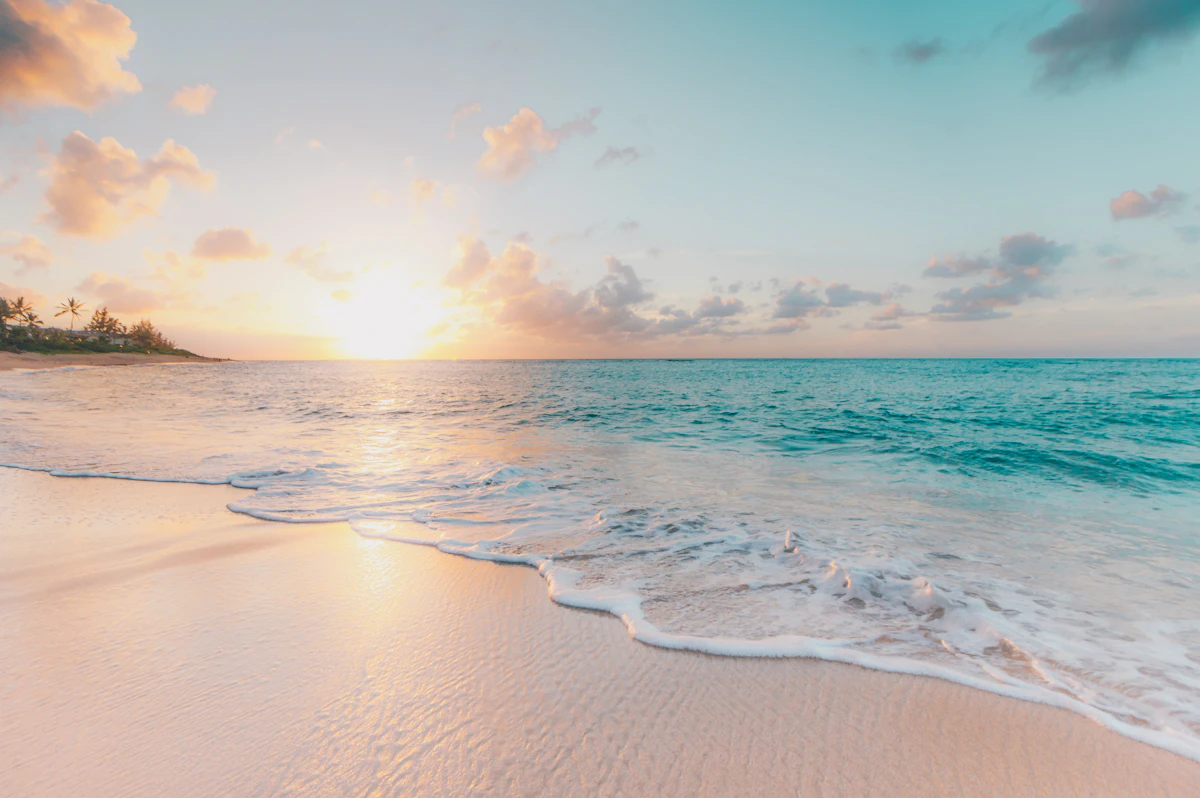
The path from the parking area threads through marram grass and low thickets before opening onto a wide, pale strand that feels more like the edge of Scandinavia than a beach an hour from Copenhagen. Stængehus sits quieter than its eastern neighbor Tisvildeleje proper, its shoreline backed by rolling dunes that shield you from the road and frame the forest canopy beyond. The sand is fine and cool underfoot, the color of wet parchment, and the Baltic here runs shallow and calm—wading out fifty meters, the water barely reaches your thighs.
“The rare combination of wild dune topography, old-growth forest trails, and a shoreline that remains genuinely undeveloped.”
 Credit: Unsplash
Aerial view of turquoise tropical bay
Behind the beach, Tisvilde Hegn unfolds in shadowed corridors of Scots pine and beech, laced with trails that lead to moss-covered troll sculptures and the inland lake Asserbo Plantage. Late-afternoon light slants low across the dunes, gilding the sand in amber and rose, and you'll often find yourself alone save for a few couples walking the tide line or a dog chasing foam.
Come in shoulder season—early June or September—and the beach belongs almost entirely to you. There are no kiosks, no umbrellas for rent, no hawkers. Just the wind, the forest, and a coastline that refuses to perform. Bring a thermos of coffee, a blanket, and the willingness to let a Danish beach be exactly what it is: raw, restorative, and utterly unbothered.


