
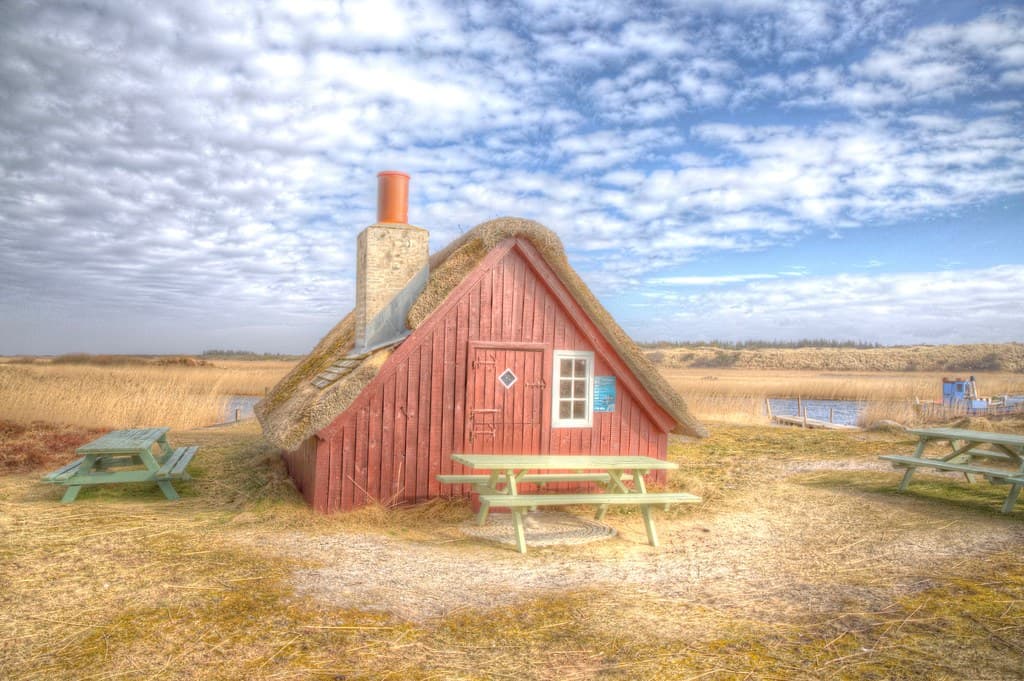
You park between the summer houses—timber-clad rectangles with pitched roofs and salt-bleached decks—and follow wooden boardwalks over the dunes. The beach reveals itself slowly: first the rustle of marram grass, then the white noise of surf, finally the overwhelming breadth of sand. At low tide, the shore becomes a highway of firm, wet sand where children sprint for what seems like kilometers.
“The sheer width of exposed sand at low tide creates a vast, firm runway that feels more Icelandic than Danish.”
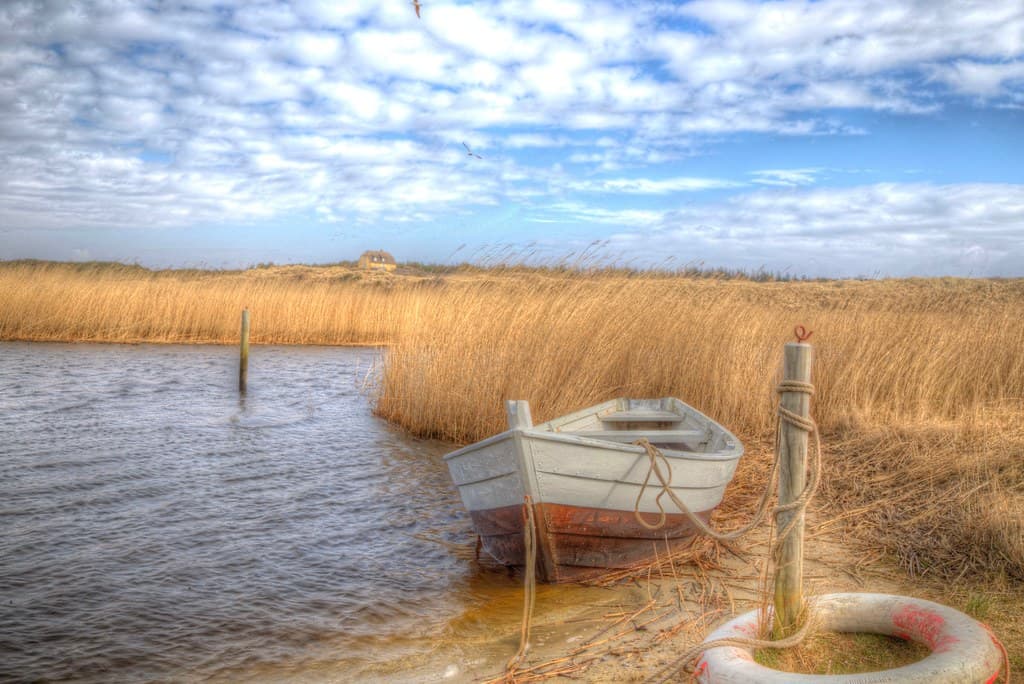 Credit: Flickr
Bjerregård Strand — photo by blavandmaster
The North Sea here is serious, steel-gray even in July, flecked with whitecaps when the westerlies blow. Families plant themselves behind striped windbreaks, the canvas snapping overhead, while kids dig trenches that fill with seawater. The light has that Nordic clarity—horizontal, unforgiving—that turns every shell and footprint into high relief. By late afternoon, the sun swings northwest and the entire beach becomes a theater for one of Denmark's most reliable performances.
Sunset watchers arrive with thermoses and woolen blankets, staking out spots on the upper beach. The sky ignites in layers—mauve, salmon, ember—reflected in the tidal pools left behind by the receding sea. There's no bar, no pier, no promenade. Just you, the sand, and the oldest ocean in Europe doing what it's done since the ice retreated.


