
Tingodden Strand occupies a peculiar geography along West Jutland's southern reach—a place where the coast refuses drama in favor of quiet repetition. The beach unfolds in a long, uninterrupted sweep, its sand fine-grained and pale, interrupted only by the occasional timber groyne half-buried in sediment. Dunes rise behind you in modest waves, their seaward faces carved by wind into concave pockets where marram grass clings in stubborn tufts. The water here is the North Sea at its most straightforward: cold, muscular, edged with foam that gathers in lacy margins along the tideline.
“A named beach along an otherwise anonymous stretch, Tingodden offers rare access to West Jutland's unbroken southern coastline without tourist infrastructure.”
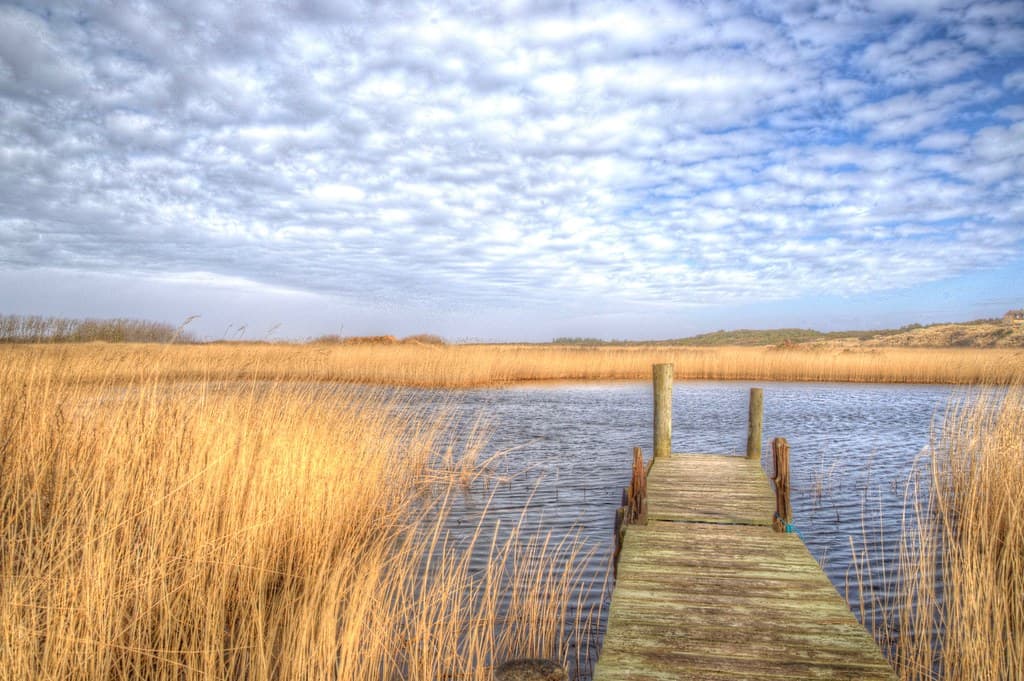 Credit: Flickr
Tingodden Strand — photo by blavandmaster
Families claim this stretch because it offers width without spectacle, space without crowds. Children dig moats that fill with seawater during the flood tide; parents spread blankets in the lee of dune slopes and watch kites snap overhead. The absence of facilities becomes a kind of asset—you bring what you need, leave what you don't, and the beach remains unmarked by the usual coastal commerce.
Sunset here is not a performance but a gradual drainage of color, the sky fading from pewter to rose to ash while the sea darkens to ink. You walk the firm sand near the waterline, your footprints filling slowly behind you, and the only company is the occasional dog walker or fellow stroller drawn to this unhurried littoral margin. By the time you return to your car, the dunes have become silhouettes and the first stars prick the deepening blue above the Danish interior.


