
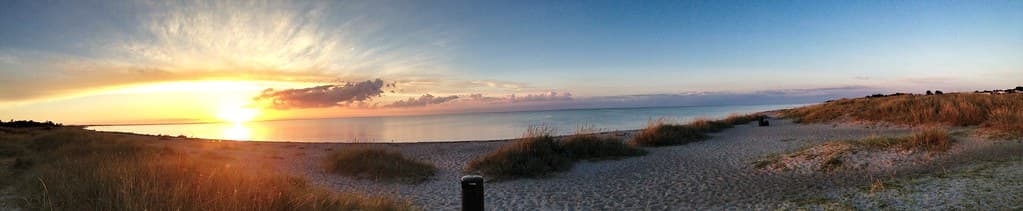
Fjellerup Strand announces itself with a row of dunes that rise higher than the rooflines of the holiday cottages tucked behind them. You descend wooden stairways that switchback through the sand hills, then emerge onto a beach so broad that high tide feels like a distant rumor. The shoreline curves gently, and the pale sweep of sand holds the light even when clouds move in from the north.
“The dune system rises dramatically enough to create true shelter pockets, making this one of the few north Djursland beaches where you can sunbathe out of the wind.”
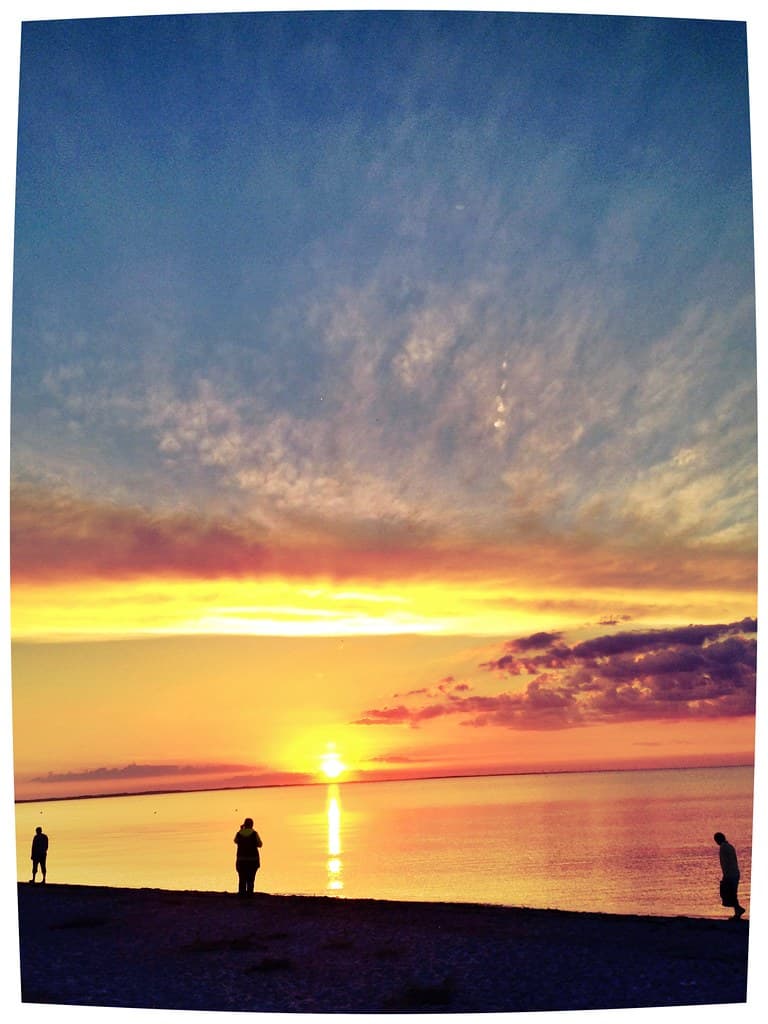 Credit: Flickr
Fjellerup Strand — photo by tray
Children dig moats and build ramparts that will survive until the next tide, while parents stake windbreaks into the sand and settle in for hours. The water temperature in July and August hovers around eighteen degrees Celsius—bracing at first contact, then tolerable once you commit. The bottom stays sandy and predictable, sloping so gradually that you can walk fifty meters offshore before needing to swim.
By late afternoon the beach empties slightly, locals heading back to prepare dinner in their rented cottages. The wind often picks up as the sun lowers, sending small eddies of dry sand skittering across the upper beach. Gulls patrol the tide line, flipping strands of kelp with their beaks, searching for sand fleas and other tidal leftovers. The rhythm of the place is steady and uncomplicated: sand, sea, dunes, repeat.


