

The walk from your car to the waterline takes less than five minutes, but it feels like crossing into another season. Holiday homes dot the dunes behind you—timber-clad, shuttered against winter storms, their Danish flags snapping in the salt air. The beach itself unfurls in both directions, wide enough that families stake out private territories without negotiation, and the surf rolls in with the determined churn that defines this stretch of the North Sea.
“This is a beach that belongs to the summerhouse families who return each year, where you're borrowing solitude rather than discovering it.”
 Credit: Unsplash
Aerial view of turquoise tropical bay
You'll share the sand mostly with Danes who've inherited these cottages, who know to bring windbreaks and wool sweaters even in July. Children dig moats that fill and drain with each tide cycle. Dogs chase foam. The water stays cold enough to make you gasp, but on still mornings the shallows warm just enough for a proper swim. Look west and there's nothing but horizon; turn east and the dune ridge softens everything into gentle, grassy contours.
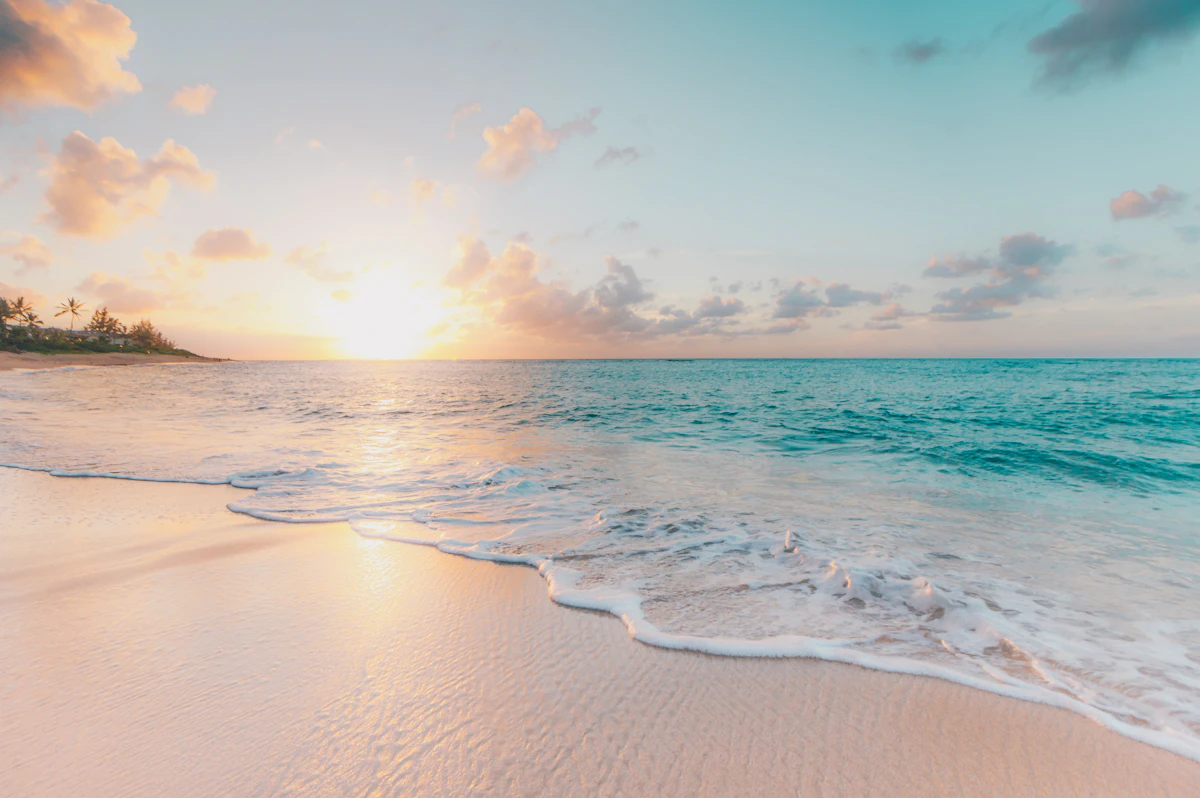
Come for the sunset, when the sky bleeds pink and orange across wet sand and the lighthouse at Lyngvig blinks to life in the distance. The wind usually dies then, just long enough for you to feel the day's warmth still trapped in the dunes. By twilight, most visitors have retreated indoors, leaving the beach to a few walkers and the gulls settling in for the night.


