
The narrow road through Løjt Land farmland dead-ends at a gravel lot rimmed with wild rose and sea buckthorn, and beyond it stretches Gåsevig Strand: a modest arc of beige sand that feels like stepping into a Danish summer postcard from 1965. The water here belongs to the Little Belt, not the open Baltic, so wavelets replace surf and the shoreline stays glassy even when wind rakes the surrounding barley fields. Toddlers wade knee-deep fifty meters from shore while parents set up low-slung canvas chairs and unpack rye bread layered with leverpostej.
“It's one of the few Baltic beaches where the water is genuinely still—protected fjord conditions mean even nervous swimmers feel at ease.”
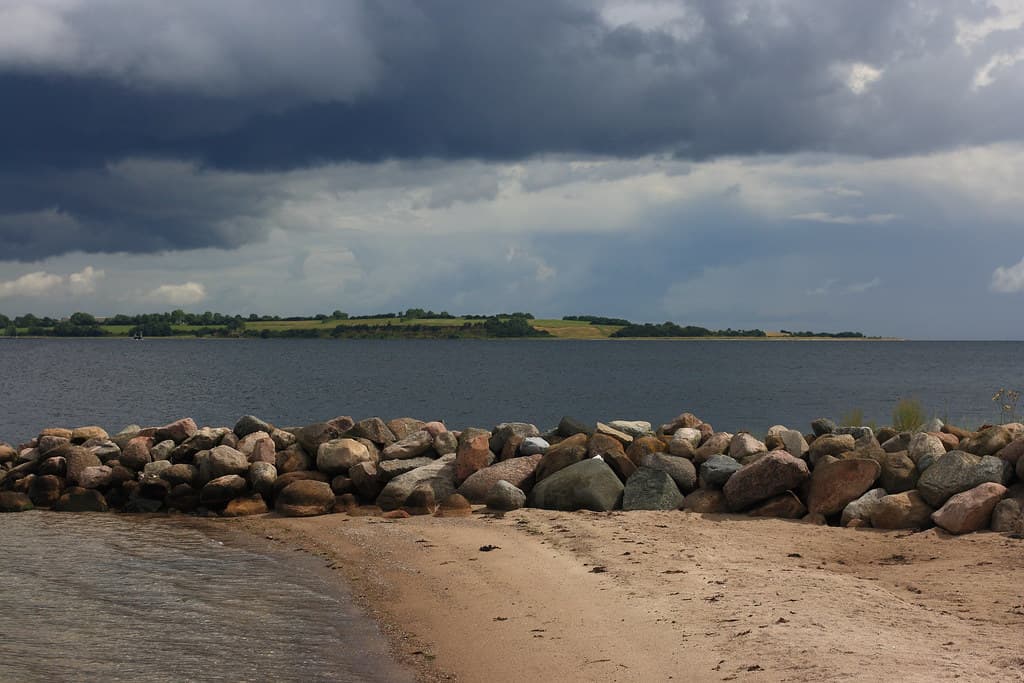 Credit: Flickr
Gåsevig Strand — photo by dmytrok
The beach occupies a sheltered notch on the eastern flank of the peninsula, protected by gentle hills thick with beech and alder that muffle road noise and filter the afternoon sun into long, golden bars. At low tide, sandbars reveal themselves like secret islands, warm underfoot and perfect for families who want to claim their own temporary kingdom. Jellyfish are rare, currents nonexistent, and the only real hazard is forgetting how quickly the Danish summer sun can burn even through high clouds.
There's no snack bar, no rental hut, no lifeguard tower—just a single wooden bench, a trash bin, and the kind of quiet that makes you notice the creak of oarlocks from a distant rowboat. Locals arrive mid-morning with thermoses of coffee and stay until the light turns amber, and they'll nod politely but won't ask where you're from. That's the unspoken bargain at Gåsevig: you've found it, so you belong.


