
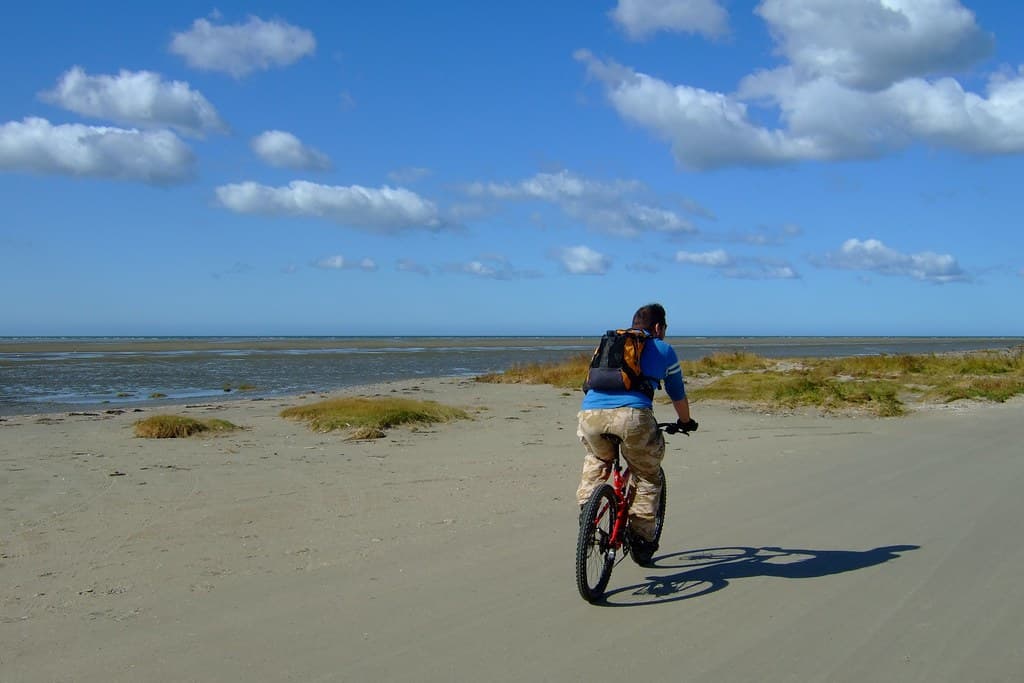
The drive across Fanø island ends where asphalt meets sand, and you roll onto the beach itself—tires hissing over packed tidal crust, dunes rising to your left like sleeping giants. Sydstrand lacks the snack bars and changing rooms of its northern cousins; what it offers instead is space, silence, and a shoreline so broad at low tide you can walk a hundred meters before the first wave licks your ankles. Marram grass shivers. Amber hunters crouch near the waterline, fingers sifting through foam-laced debris.
“You can drive directly onto the beach and park on the sand itself—a rare freedom that turns your car into a mobile base camp.”
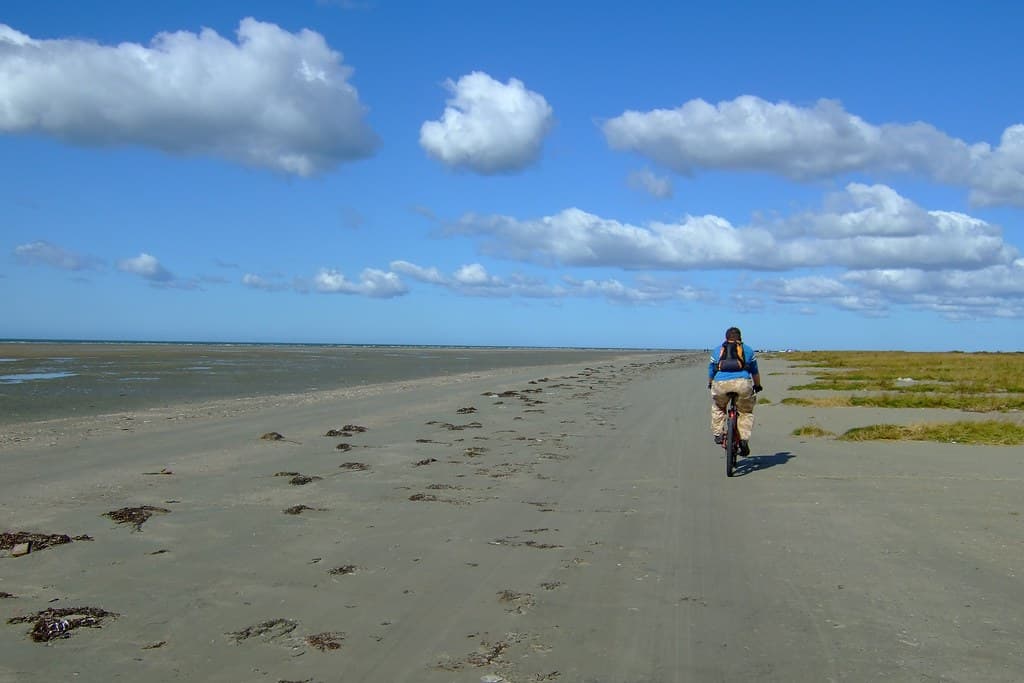 Credit: Flickr
Fanø Sydstrand — photo by ebygomm
Families stake claim with windbreaks—striped canvas pockets that bloom across the sand like wildflowers, shielding picnic blankets from the relentless westerlies. Children dig moats that fill and drain with tidal rhythm. The water stays bracing even in July, a reminder that this is the North Sea, not the Mediterranean; a quick plunge sharpens your senses and sends you scrambling back to your towel.
As afternoon softens, you notice the light—flat, pewter, utterly Danish—casting long shadows from driftwood and tufted dune grass. Kitesurfers rig their lines in the distance. A couple walks the hard-pack with a dog, three silhouettes against an enormous sky. There are no vendors, no loudspeakers, no umbrellas for rent. Just wind, sand, and the steady metronome of surf.


