
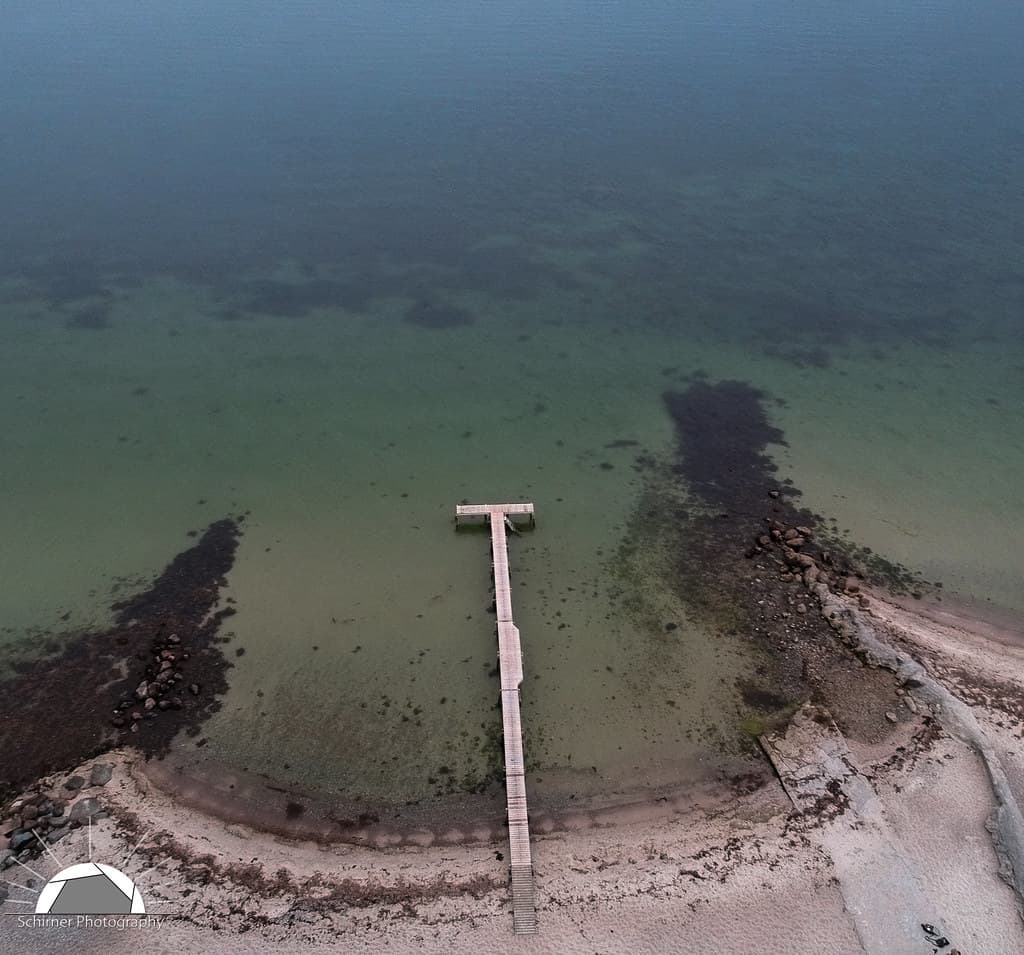
The drive from Haderslev threads through pastures striped green and gold, then deposits you at a shoreline that feels more like a neighbor's backyard than a public beach. Vilstrup Strand hugs the inner reach of Haderslev Fjord, where the water trades the Baltic's choppy moods for a sheltered stillness that barely ripples except when a small sailboat glides past. The sand is coarse and blonde, scattered with mussel shells and the occasional crab claw, and it peters out into marsh grass that rustles in the steady southwesterly breeze.
“One of the few Danish beaches where farmland abuts the tideline, blurring the boundary between agricultural interior and Baltic fringe.”
 Credit: Flickr
Vilstrup Strand — photo by Grille1991
Families from the surrounding hamlets claim their usual spots on weekday afternoons—towels spread on the narrow beach, thermoses of coffee balanced on driftwood logs, children wading knee-deep where the bottom stays visible for a hundred meters. There's no snack bar, no lifeguard tower, just a simple wooden bench facing the water and a faded sign reminding you to take your rubbish home. The fjord's salinity sits somewhere between sea and river, warm enough by July that even hesitant swimmers commit.
Across the inlet, beech forest climbs the far slope, its canopy dense and unbroken. Herons stalk the shallows at dawn. The light here is softer than on Denmark's open coasts—filtered through cloud, reflected off calm water—and the quiet is broken only by the occasional bleat of sheep from the farm next door.


