
The approach to Ommel Strand feels more agricultural than coastal—your bicycle tires hum along narrow asphalt past rye fields and hedgerows thick with wild rose. Then the Baltic opens before you, a stretch of tawny sand interrupted only by the occasional weathered groyne and a few overturned dinghies. This is Ærø's working shoreline, where locals moor small boats and children build dams in the shallows while their parents unpack rye bread and leverpostej from wicker baskets.
“It's the anti-resort: a functional beach where Ærø islanders actually swim, unencumbered by kiosks or rental umbrellas.”
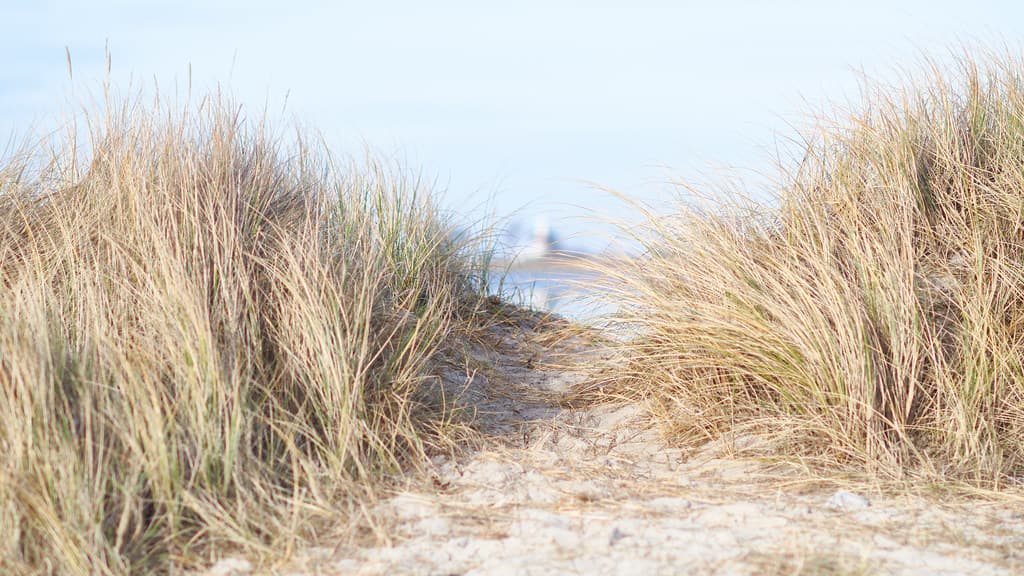 Credit: Flickr
Ommel Strand — photo by Jesper Hauge
The water here is shallow enough that you can wade fifty meters out and still feel sand underfoot, the temperature a few degrees warmer than the open sea thanks to sun-baked sandbars. Gulls wheel overhead, their cries mixing with the creak of rigging from anchored sailboats. A single bench faces the water near a stand of wind-pruned pines—the kind of seat that invites an hour with a thermos and a paperback.
Unlike Marstal's bustling quay three kilometers east, Ommel Strand attracts families from the island's interior and the occasional cyclist completing the southern loop. You'll share the sand with perhaps a dozen others, even on warm July afternoons. The lack of facilities means you pack everything in and out, but that compact simplicity—sand, sea, sky—is precisely the point.


