

You reach Mølby through farmland where sheep graze in geometric paddocks, their wool yellowed by salt carried on prevailing winds. The village itself barely qualifies—scattered houses, a single road, a church steeple visible above the dunes. Beach access is democratic and uncomplicated: park in the small lot, walk two minutes through grass, arrive at sand that stretches substantially in both directions. No facilities means no crowds means no noise except wind, waves, and the occasional cry from gulls overhead.
“The central coast sweet spot where Rømø delivers all its characteristic width and wildness without the tourist infrastructure or weekend traffic of famous beaches.”
 Credit: Pexels
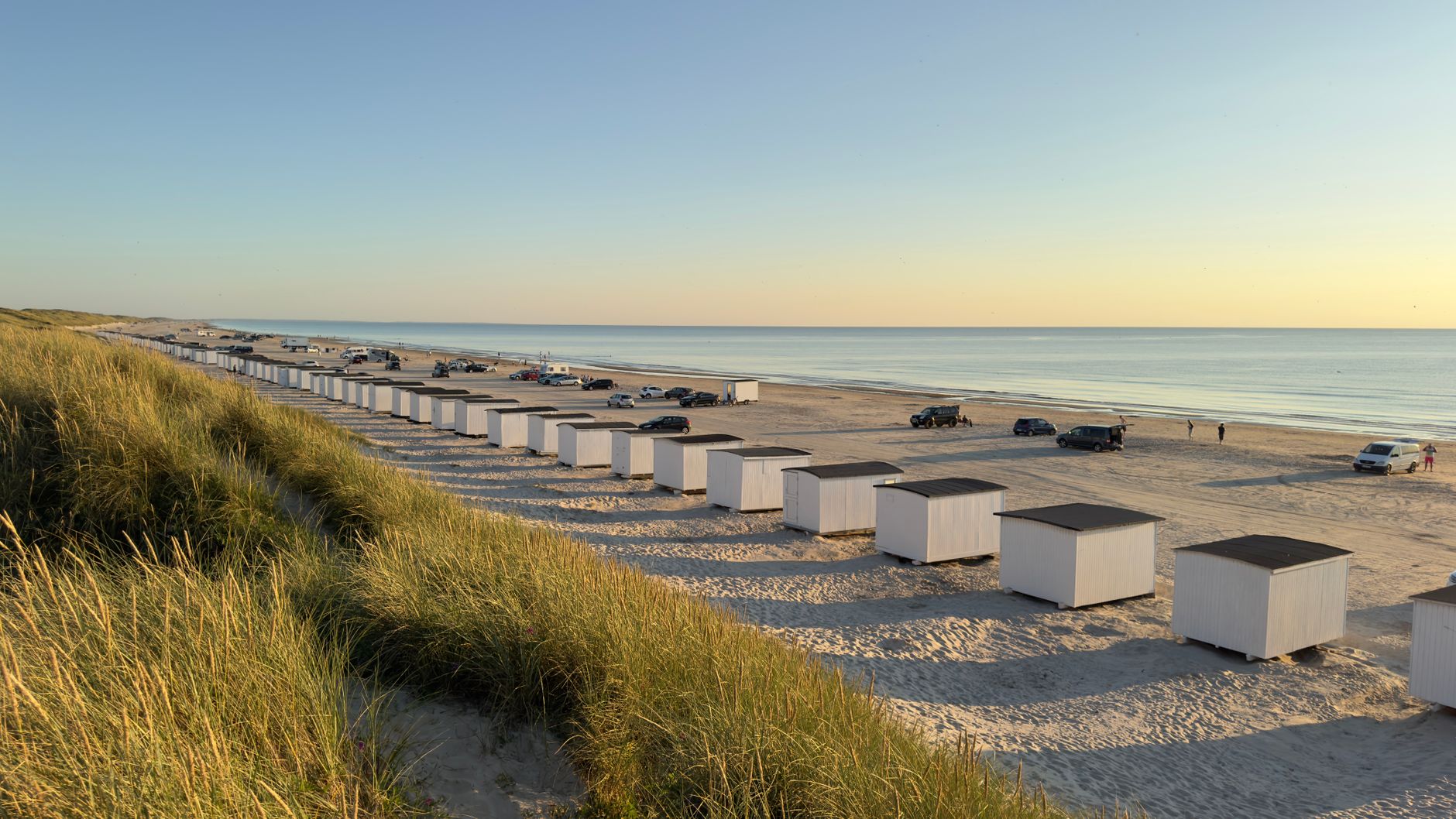
Beautiful sunset at Løkken Beach, Denmark, featuring iconic beach huts and serene ocean views.
The strand width here varies dramatically with tide—three hundred meters of firm sand at low water, reduced to thirty meters when the North Sea reclaims its territory twice daily. Smart visitors check tide tables and plan accordingly, timing walks for the hours when the beach becomes a highway and the ocean retreats to a distant gray line. Families with young children appreciate the gradual slope and absence of sudden drop-offs. The few regulars who beach here spread out with unspoken territorial agreements, everyone respecting everyone else's claim to a patch of Denmark.
Sunset at Mølby lacks dramatic cliffs or photogenic rocks—just sun, water, and the mathematics of light refraction creating a daily masterpiece from the simplest ingredients. You might see a kite-surfer working the wind, or horses being exercised along the waterline, their hoofprints vanishing behind them as waves erase all evidence. The beach empties fully by dusk, returning to the rabbits and foxes that own the dunes after humans retreat to their cottages and caravans.


