Counting the waves…
Counting the waves…
A refined fusion of water purity, environmental stability, and communal vibrancy for Pomlenakke Strand.
View MethodologyAnalyzed via live sensors and environmental data.
Wave height, wind, and atmospheric stability.
Live footfall and crowd balance metrics.
Community reviews and curated sentiment.
“You'll hear the crunch of smooth stones underfoot before you see the water—Pomlenakke Strand hides beneath wooded slopes where the South Zealand coast sheds its sandy reputation. The forest canopy breaks suddenly,…”
Limited recent visitor reports — live OBI telemetry is your best guide for current conditions.
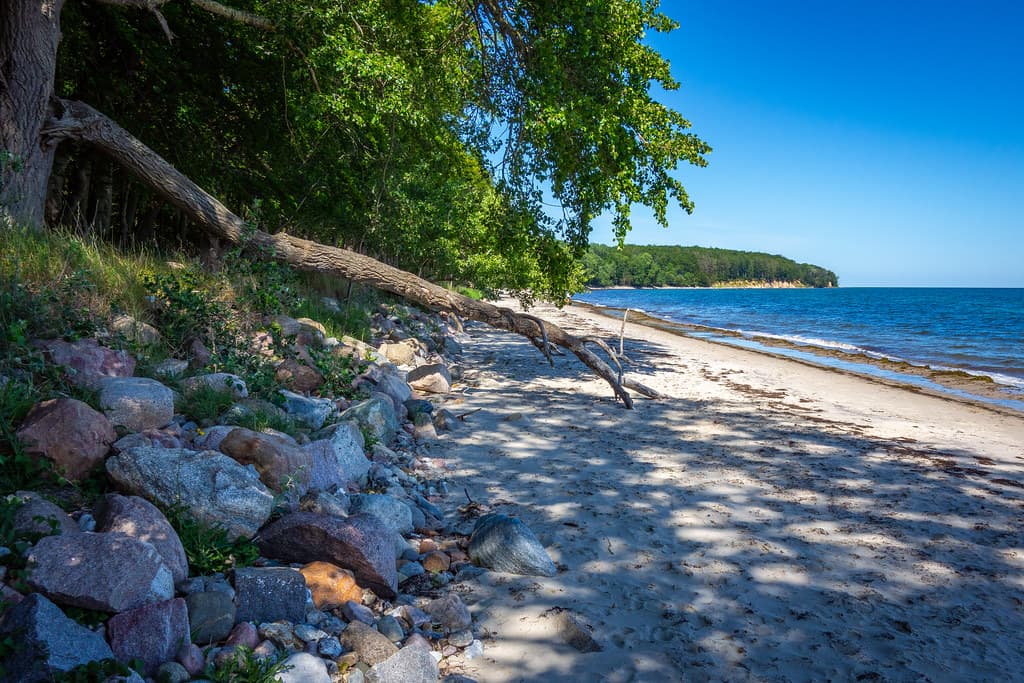
The descent through beech and oak feels longer than it is, the kind of walk that separates casual beachgoers from those willing to earn their solitude. When the trees finally part, you're met not with the broad sand flats that define most of Zealand's coast but with a modest pebble beach that stretches in both directions, interrupted only by the occasional weathered groyne and driftwood scattered like sculpture.
The stones here are Baltic storytellers—rounded by centuries of wave action, warm to the touch on bright afternoons, ranging from ash-grey to rust-orange to rare translucent amber. You'll find yourself walking slowly, head down, pocket growing heavy with keepsakes. The water comes in cold and clear, the pebbled bottom visible even at chest depth, and the gentle slope means wading out requires patience. Behind you, the forested bluff provides natural shelter from coastal winds.
 Credit: Unsplash
mountain covered by grass beside the seashore
 Credit: Unsplash
A sandy beach next to the ocean under a blue sky
Beech canopy above coastal bluff
Amber-toned stones and driftwood compositions
Gradual depth over smooth stones
Prime Visitation
Best Weather|Less Crowds
Where it is
Pomlenakke Strand
Pomlenakke, Region Zealand, Denmark
54.803600°, 12.144400°
Weather
Loading…
Swell
—
Temp
Warm · Restorative
UV Index
Moderate
Wind
—
Tidal State
Last known
Max Sunlight
—
Ideal Shade
—
May - Sep (Peak)
Jan - Dec (Off-season)
Best Weather|Less Crowds
Select a category to load nearby places.
Unlock restaurants, luxury stays and curated maritime experiences within 2km
Swimming at Pomlenakke Strand is generally safe during calm conditions, though the pebble beach requires some care when entering the water. Wear water shoes for comfort when walking over the stones. The beach sits below forested slopes on Falster's east coast, with Baltic Sea waters that can vary from calm to choppy depending on weather. No lifeguards are present, so swimmers should assess conditions personally and exercise caution. The pebble composition means clearer water visibility compared to sandy beaches. Avoid swimming during storms or high winds, and always supervise children carefully on the uneven pebble surface.
Pomlenakke Strand is best visited during late spring through early autumn (May to September) when weather is most favourable. The beach shines during less crowded periods thanks to its underrated, hidden status—June and early September offer pleasant temperatures without peak-season visitors. July and August provide the warmest swimming conditions. The scenic setting below forested slopes is particularly beautiful in late spring when nature awakens and in early autumn with changing foliage. For couples seeking tranquility and natural beauty, weekday visits during shoulder seasons deliver the most romantic, peaceful atmosphere. Winter visits are atmospheric but cold and windswept.
Pomlenakke Strand is located on the eastern coast of Falster island in southern Denmark. By car, cross to Falster via bridges from Zealand or other islands, then follow coastal roads to Pomlenakke village. The beach lies below the coastal slopes and forest, accessible via local roads. From Copenhagen, expect roughly a 90-minute to two-hour drive. Public transport options to this hidden beach may be limited, so verify current bus services from larger Falster towns like Nykøbing Falster. Cycling is feasible for those already on Falster. A car provides the most convenient access to this quieter, less-developed location.
Pomlenakke Strand is a hidden, uncommercialised beach with minimal facilities directly on-site. The small village of Pomlenakke may have limited local amenities. For restaurants, shops, and broader services, visitors typically rely on larger towns elsewhere on Falster, such as Nykøbing Falster or Gedser. Accommodation options in the region include holiday cottages, rural bed-and-breakfasts, and hotels in nearby towns. The area's appeal lies in its natural, undeveloped character, so visitors should plan to bring their own food and drinks for beach outings. The scenic setting compensates for the lack of commercial facilities.
Pomlenakke Strand's distinctive character comes from its pebble composition and dramatic setting below Falster's forested east-coast slopes. Unlike sandy beaches, the pebbles create exceptionally clear water and a different tactile beach experience. The combination of forest-backed coastline and underrated status makes it feel more secluded and scenic than developed beaches. It's particularly suited to couples seeking romantic, peaceful settings rather than family beach activities. The east-coast location on Falster offers a different perspective from western shores, with views across the Baltic. Its hidden nature means discovering this beach feels like finding a local secret.
Photos