

The bridge from Møn deposits you onto Nyord, a 4.8-square-kilometer island that feels like Denmark before the tourist buses arrived. The village—population seventy-odd—gathers around a whitewashed church and a handful of thatched cottages, then surrenders to pasture and wetland. Nyord Strand lies on the island's southern edge, a crescent of blond sand backed by wild grasses and gnarled beach roses that bloom shocking pink in June.
“One of Denmark's last inhabited islands where farming tradition and tidal marshland frame an untouched Baltic shoreline.”
 Credit: Unsplash
Aerial view of turquoise tropical bay
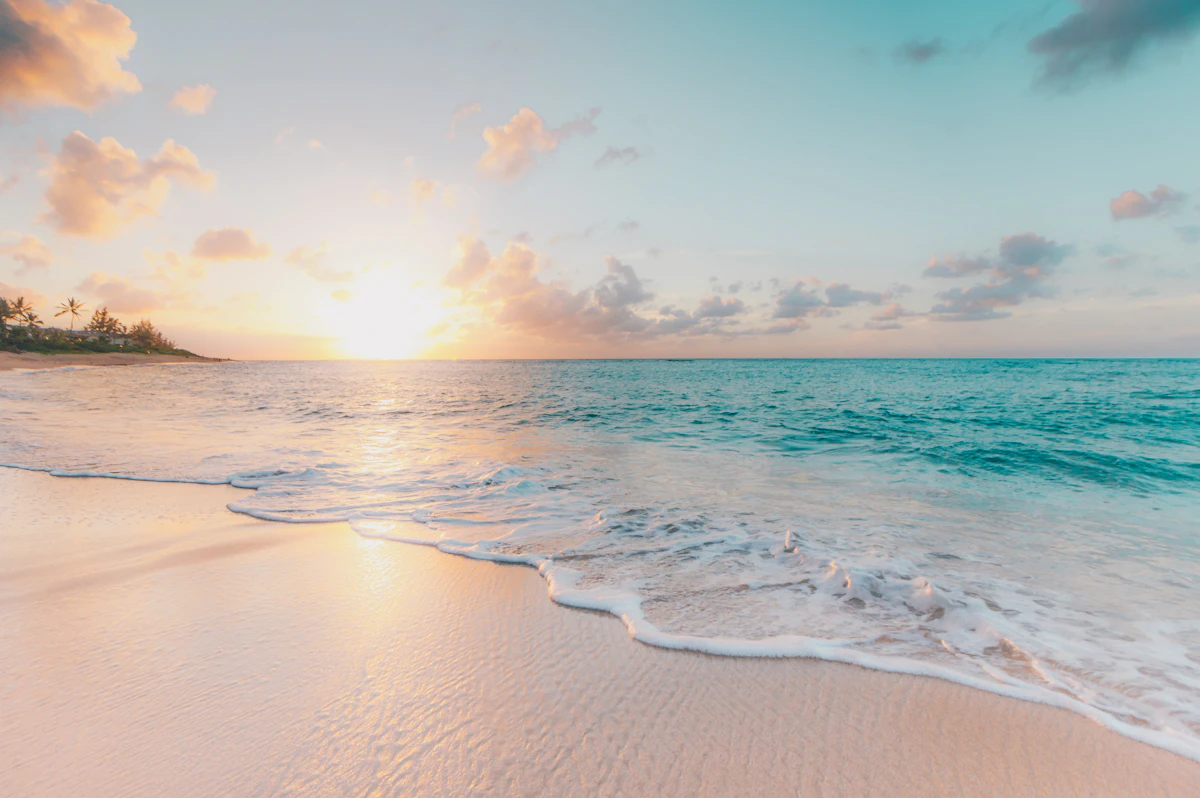
You'll walk the beach alone, or nearly so. The water is Baltic-cold, even in summer, but the shallows extend so far that children splash waist-deep a football field from shore. Oystercatchers probe the tideline. Behind you, the marsh hums with birdlife—avocets, redshanks, marsh harriers riding thermals. The light here is coastal-Nordic: silver-grey one moment, honey-gold the next, painting the water in shades that shift with every cloud.
The village offers a single café and a farm shop selling Nyord lamb and raw honey. There are no hotels, no beach bars, no jet-ski rentals. Just sand, sky, and the kind of quiet that makes you notice the crunch of shells underfoot and the salt smell carried on the wind. You came here to escape, and Nyord doesn't argue.


