

The causeway opens only when the Wadden Sea retreats, leaving a narrow window to reach Mandø—a tidal island barely three kilometers wide where forty residents share their dunes with oystercatchers and harbor seals. You board the tractor-bus at Vester Vedsted, bumping across exposed seabed ribbed with tide channels, gulls circling the wooden trailer as North Sea brine mists your face. The journey itself is theater: vast mudflats glinting under low Danish sky, the hum of the diesel engine, the knowledge that in six hours the road you're crossing will lie beneath two meters of saltwater.
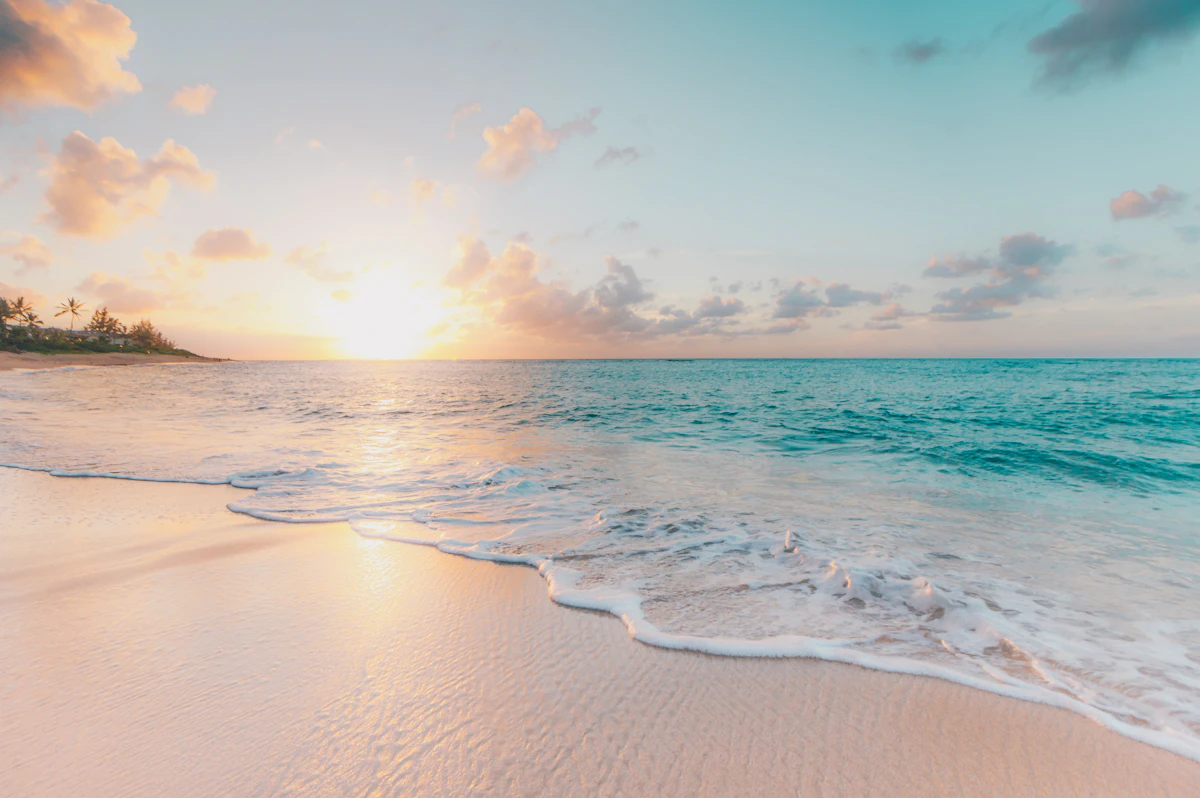
“Denmark's only tidal-causeway beach, reachable just hours each day before the North Sea reclaims the road.”
 Credit: Unsplash
Aerial view of turquoise tropical bay
Mandø Strand unfurls along the island's western flank, a broad apron of blond sand where the wind never stops and the only footprints belong to shore birds. Marram grass shivers in the dunes. The air tastes of iodine and sea lettuce. You walk for twenty minutes without seeing another soul, the tide line decorated with crab shells and kelp ribbons, the horizon unbroken except for the dark smudge of neighboring Fanø across the channel.
This is the Wadden Sea National Park at its most elemental—no cafés, no lifeguard towers, just sediment and sky and the pull of lunar rhythms. You check the tide table twice. The tractor-bus returns on schedule, and missing it means spending an unplanned night in Denmark's smallest commune, where the grocery closes at four and the inn serves dinner only if you've booked ahead.


