
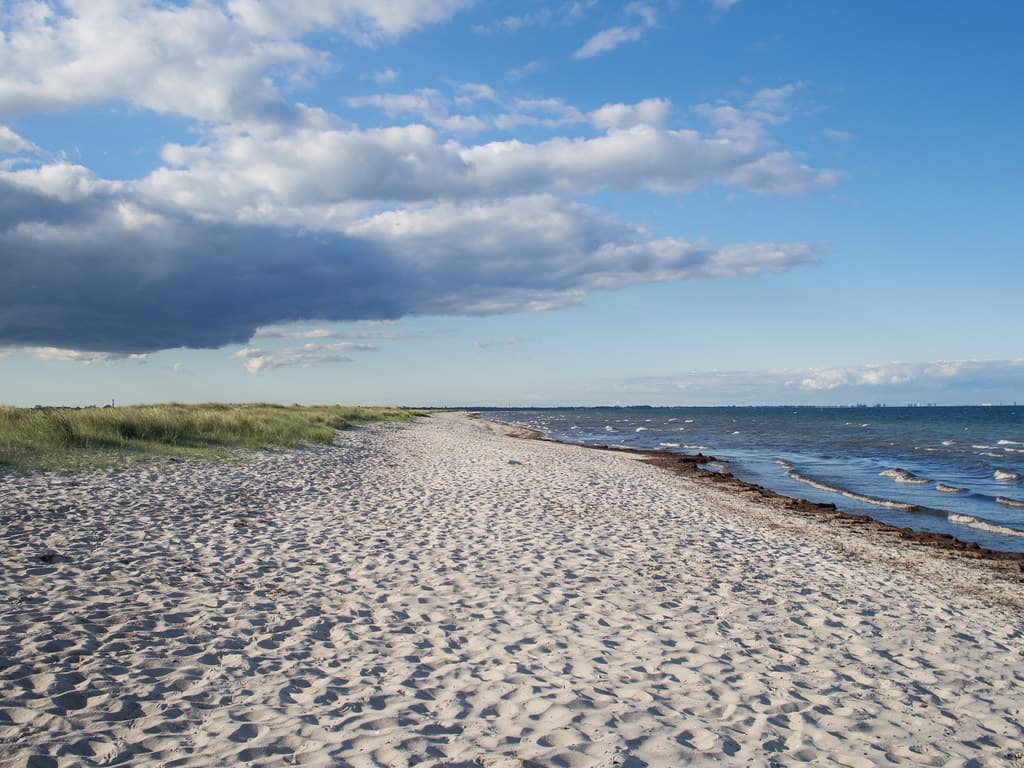
The sand here holds a faint chill even in July, a reminder that the Øresund never fully warms. You spread your towel near the low concrete groyne, where teenagers practice backflips into shallow water and retirees wade knee-deep, trousers rolled to mid-calf. Behind you, the modest promenade hums with cyclists pedaling to the supermarket, their baskets loaded with netted bags of new potatoes. This isn't a resort beach—it's a neighborhood amenity, bordered by postwar apartment blocks and the occasional manor house turned municipal building.
“This is Zealand's rare beach where working Danish life unfolds unfiltered, windbreaks and all, minutes from a perfectly preserved medieval town.”
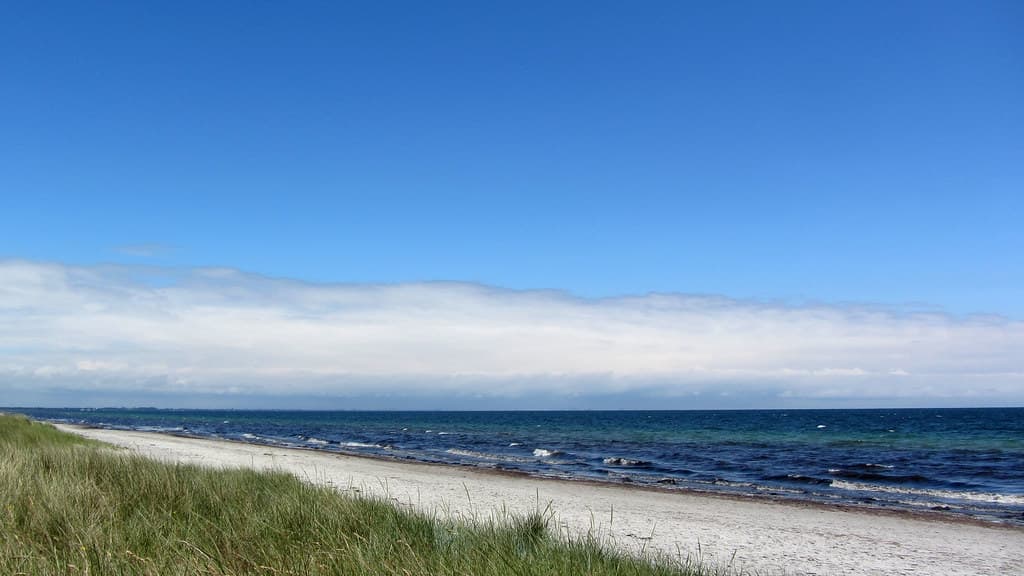 Credit: Flickr
Køge Søndre Strand — photo by monxton
The water stretches gray-green toward Sweden, stippled with whitecaps when the wind picks up from the northeast. Families anchor themselves with windbreaks—striped canvas panels staked into the sand—and unpack thermoses of coffee and rolls with leverpostej. The beach extends in a generous crescent, wide enough that you can claim solitude even on warm weekends, though most gather near the southern bathing jetty where a ladder offers easier entry.
Køge's medieval half-timbered center sits a ten-minute walk inland, but here the architecture is practical: bike sheds, a small kiosk selling soft-serve, benches facing the water. Gulls wheel overhead, crying their persistent demands. As afternoon softens, the light turns amber across the shallow bay, and you understand why generations have returned to this unpretentious stretch—not for drama, but for the quiet Danish pleasure of sand between your toes and salt air in your lungs.


