
The causeway to Lilleø feels like crossing into a different century—asphalt gives way to gravel, then to a narrow track flanked by wildflowers and scrub. The island itself is barely a kilometer across, its interior a tangle of Scots pine and birch that opens suddenly onto a crescent of fine, butter-colored sand. This is not a beach that announces itself; there are no kiosks, no lifeguard towers, only a modest clearing where a handful of Danish families spread blankets on weekday afternoons in July.
“One of Denmark's few true island beaches accessible by car yet still overlooked by coastal roundups.”
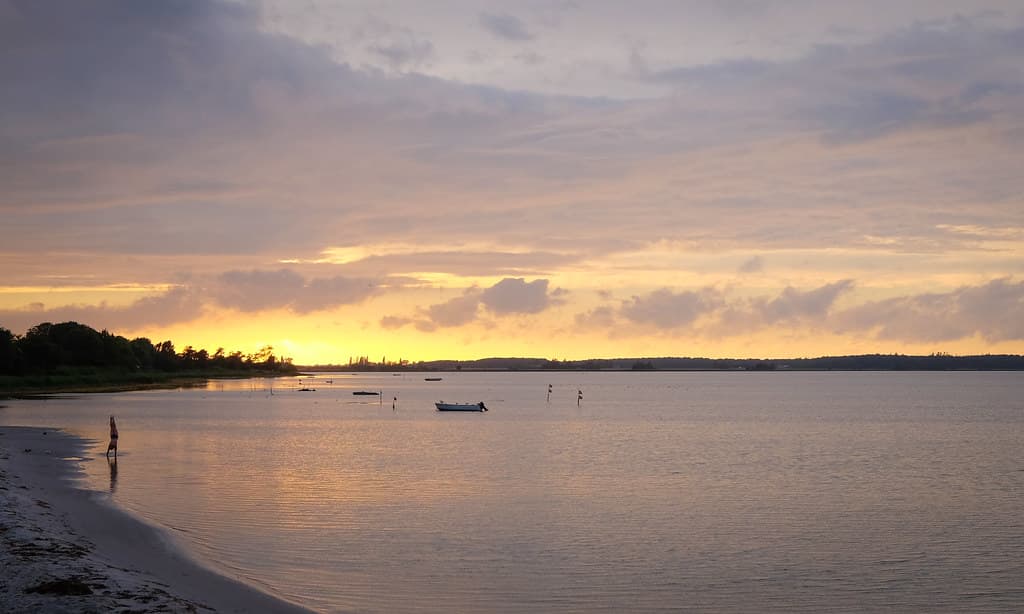 Credit: Flickr
Lilleø Strand — photo by Lars Plougmann
The water here is the Baltic at its most placid: shallow for thirty meters, gin-clear over rippled sand, warmed by summer sun to temperatures that make wetsuits a distant memory. You wade in past tufts of eelgrass, watching crabs scuttle sideways, and the silence is broken only by the occasional outboard putting toward Stubbekøbing. In late afternoon, the light turns amber, gilding the pine trunks and casting long shadows across the strand.
Timing is everything. Arrive in late May or early September and you may have the entire beach to yourself, the water still swimmable, the blackberry bushes along the causeway heavy with fruit. Lilleø Strand rewards the unhurried—pack a thermos, a paperback, and the understanding that the best beaches are the ones you have to look for twice on the map.


