
The village of Elkenøre consists of perhaps two dozen summer cottages, a handful painted the traditional ochre and brick-red of Danish coastal architecture, most clad in weathered wood silvering in the salt air. You park along the sandy verge where the asphalt ends, then walk a narrow footpath through stunted pines and beach grass that whisper in the constant breeze. The beach reveals itself gradually—first the sound of small waves lapping, then the white expanse stretching north and south.
“This is Falster's quiet alternative to Marielyst—same white sand and shallow Baltic swimming, without a single commercial distraction in sight.”
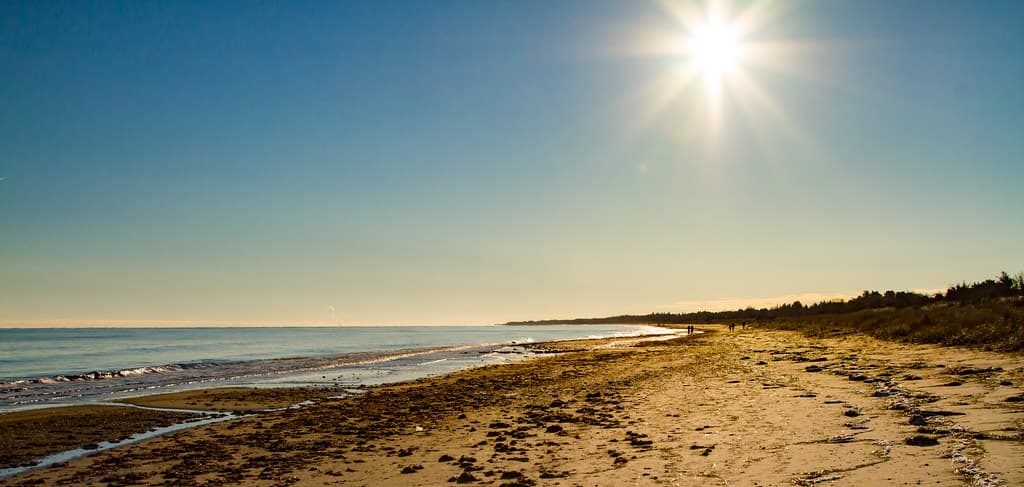 Credit: Flickr
Elkenøre Strand — photo by Bo Mertz
Families claim their territories early on warm days, planting windbreaks into the sand and unfurling blankets while children dig moats around ambitious sandcastles. The water deepens so gradually that toddlers wade twenty meters out, still knee-deep, under watchful eyes. By afternoon, the sand radiates stored heat, and the shallow sea loses its morning chill. Gulls wheel overhead, their cries mixing with Danish chatter and the rhythmic shush of low surf.
Marielyst beach, three kilometers south, draws the tour buses and beach bars. Elkenøre remains what it has always been: a local secret in plain sight, a place where you measure the day by the sun's arc rather than a watch, where the only decision that matters is whether to swim now or after your picnic.


