
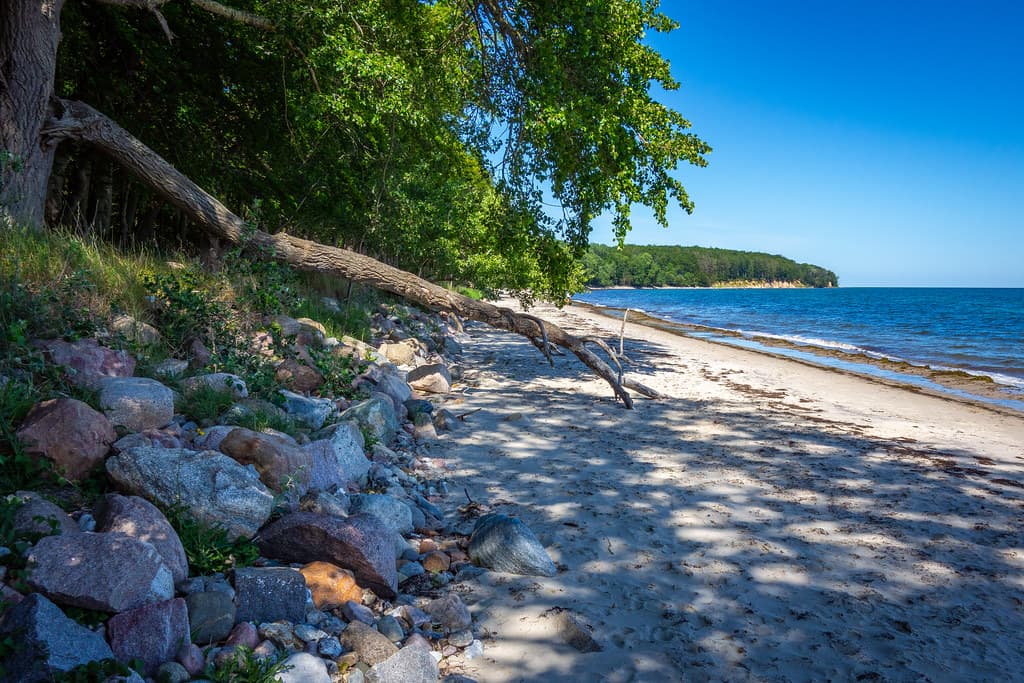
Korselitse Strand lies along a crescent of Denmark's Lolland-Falster coast that most travelers miss entirely, tucked between farmland and forest just south of Nykøbing Falster. You'll find no boardwalks or beach bars—only a narrow gravel turnout where locals park before slipping through the tree line. The shore itself is a study in muted tones: egg-sized pebbles in dove gray and ochre, seaweed the color of tobacco, water that shifts from slate to jade depending on the clouds overhead.
“One of Denmark's few remaining forest-edge beaches where beech canopy and Baltic shoreline meet without a single structure between them.”
 Credit: Flickr
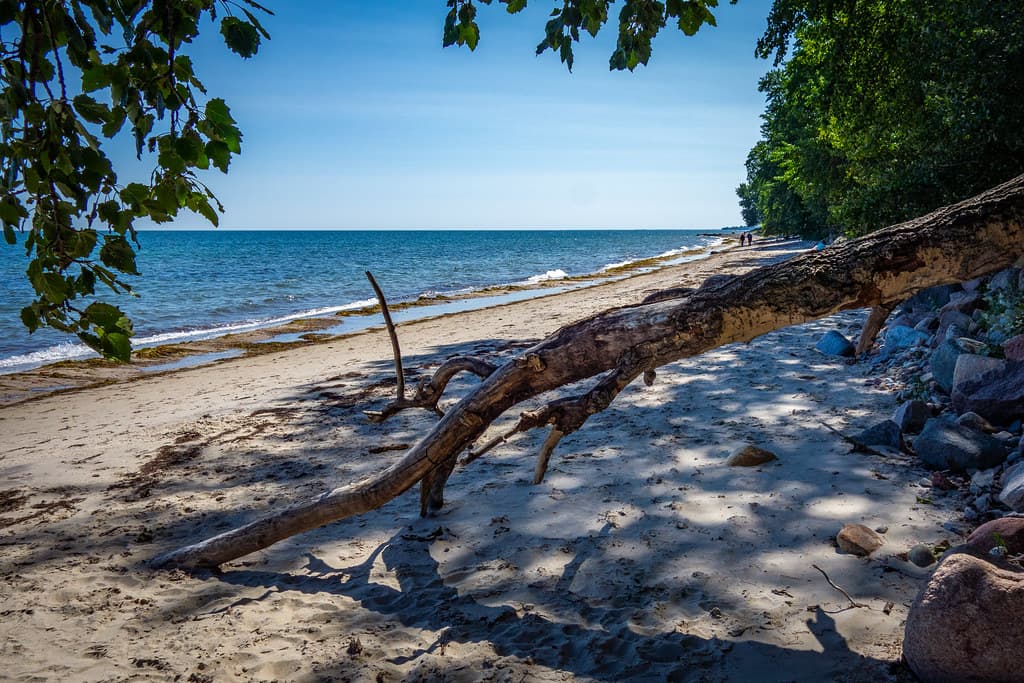
Korselitse Strand — photo by Santa Cruiser
The forest presses right to the tide line, creating pockets of dappled shade where you can spread a blanket on sun-warmed stones. Gulls wheel above shallow water that stays calm most days, protected by the gentle curve of the coastline. In early morning you might spot a lone fisherman casting from the rocks, or a pair of kayakers tracing the wooded shore toward Guldborgsund.
Come in shoulder season and you'll have the place nearly to yourself. The pebbles massage your feet as you walk; the air smells of salt and pine resin. No one will ask you to move your towel or sell you an umbrella. This is Falster at its most unadorned—a beach that asks nothing of you except that you notice the light slanting through the branches, the rhythm of small waves sorting stones.


