

Access requires navigation through a service road behind the Porto Sokhna development, then a short scramble down a rocky embankment. The beach itself is maybe thirty meters of coarse sand and broken coral, nothing that would earn magazine covers. But slide into the water and you enter a different ecosystem: the seafloor drops quickly to five meters, and suddenly you're hovering above table corals and brain corals that have been growing undisturbed because this spot lacks the infrastructure that draws crowds.
“While resort beaches are engineered and sanitized, this cove's coral remains genuinely wild, shaped only by current and the occasional storm surge.”
 Credit: Unsplash
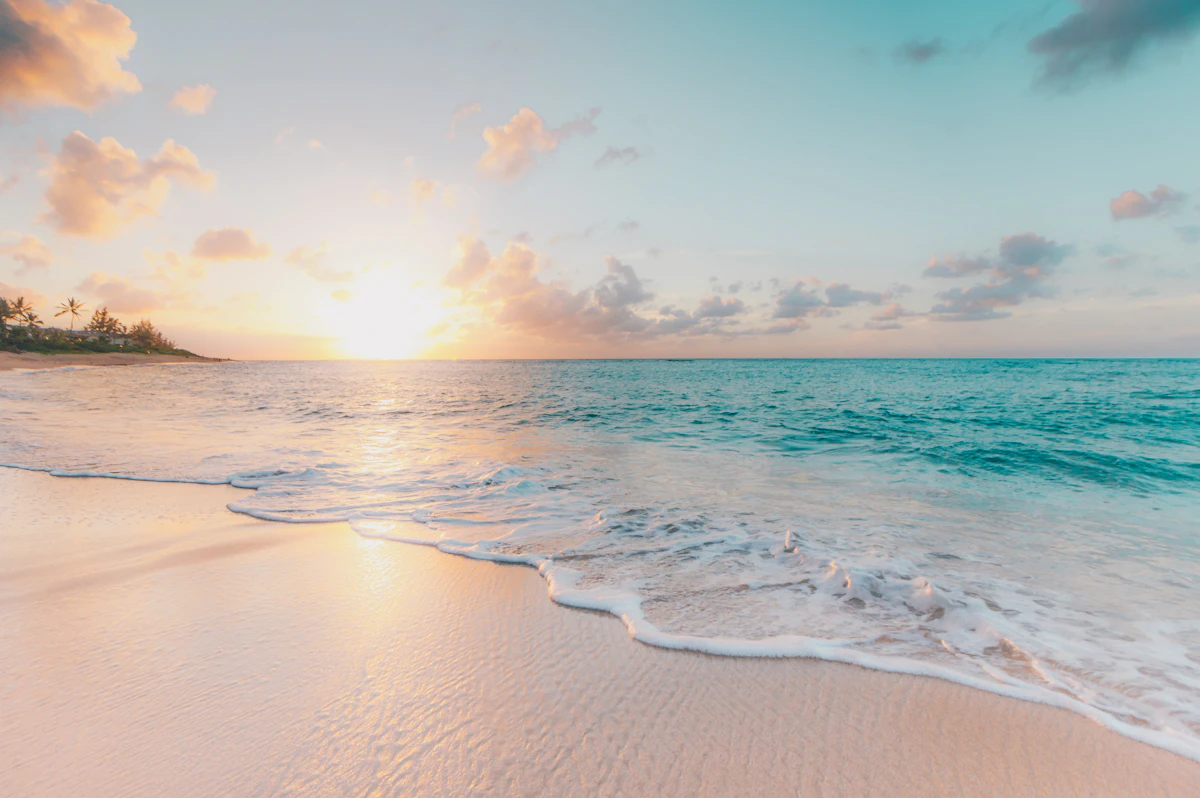
Aerial view of turquoise tropical bay
Visibility fluctuates with current and season—sometimes 15 meters, sometimes less—but even on murky days you'll spot yellowtail tangs, butterfly fish, and the occasional blue-spotted ribbontail ray gliding over sand patches. The reef extends parallel to shore for about 100 meters before giving way to rubble and seagrass. Locals who know this spot come weekday mornings with mask and fins, free-diving the coral heads where grouper cluster. By early afternoon, wind chop makes snorkeling less pleasant, the surface ruffled enough to reduce visibility and comfort.
Facilities amount to nothing—no toilets, no showers, nowhere to buy water. A few fishermen use the access road to reach a concrete pier farther south, and they might nod acknowledgment as you pass. This is beach-going stripped to essentials: just you, the reef, and however long your water bottle lasts.


