

Playa Costa Azul refuses to shout. Tucked along the Atlantic corridor south of Buenos Aires, this unadorned settlement lives in the shadow of its better-known neighbors—La Lucila del Mar to the north, San Bernardo to the south—and seems content with the arrangement. The beach itself unfurls in tawny ribbons, wide enough at low tide to accommodate soccer games and toddlers chasing foam without collision. Wooden stakes mark fishing zones; canvas windbreaks flap in the easterly breeze that carries salt and the occasional whiff of grilled choripán from makeshift parrillas along the sand.
“This is the coast stripped to essentials—sand, sea, and the breathing room that vanishes once you cross into the adjacent resort towns.”
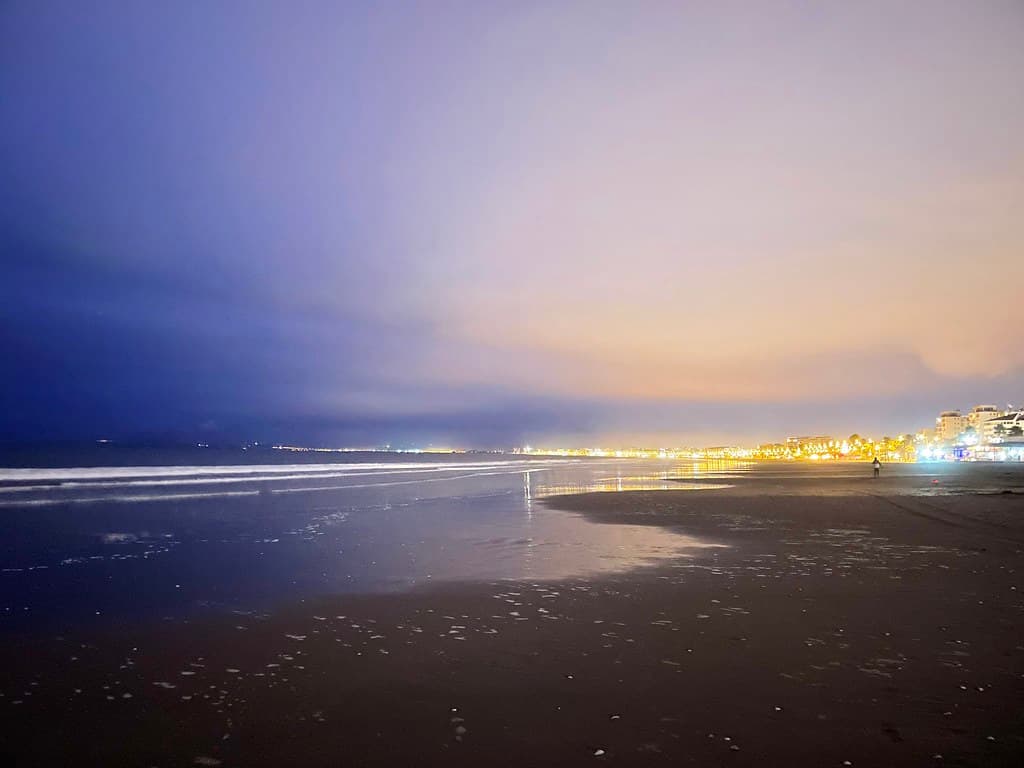 Credit: Flickr
Atardecer en la playa
The rhythm here follows family schedules rather than nightclub hours. By mid-morning, umbrellas dot the beach in irregular clusters, each staked out by porteño families who rent the modest brick homes lining the quiet streets a block inland. Vendors push carts selling alfajores and mate, their calls mingling with the chatter of gulls. The water temperature hovers cool enough to wake you up, warm enough by February to invite long swims parallel to shore.
Costa Azul operates on a different frequency than Argentina's polished resorts. There are no high-rises blocking the western sun, no curated beach clubs with overpriced reposeras. What you find instead: unhurried afternoons, the satisfying give of damp sand beneath bare feet, and the rare luxury of claiming your own patch of Atlantic coastline without performing for anyone's Instagram feed.


