

The shoreline here follows Ovalau's volcanic skeleton, exposing the island's igneous bones in formations too jagged for casual wading. You'll pick your way across basalt platforms slick with algae, step over driftwood wedged between boulders, and discover tiny crescents of dark sand where the rock briefly relents. The terrain demands attention—this is not a beach for distracted scrolling or paperback absorption. One misstep on the uneven surface and you're nursing a twisted ankle miles from the nearest clinic.
“This is Ovalau's only significant rocky coastline, revealing the island's volcanic origins in stark contrast to the sandy beaches that dominate tourism itineraries.”
 Credit: Pexels
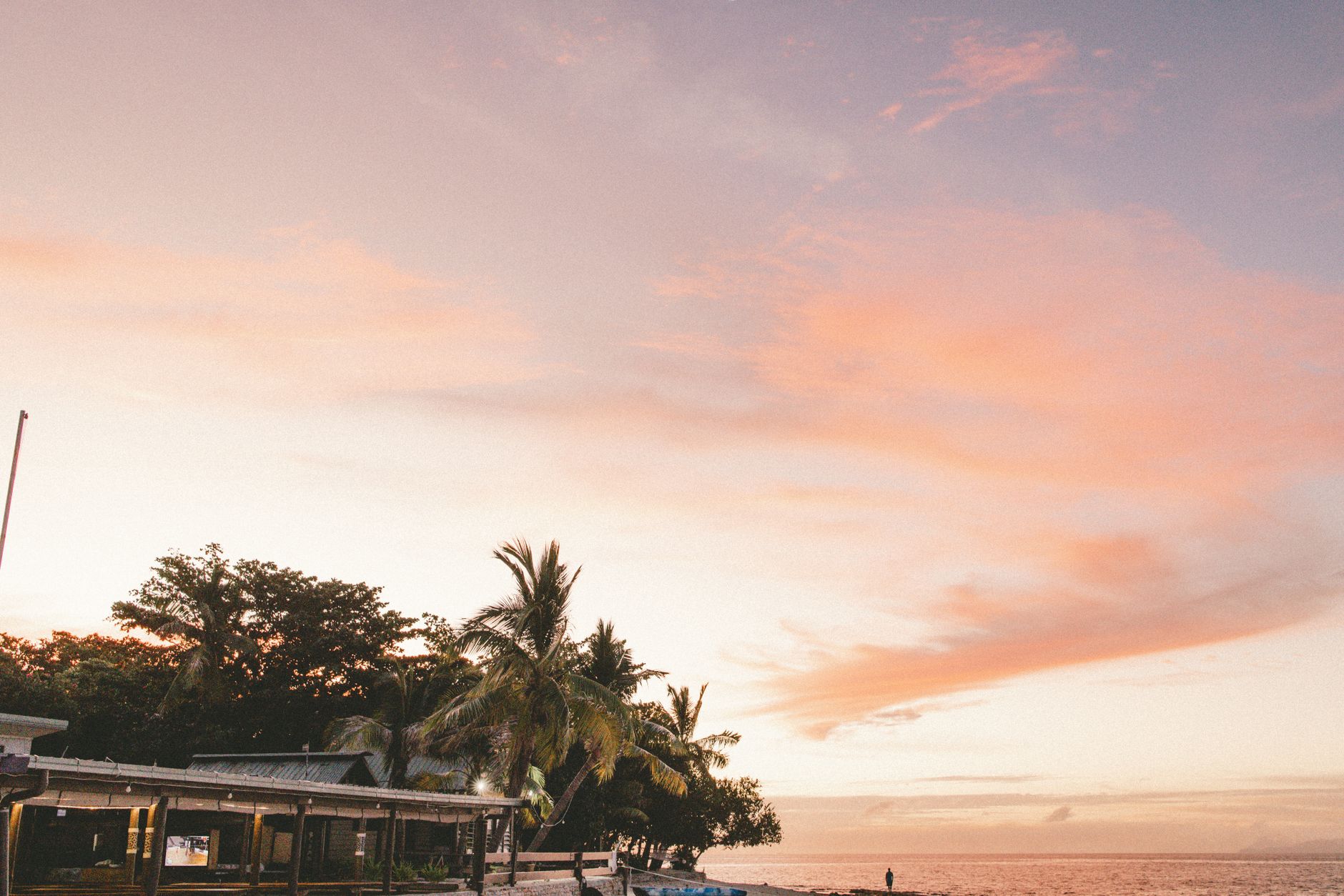
A tranquil sunset over a palm tree-lined beach in Nadi, Fiji.
Sunset transforms the ruggedness into theater. The western exposure catches the day's final light, setting the offshore waters ablaze in copper and amber while the rocks glow like coals. Local fishermen time their returns to this hour, silhouettes against the burning horizon as they navigate channels only they can read. The air cools quickly once the sun drops, and the mosquitoes emerge with purpose—bring repellent or retreat.
Lovoni village sits inland, nestled in the volcanic crater that gives Ovalau its distinctive profile. The coastal route here sees more fishermen than tourists, more utility than recreation. You're walking a shoreline shaped entirely by geology and weather, untouched by landscaping or improvement. It's beautiful in the way wild things are beautiful—indifferent to your comfort, magnificent on its own terms.


