
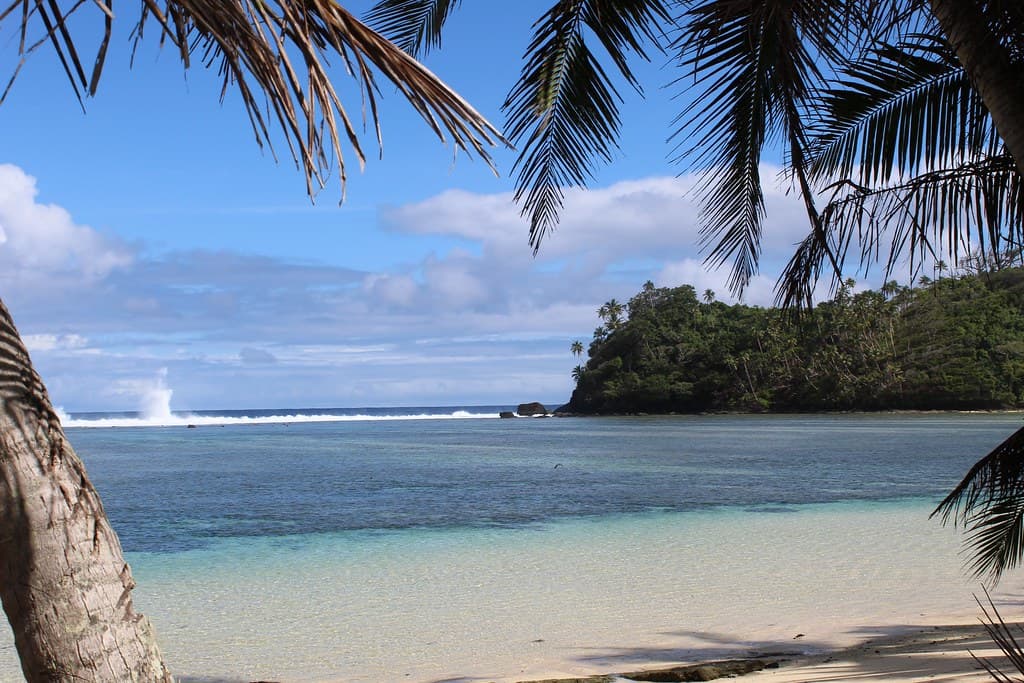
Pepjei Beach occupies a geological fold where ancient lava flows meet persistent southern swells. The bluffs rise steeply on both sides, their faces streaked with mineral deposits and clinging vegetation that somehow roots in vertical cracks. The beach itself runs narrow, disappearing entirely at spring tides when waves push against the cliff base and force you onto the rocks.
“Rotuma's only south-coast beach where volcanic geology and direct swell exposure create dramatically different conditions than the northern settlements.”
 Credit: Flickr
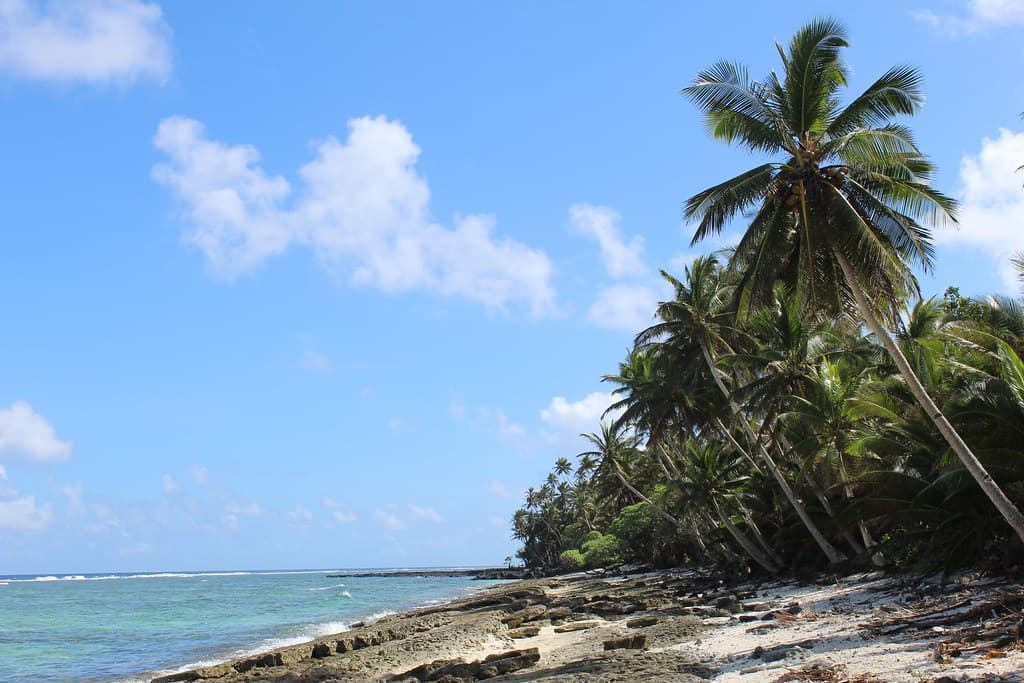
Faguta Coastline
The sand feels coarser than northern beaches, mixed with volcanic fragments that glitter when sunlight hits the black specks. Driftwood accumulates in impressive piles at the high-tide mark—entire tree trunks stripped pale by salt and sun, polished smooth by tumbling waves. Local children use the wood piles as forts and kingdoms, their games continuing traditions older than anyone can date.
Swimming requires reading the conditions carefully. The southern exposure means real surf energy, enough to create legitimate shore break on building swells. Rip currents develop along the rocky points, visible as darker channels where suspended sediment shows the water's outward flow. When conditions settle, the water clarity improves dramatically, and you can see boulders on the seabed worn round as dinosaur eggs. The beach empties completely by late afternoon, when shadows from the western bluff swallow the sand and the temperature drops noticeably.


