

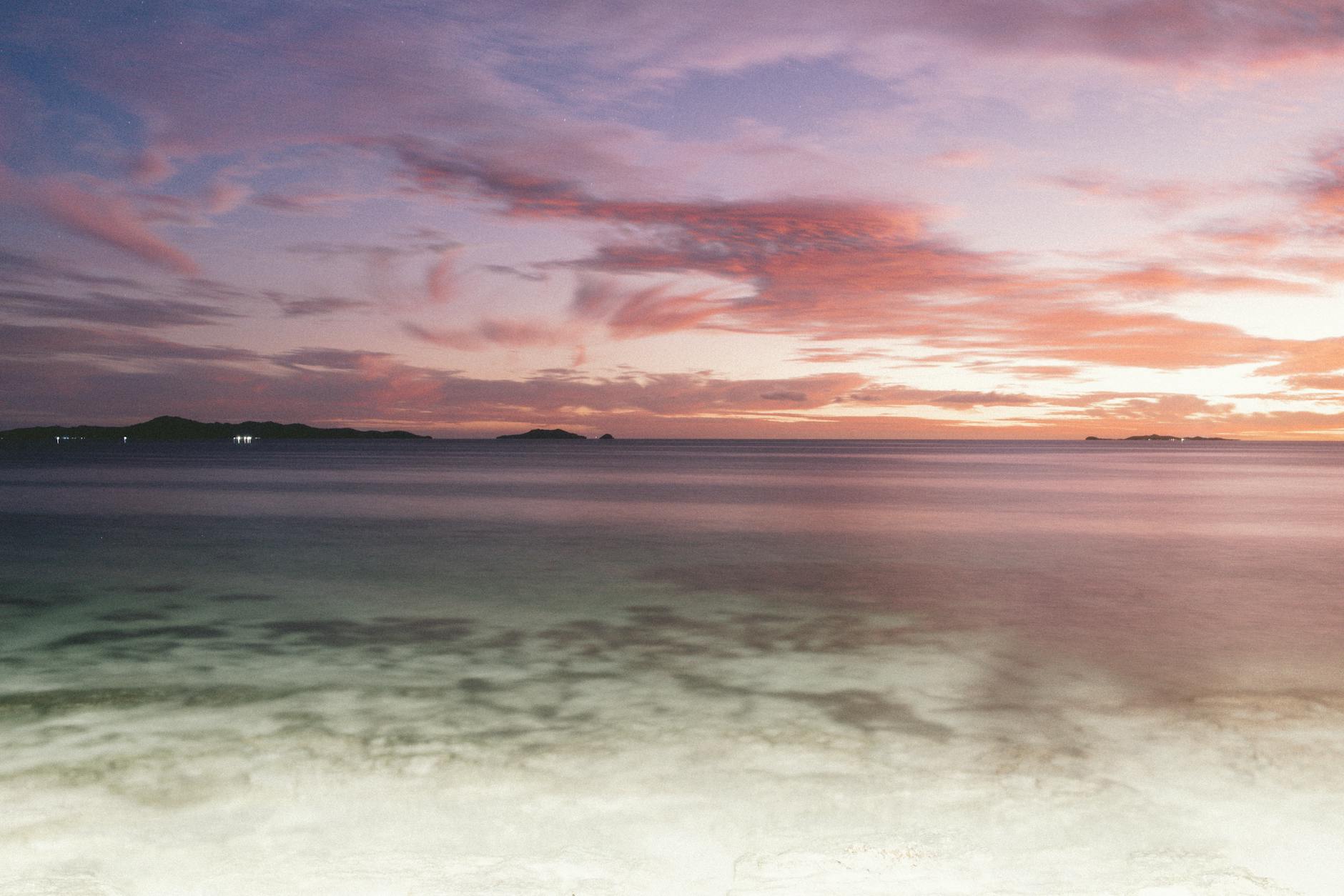
This is Rotuma at its most open, least sheltered. The reef lies perhaps half a kilometer offshore, which means the lagoon here deepens quickly and the water takes on a darker, more serious blue. You'll feel the difference when you wade in: cooler temperature, stronger pull of current, the sense that you're entering ocean rather than paddling pool. The sand is fine and pale, almost white where the sun has bleached it, marked by delicate tracks from ghost crabs that emerge at night to scavenge the tide line.
“The only southern Rotuma beach where the distant reef and deep lagoon create conditions more oceanic than typical Pacific atoll shores.”
 Credit: Pexels
Serene sunset view over the Pacific Ocean in Nadi, Fiji, with vibrant skies and tranquil water.
By late morning, the wind arrives—not the gentle trade breeze that cools other beaches, but a sustained southerly that kicks up whitecaps beyond the reef and sends sand skittering across the beach in stinging clouds. This wind shapes everything: the coconut palms lean permanently northward, their fronds tattered and sun-bleached. The village houses near the beach are built low and solid, with tin roofs weighted by old fishing nets and coral rocks. You'll find shelter behind driftwood logs worn smooth as bone, watching the wind patterns shift across the lagoon surface.
During calmer mornings or late afternoons when the wind drops, the beach reveals a different character. The water clears to remarkable visibility. Small reef sharks patrol the shallows—blacktips no longer than your arm, hunting in inches of water with dorsal fins exposed. You'll see their shadows before you see them, dark torpedoes sliding across the sand with startling speed. They're harmless, intent on smaller prey, but their presence reminds you this beach connects directly to deeper water, to the open Pacific that surrounds Rotuma like a moat.


