Counting the waves…
Counting the waves…
A refined fusion of water purity, environmental stability, and communal vibrancy for North Matacawalevu Beach.
View MethodologyAnalyzed via live sensors and environmental data.
Wave height, wind, and atmospheric stability.
Live footfall and crowd balance metrics.
Community reviews and curated sentiment.
“You'll have this pocket beach to yourself more often than not. The northern exposure means bigger swells and stronger currents than the protected bays down south, and the sand here is fine as flour, built from millennia…”
Limited recent visitor reports — live OBI telemetry is your best guide for current conditions.
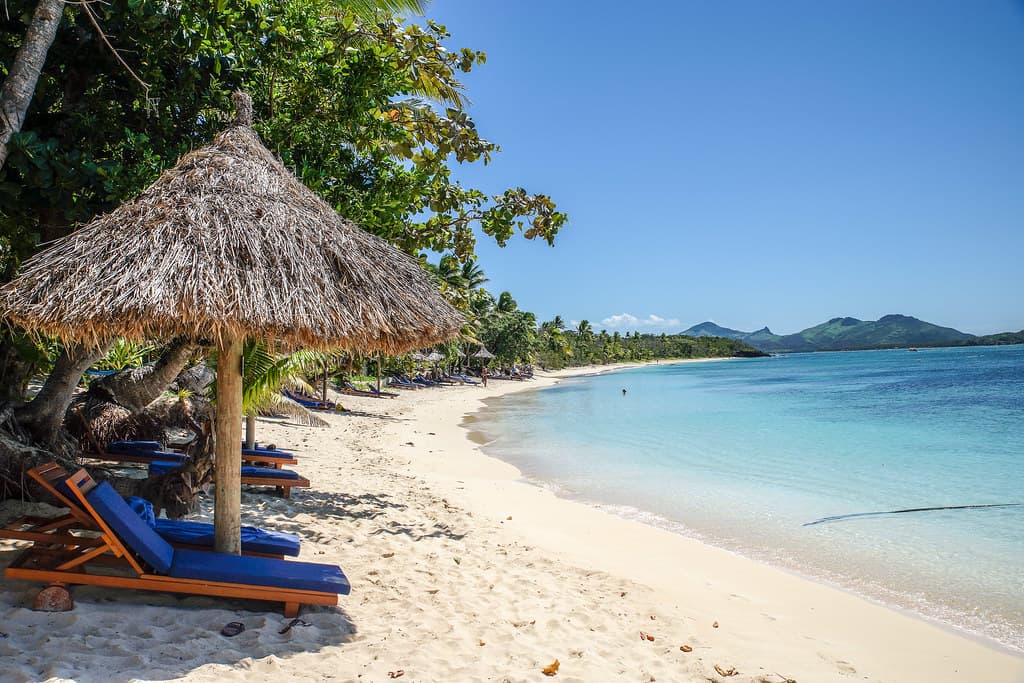
Getting here requires commitment—most visitors never venture beyond the island's main beaches, leaving this northern stretch to those willing to walk the rocky headland trail. You'll round the point and find a compact crescent facing open water, the horizon unbroken except for distant Yasawa Island's outline. The sand is genuinely white, bleached by constant sun and composed of pulverized coral so fine it squeaks underfoot.
The swimming here demands respect. You're facing the full fetch of the Pacific, and even on calm days the shore break has punch. Waves march in with metronomic regularity, building over the shallow reef before collapsing in foam lines that race up the beach. Snorkeling is possible on dead-calm mornings when the water clears to reveal scattered coral heads, but most days you'll settle for wading and watching the set patterns. Frigatebirds hang overhead, riding thermals off the headland, while noddies nest in the coastal scrub.
Cliff-edge cove with emerald water
Palm trees framing a sunset shore
Rocky approach from main beach
Claim the entire crescent
Frigatebirds and nesting noddies
Prime Visitation
Less Crowds
Where it is
North Matacawalevu Beach
Matacawalevu Island, Western Division, Fiji
-16.947000°, 177.362000°
Weather
Loading…
Swell
—
Temp
Warm · Restorative
UV Index
Moderate
Wind
—
Tidal State
Last known
Max Sunlight
—
Ideal Shade
—
May - Sep (Peak)
Jan - Dec (Off-season)
Historical data suggests peak visibility and stable sea temperatures occur during the prime visitation window.
Select a category to load nearby places.
Unlock restaurants, luxury stays and curated maritime experiences within 2km
Swimming conditions at North Matacawalevu Beach vary depending on tides, weather, and reef proximity. As a remote northern Yasawa location, there are no lifeguards or established safety infrastructure. The beach is generally suitable for confident swimmers, but always assess conditions before entering the water. Check for currents, coral heads, and sea conditions. Reef shoes are recommended to protect against coral and sea urchins. Swim during daylight hours and inform someone of your plans. Because facilities are minimal to nonexistent, bring your own first aid supplies and stay within your swimming abilities. Local knowledge is invaluable if accommodations exist.
The best time to visit North Matacawalevu Beach is during the less crowded shoulder seasons of May and October, or even the wet season (November-April) if you're seeking solitude. This remote northern Yasawa beach sees few visitors year-round, making crowd avoidance relatively easy anytime. For weather, the dry season (May-October) offers calmer seas and sunnier days, though the trade-off is slightly more tourists in the Yasawas overall. The beach's isolation means you'll rarely encounter crowds regardless of season. Plan around weather rather than tourism peaks, and confirm boat access during wet season when seas can be rough.
Reaching North Matacawalevu Beach is challenging due to its remote northern Yasawa location. The Yasawa Flyer catamaran from Port Denarau doesn't typically service Matacawalevu Island directly. Access usually requires private boat charter from nearby islands like Nacula or Yasawa Island, which are connected by the Yasawa Flyer (4-5 hours from Nadi). Alternatively, resorts on neighboring islands may arrange day trips or transfers. Seaplane charters from Nadi offer a faster but expensive option. Due to limited infrastructure and visitor services, reaching this beach requires advance planning, local contacts, and flexibility. Confirm all arrangements before traveling to this isolated location.
Accommodation and dining options at North Matacawalevu Beach are extremely limited or possibly nonexistent. This small, remote beach area has minimal tourism development compared to other Yasawa islands. If any local village accommodations exist, they would be basic homestays offering simple Fijian meals. Most visitors access the beach as a day trip from established resorts on nearby Nacula or Yasawa islands. Bring your own food, water, and supplies if visiting, as no restaurants or shops operate here. For overnight stays in the area, look to neighboring islands with developed tourism infrastructure and plan Matacawalevu as an excursion destination.
North Matacawalevu Beach offers the rare appeal of genuine isolation in an increasingly discovered Yasawa Islands chain. Its remote northern position means very few tourists reach this white sand stretch, providing an authentic deserted-island experience. The beach serves as a valuable reference point for travelers seeking to explore the complete northern Yasawas rather than just the well-known southern islands. While it lacks the amenities and activities of popular beaches, its unspoiled character and quiet beauty attract adventurous travelers who value pristine nature and solitude over facilities. It represents the Yasawas as they existed before tourism development accelerated.
Photos