

The beach is small enough to pace in thirty seconds—maybe twenty meters of white sand tucked between volcanic outcrops that anchor each end of the lagoon. You'll pull your kayak onto the sand and immediately notice the quiet: the surf that pounds the island's windward side arrives here as a distant murmur, filtered through the reef and absorbed by the lagoon's protected waters. The sand is coarse, heavy with coral fragments and small shells, the kind that crunches audibly underfoot.
“This is the Mamanucas in miniature: an entire reef ecosystem compressed into a space small enough to explore thoroughly in an afternoon.”
 Credit: Unsplash
Palm trees framing a sunset shore
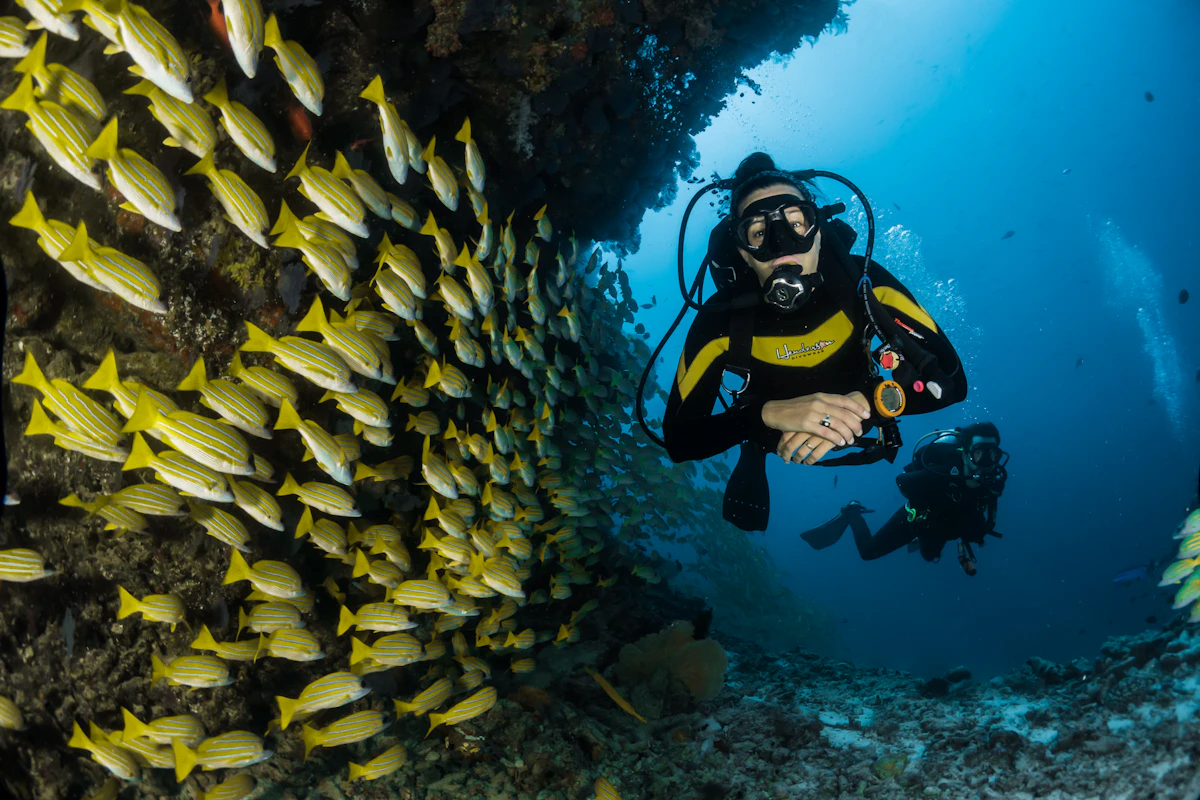
Wade in and you'll spot them within seconds: massive brain coral heads rising from the sandy bottom like boulders, some larger than a car, their surfaces etched with labyrinthine patterns that give them their name. Sergeant majors dart between the coral formations, their vertical stripes vivid against the pale sand. The water is warm and still, disturbed only by your movements and the occasional ripple from a reef fish passing through. You can stand here in chest-deep water and watch entire ecosystems function: wrasse picking parasites from larger fish, anemones retracting when shadows pass overhead, hermit crabs scuttling across coral surfaces.
The lagoon deepens toward its mouth, where the reef almost closes the entrance. Snorkel out toward the gap and you'll find the coral transitions from brain formations to staghorn and table corals, healthier and more densely populated with fish. The current strengthens near the opening—incoming tide brings nutrients and cooler ocean water, and the fish know it. By mid-afternoon the lagoon becomes an aquarium, lit from above by unfiltered sun, every creature visible against the pale bottom.


