

You park near a grove of windswept pines and walk fifty paces to the shore, where pink-veined granite slopes into water the color of brushed steel. This is Kungsö Beach, a misnomer if you're expecting dunes—Jomala's western coastline is all stone, shaped over millennia by ice and tide. Cushions of gray-green lichen soften the rock, and in late June, tiny wildflowers push through cracks in the granite. The air smells of salt and pine resin.
“One of the few westward-facing Baltic shores where sunset unfolds directly over open water rather than forest or archipelago.”
 Credit: Flickr
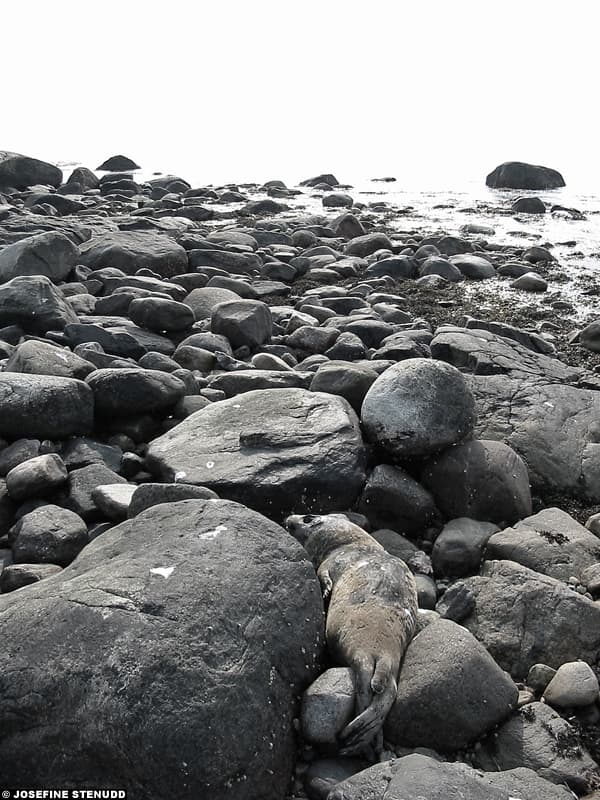
20020731_5 Dead harbor seal (Phoca vitulina) | The island of Kungsö, near Gothenburg, Sweden
Few visitors make the short detour from Mariehamn, twelve kilometers east. You'll share the rocks with oystercatchers and the occasional Finnish family spreading a wool blanket for an evening thermos of coffee. The water is shallow and calm, warming to swimmable temperatures by midsummer, though you'll want water shoes for the rocky entry. Bring a book, a bottle of wine, a companion who doesn't need conversation.
Stay until the light turns amber. The sun sets directly over the water here, painting the granite gold and rose, and if you time it right—late June through early August—the glow lingers past ten o'clock. You'll understand why Ålanders guard their island routines fiercely: this kind of quiet, this quality of light, doesn't scale.


