

Nallikari exists as geographic surprise: a proper sandy beach on the latitude where most Finnish shores dissolve into rocky fragments and bog margins. The sand came courtesy of post-glacial uplift and Bothnian Bay currents, creating a kilometer-long strand that Oulu residents treat as borderline miraculous. By July, the beach hums with activity that feels imported from latitudes fifteen degrees south—families excavating elaborate castles, teenagers playing endless volleyball, paddle boarders threading between swimmers in water that actually warms to tolerable temperatures.
“Nallikari is the only significant sandy beach in northern Finland, making it an improbable beach-culture oasis at 65 degrees north.”
 Credit: Unsplash
Aerial view of turquoise tropical bay
The infrastructure matches the scale: changing rooms, a beach restaurant serving passable burgers, playground equipment that fills with shrieking children on sunny afternoons. This isn't wilderness; it's Oulu's summer living room, a democratic gathering space where university students and retired couples claim adjacent patches of sand without tension. The shallows extend fifty meters out, warm enough by Finnish standards that children submerge for hours without turning blue.
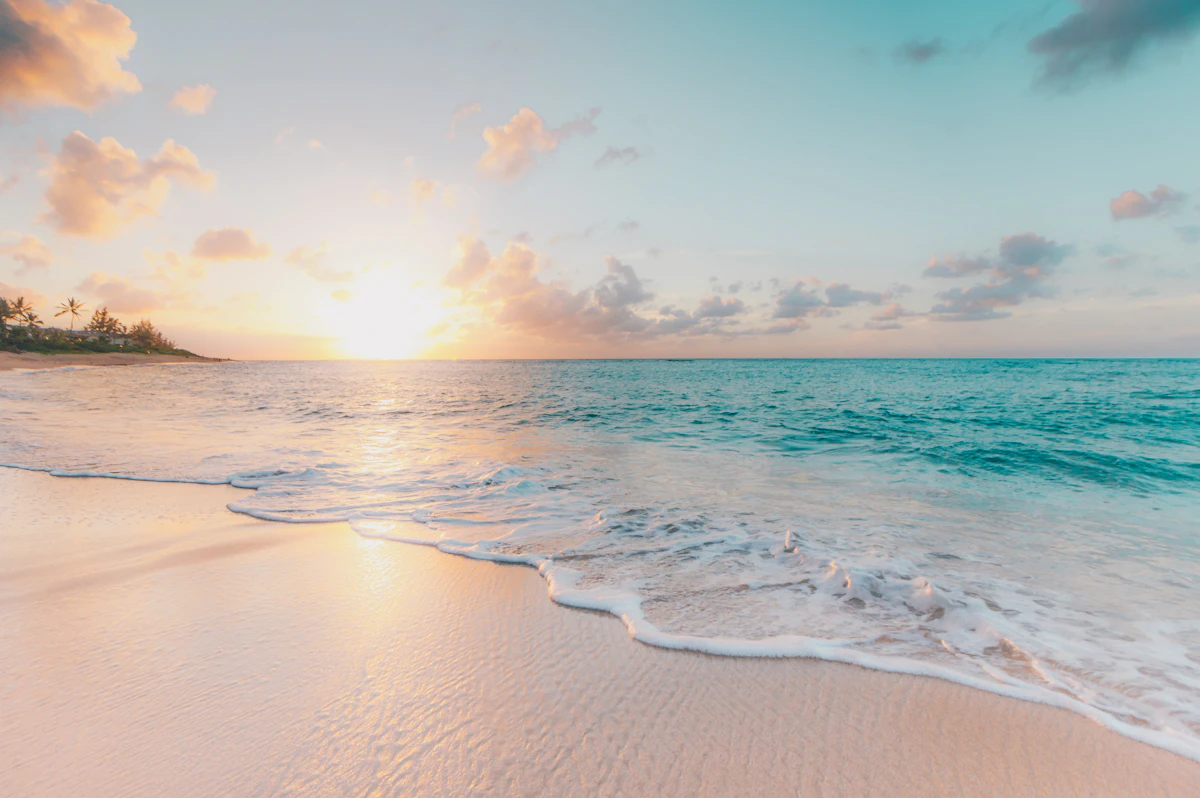
Sunset transforms the scene—the western sky ignites above the Bothnian Bay's flat horizon while the sand radiates the day's stored heat. Groups gather around portable grills, volleyballs thud against nets silhouetted by alpenglow, and the evening remains bright enough to read until eleven. The water goes glassy calm, reflecting pink and orange in bands. This is Nordic summer at maximum output, compressed into brief weeks when the sun barely sets and everyone acts accordingly.


