

The approach to Mikonkari leads you through a corridor of Scots pine before the bay opens up—a crescent of pale sand facing water that shifts from steel to pewter depending on the cloud cover overhead. Unlike Raahe's town beaches, this one feels like a secret kept by residents who arrive with thermoses and worn beach bags, staking out the same spots their parents chose decades ago.
“Mikonkari preserves the unhurried rhythm of a neighborhood beach where generational loyalty runs deeper than tourist trends.”
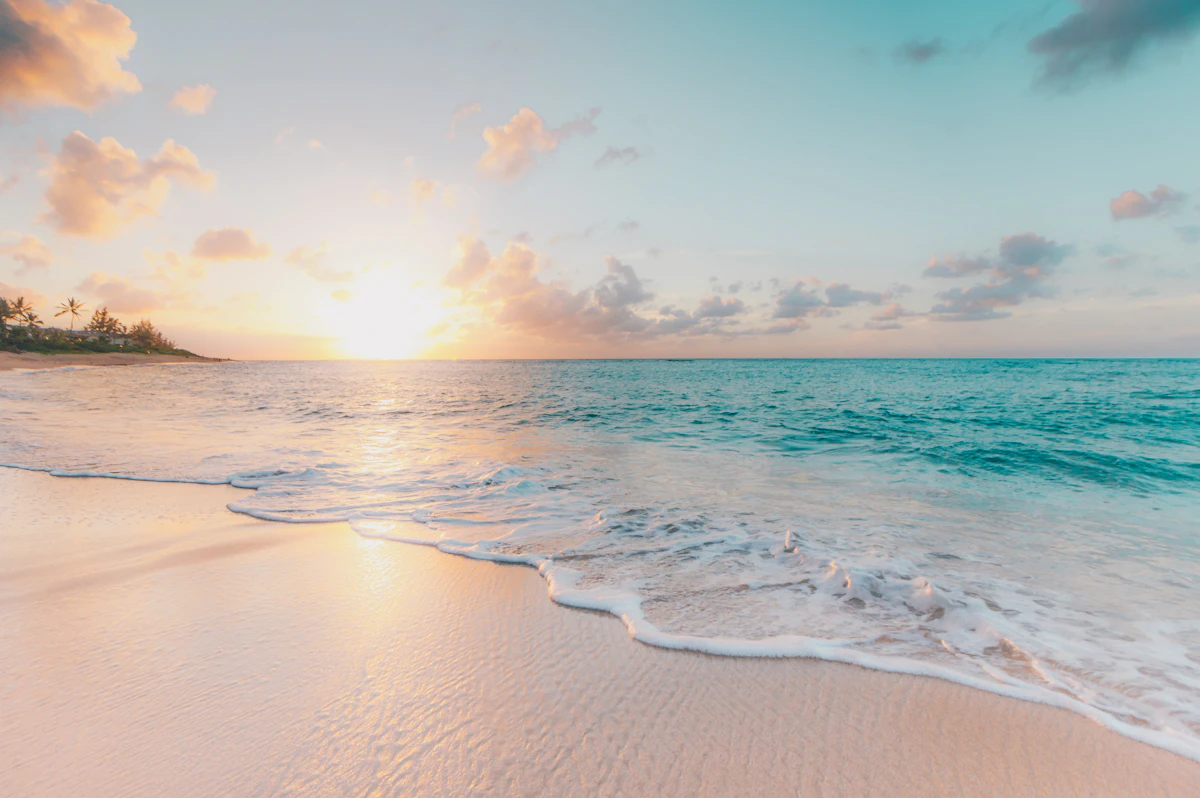 Credit: Unsplash
Aerial view of turquoise tropical bay
The sand beneath your feet is fine-grained, compacted near the waterline where the bay's gentle waves leave patterns like fingerprints. When you wade in, the bottom stays shallow for twenty paces, the water temperature hovering around eighteen degrees Celsius even in July—bracing enough to make you gasp, mild enough to keep you in once the initial shock passes. Birch logs bleached silver by sun and salt scatter the upper beach, natural benches facing west.
By evening, the light turns amber and stretches long across the bay. You'll hear the crack of a volleyball meeting palms from a net strung between trees, smell grilled makkara drifting from a family's portable grill. The atmosphere here resists hurry; towels stay spread until the mosquitoes arrive with dusk, and even then, locals linger, reluctant to surrender another summer day to the brevity of the northern season.


