
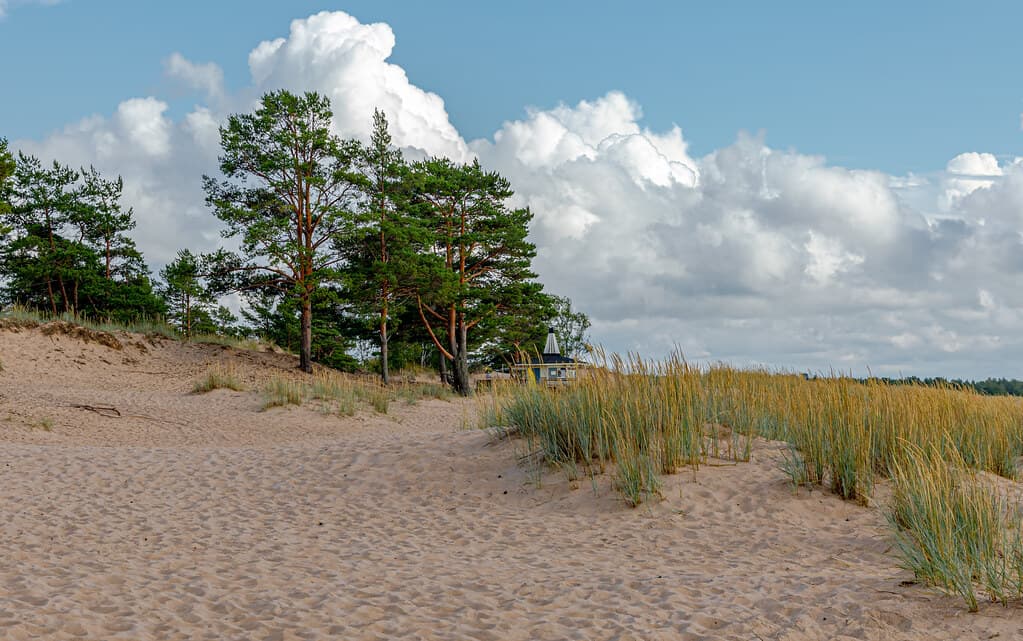
The cove reveals itself gradually—first as a depression in the dune field, then as a crescent of sand tucked between grassy ridges that block the wind and muffle the sounds of the main beach. You descend a sandy slope, boots sinking ankle-deep, into a space that feels discovered rather than designated. Marram grass borders the small strand, its roots binding the dunes in complex networks underground, its blades scratching softly against each other in the breeze.
“The cove exists in Yyteri's shadow—overlooked because the famous beach satisfies most visitors before they wander far enough to find it.”
 Credit: Flickr
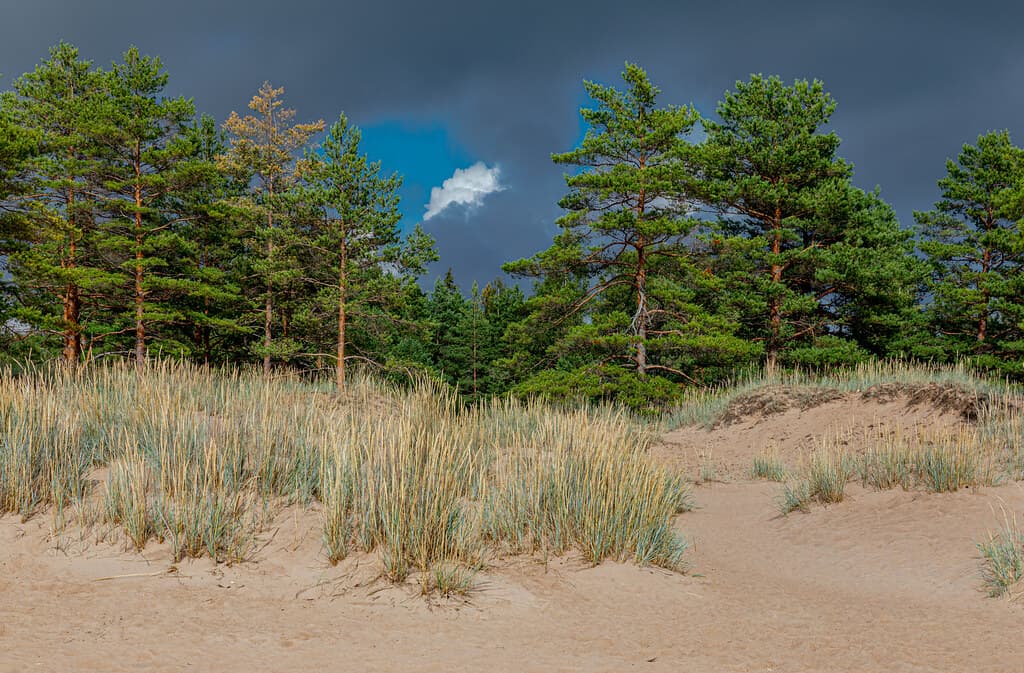
Yyteri Hidden Dunes Cove — photo by Ninara
The water here is the same pale jade as the main beach, but the cove's curve creates a sense of enclosure, of being held by the landscape rather than exposed to it. The bottom slopes gently, sand ridged by currents into patterns that shift with each tide. Dried kelp marks the high-water line. Shorebirds—plovers and sandpipers—work the wet sand margin, probing for invertebrates, scattering at your approach then resettling meters away.
Above, the dunes rise in soft peaks and valleys, their windward faces steep, their inland sides gentler slopes colonized by creeping juniper and lichen. The light changes constantly as clouds move across the Bothnian sky—now bright enough to bleach the sand white, now diffused to pewter and rose. You swim in water that tastes faintly of iron and salt, dry off on sand that holds no footprints but your own, and understand why some places resist being shared even as you photograph them for later proof they exist.


