

Getting here means commitment: a ferry threading through dozens of islands, then the slow approach to Jurmo's low silhouette on the horizon. The beach reveals itself gradually—first a dark line against blue, then resolving into bands of stone in shades of gray, rust, and bone-white. These pebbles have tumbled for centuries in Baltic storms, arriving smooth as river rocks, ranging from gull-egg to fist-sized, clicking and rattling in the constant offshore wind.
“No other Finnish beach offers this combination of utter remoteness, dramatic pebble geology, and uninterrupted Baltic seascapes.”
 Credit: Unsplash
Aerial view of turquoise tropical bay
The ridges run parallel to the water, geological records of ancient shorelines now stranded meters inland. Between them, hardy grasses and dwarf junipers cling to pockets of sandy soil. At the water's edge, the stones give way underfoot with each step, the beach literally moving beneath you as waves reorganize thousands of tons of rock. On clear days the horizon shows nothing but the meeting of steel-blue water and pale sky—no islands, no ships, just emptiness stretching south toward Estonia.
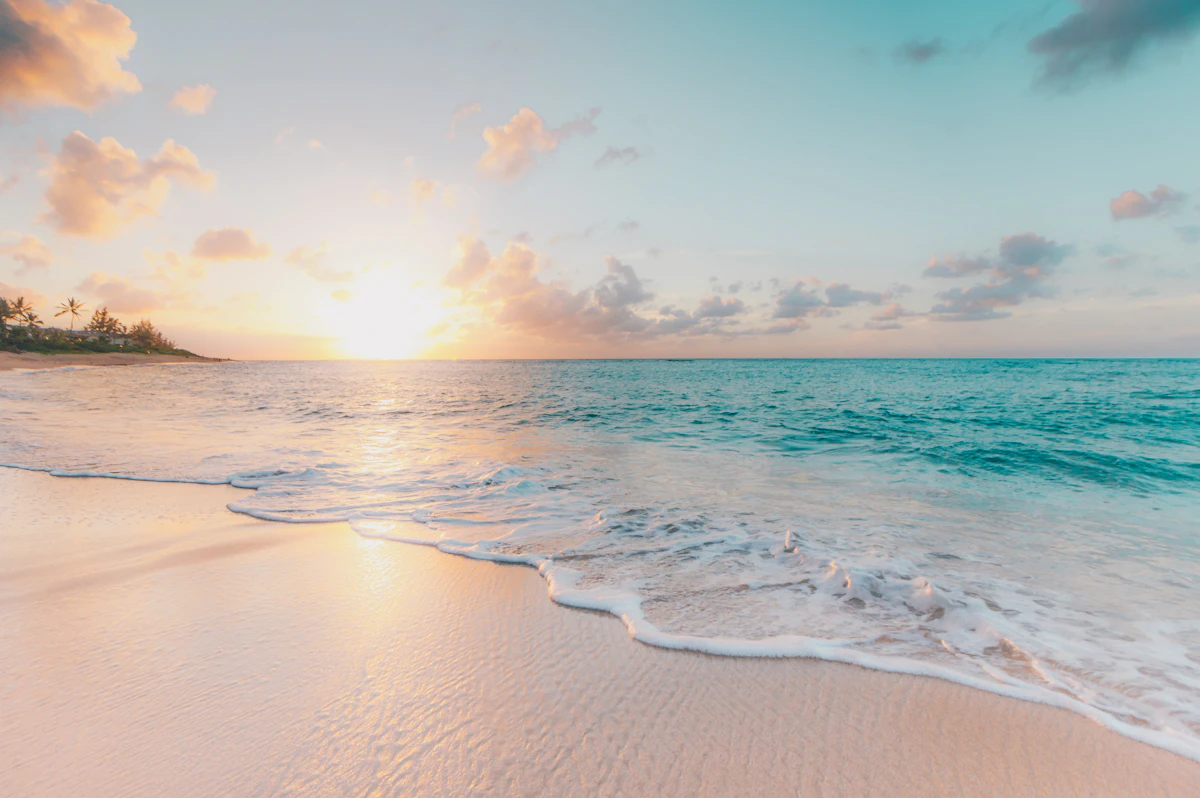
Sunset here feels apocalyptic in the best sense: vast, unobstructed, the sky igniting in bands of orange and magenta while the stones at your feet cool rapidly in the dimming light. Photographers arrive on the afternoon ferry specifically for this show, tripods planted between the pebbles. As darkness gathers, stars emerge with a clarity impossible near mainland light pollution, the Milky Way a bright smear overhead, the stones still clicking softly in the night surf.


