
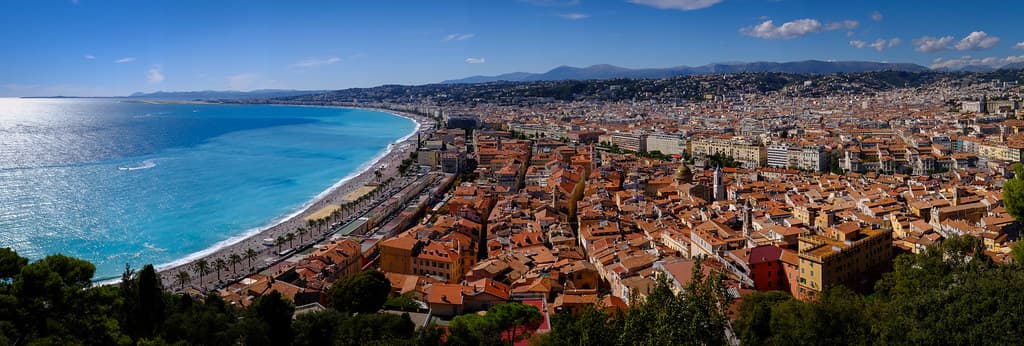
Plage Beau Rivage sits at the hinge point between Nice's two identities: the ochre-walled Vieux Nice to the east and the grand hotels of the Promenade des Anglais stretching west toward the airport. The beach itself is a crescent of gray-blue pebbles that clatter underfoot and radiate heat by midday, uncomfortable until you surrender to the texture and rent a padded chaise from the beach club. The water is that particular Mediterranean sapphire, clear enough to see the stones on the seafloor five meters out, warm enough from June through October that you can swim without a wetsuit and without the breath-catching shock of the Atlantic.
“The juxtaposition of urban grandeur and beach-club culture creates a scene unique to the Côte d'Azur's most accessible city beach.”
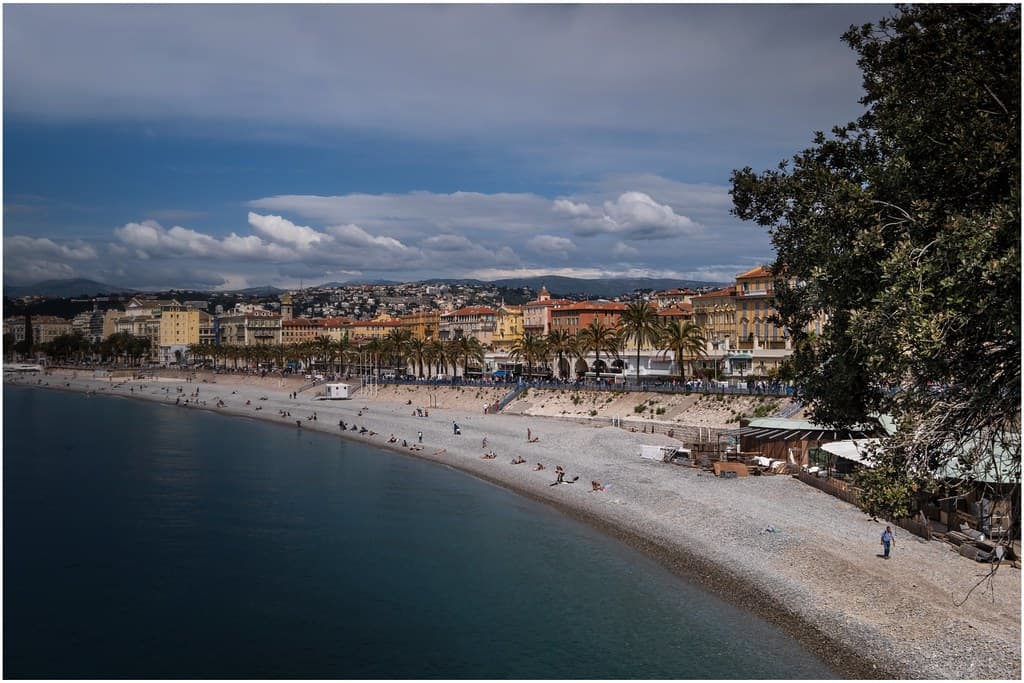 Credit: Flickr
Plage Beau Rivage — photo by marc.barrot
The beach club—also called Beau Rivage—plants rows of navy-and-white striped mattresses and umbrellas that echo the Belle Époque aesthetic of the hotel behind it. You'll pay twenty-five euros for the privilege, which includes a shower, a locker, and proximity to a bar that serves Aperol spritzes in actual glassware. The public beach stretches north and south, free and democratic, where locals spread towels directly on the stones and tourists attempt the same before giving up and migrating to the paid sections. By noon, the beach is a mosaic of bodies, conversations in six languages, and the smell of monoï oil mixing with salt air.
Evening transforms the scene. The sun drops behind the hills west of town, the water takes on a platinum sheen, and the pebbles cool enough to walk barefoot. Joggers and rollerbladers claim the Promenade, while swimmers float in the calm water, watching the lights of the old town blink on against the darkening sky. The beach clubs pack up their furniture, and for an hour the strand belongs equally to everyone again.


