
The sand beneath your toes is fine and pale, a gentle contrast to the volcanic drama unfolding all around. Plage de la Figueirette anchors the western edge of Théoule-sur-Mer, where the town yields to the wild geology of the Estérel. You swim in water that shifts from shallow aquamarine to deeper cobalt, the seabed visible through six feet of clarity. Behind you, rust-orange cliffs studded with umbrella pines climb toward the sky, their jagged silhouettes softening in the afternoon light.
“The Estérel's volcanic cliffs frame every swim, turning a family beach into a geological amphitheater.”
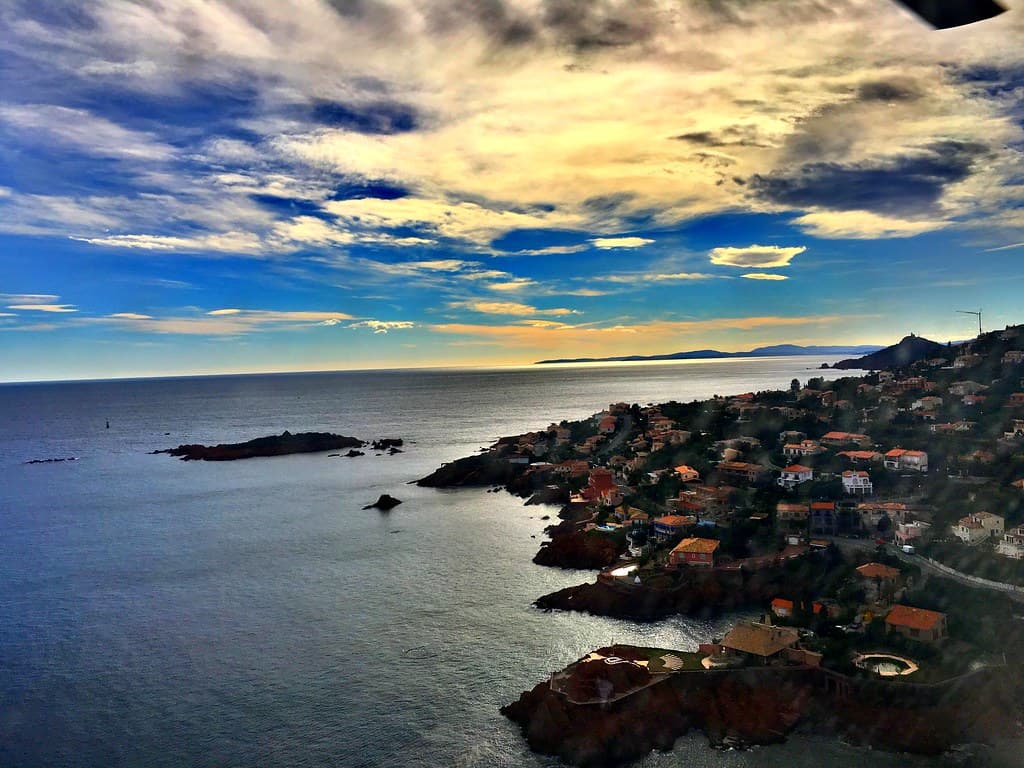 Credit: Flickr
Plage de la Figueirette — photo by Navis06
This is a beach engineered for the unhurried rhythm of French family summer. Grandparents stake out positions beneath rented parasols while children chase each other in the shallows. You notice the infrastructure—a snack bar, restrooms, lifeguards in season—all discreetly tucked beneath the coast road. The beach shelves gradually, making it easy to wade out twenty yards and still touch bottom, though strong swimmers find satisfaction farther out where the water deepens against the rocks.
Come late afternoon and the crowds thin. You claim a spot near the water's edge and watch sailboats tack across the Golfe de la Napoule. The sun descends toward the Estérel ridge, igniting the porphyry cliffs in shades of copper and burgundy. It's the sort of dependable coastal beauty that doesn't announce itself loudly but rewards those who return season after season.


