
You arrive along the D514 and park beside low dunes stitched with marram grass, the Channel spreading wide and pewter-gray before you. Asnelles is quieter than its famous neighbors—Arromanches lies just to the west—but its beach carries the same gravity. Offshore, rusted pontoons jut like broken teeth, fragments of the Mulberry artificial harbor that once funneled troops and tanks toward liberation. The sand here is fine and pale, sloping gently into shallow water that draws families with small children and metal-detectorists hoping for relics.
“Asnelles offers intimate access to Gold Beach history without the crowds, letting you contemplate D-Day alongside your beach towel.”
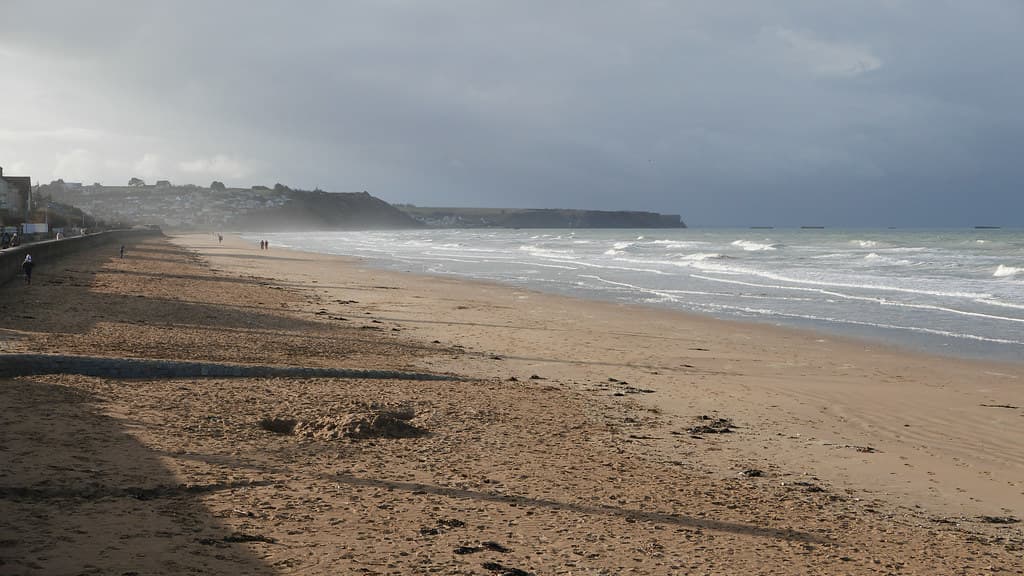 Credit: Flickr
Plage d'Asnelles
You can walk for kilometers in either direction at low tide, when the sea retreats to reveal acres of ribbed sand and tidal pools dotted with mussels. The promenade is lined with modest villas and a handful of cafés serving moules-frites and cider; in summer, beach clubs rent striped cabanas, but the atmosphere remains refreshingly low-key. Sunsets are spectacular—molten gold pouring over the water, silhouetting the Mulberry ruins in stark relief.
This is a beach that asks you to hold two things at once: the simple pleasure of a paddle in cool Norman water and the knowledge that young men once waded ashore here under fire. You come for the beauty, the accessibility, the uncrowded calm—but you leave changed, carrying the weight of what this sand has witnessed.


