
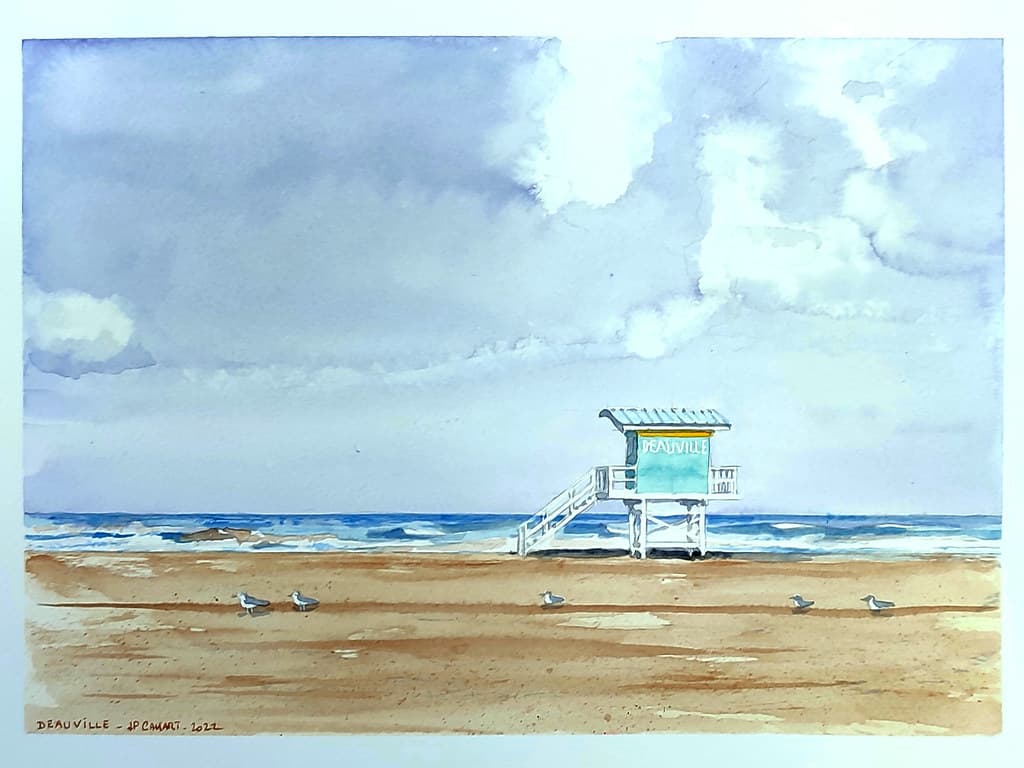
The beach unfolds in a geometry of colour and light that has seduced painters and filmmakers for more than a century. Rows of parasols in blue, green, red, and yellow stripes punctuate the beige expanse, their canvas snapping in the offshore breeze. Behind you, the famous boardwalk stretches east toward Trouville, lined with belle époque villas whose half-timbered facades glow amber in the late afternoon. Families claim their spots near the parasols by mid-morning; by noon the sand buzzes with children building moats against the incoming tide while their parents settle into wicker deckchairs with Le Figaro and a thermos of coffee.
“It is the only French beach where numbered parasols have become as iconic as the Arc de Triomphe.”
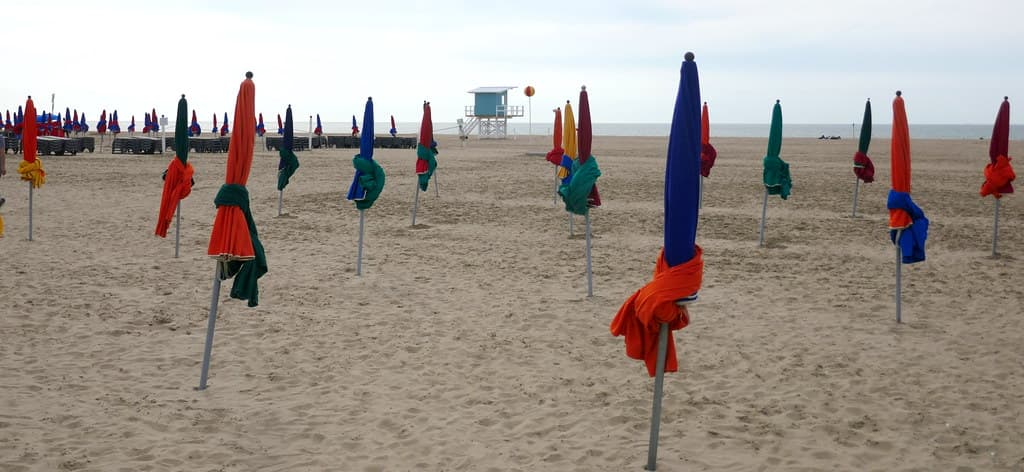 Credit: Flickr
Les parasols de la plage des Planches, Deauville, Calvados, Normandie.
The water is bracing—this is the English Channel, after all—but that doesn't deter the wetsuit-clad swimmers who wade in at high tide. When the sea retreats, it leaves behind tidal pools and a hundred meters of hard-packed sand perfect for barefoot jogs or impromptu football matches. The light changes by the hour: pewter and moody at dawn, harsh and clean at midday, then molten gold as the sun drops behind the casino and the Pompeian Baths.
Evenings bring a different rhythm. The parasols fold, the lifeguards pack up, and the planches fill with couples in linen and espadrilles, drifting between oyster bars and ice cream kiosks. You hear snatches of English, Dutch, Parisian French. This is where Normandy does summer—not with Mediterranean exuberance, but with a restrained elegance that never quite goes out of style.


