
Saint-Aubin-sur-Mer stretches along a gentle curve of sand backed by striped beach cabins and the modest promenade where locals walk their terriers at dusk. The beach empties twice daily when the tide retreats half a kilometer, exposing ribbons of wet sand that reflect the changing light like pewter. White chalk cliffs bookend the strand to the west, and you can see fishing boats bob near the small harbor that still lands Dover sole and turbot each morning.
“Saint-Aubin offers breathing room between D-Day pilgrimage sites, a working Norman beach town that never became a monument.”
 Credit: Flickr
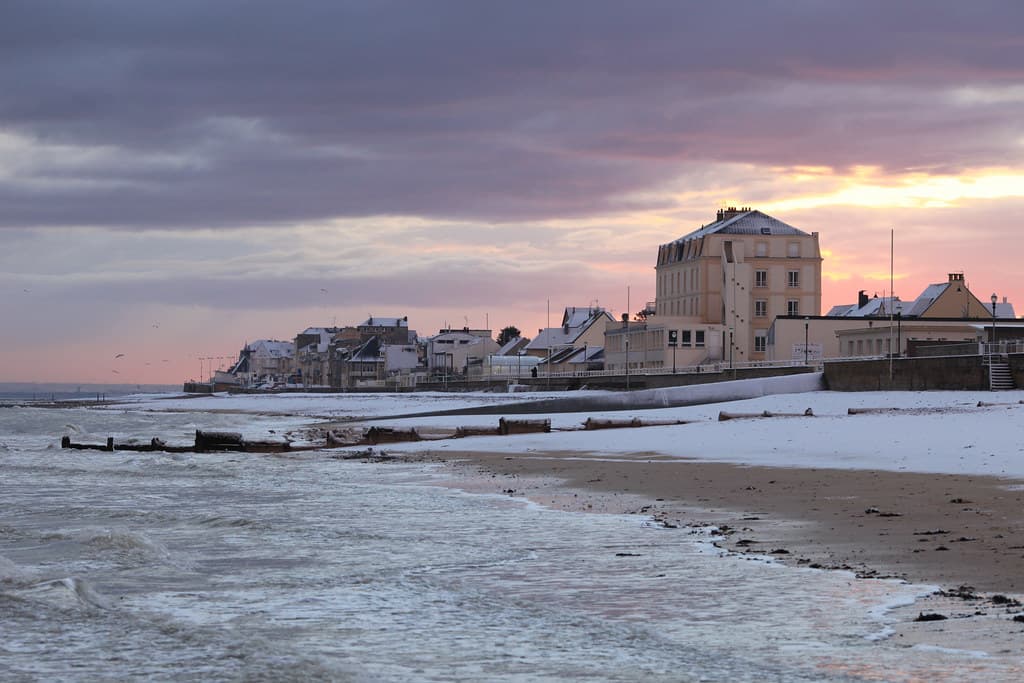
Lever de soleil sur la plage enneigée
This is not Omaha or Juno—the big names lie minutes away by car—but Saint-Aubin carries its own wartime memory quietly. A single monument stands near the seawall where Canadian forces came ashore on June 6, 1944. Today, the beach belongs to Norman families who return each July, children netting shrimp in the pools, grandmothers reading paperbacks in折叠chairs. The water stays bracingly cold through August, the kind that makes you gasp and laugh.
You come here when you want the Normandy coast without the tour buses, when you need to watch the sun drop into the Channel after a day tracing history. The beachfront cafés serve moules-frites and Calvados, and by evening the light turns the Belle Époque facades the color of apricots. It is a beach that asks nothing of you except that you notice it.


