
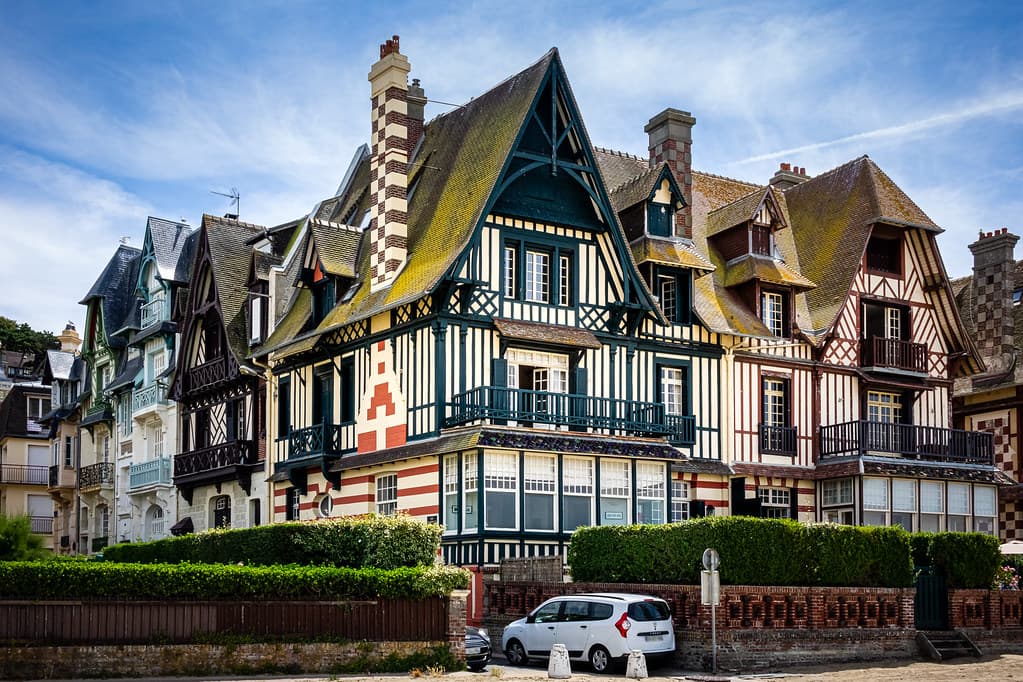
The boardwalk planks creak beneath your feet the way they did when Monet set up his easel here in 1870. Trouville wears its Belle Époque pedigree openly: art nouveau casino façades, timbered hotels with mansard roofs, a fish market where trawlers unload before dawn. The beach itself stretches wide and flat at low tide, revealing ribbed sand and tidal pools where children crouch with nets. When the tide rushes back—and it rushes, six vertical meters in six hours—the waterline climbs to the promenade wall, and the beach narrows to a strip where families plant their windbreaks and canvas chairs in tidy rows.
“The only Normandy resort where a working fish market still abuts Belle Époque promenades and the tide rewrites the beach twice daily.”
 Credit: Flickr
An der Strandpromenade
You won't find tropical warmth here. The English Channel delivers brisk water year-round, a wind that snaps flags taut, and light that shifts from pewter to gold within minutes. Locals swim regardless, pulling on neoprene in July as casually as woolen coats in January. The promenade hums with life: grandmothers in headscarves walking miniature dogs, teenagers sharing barquettes of moules-frites, couples leaning against the railing to watch kiteboarders carve upwind.
Across the narrow Touques River, Deauville glitters with its polo fields and film festival; Trouville answers with Norman authenticity. The fishing boats are working vessels, the restaurants serve sole meunière caught that morning, and the villas—though grand—belong to families who return each August, unlocking the same blue shutters their grandparents did. This is a beach that never pretended to be anything but itself.


