
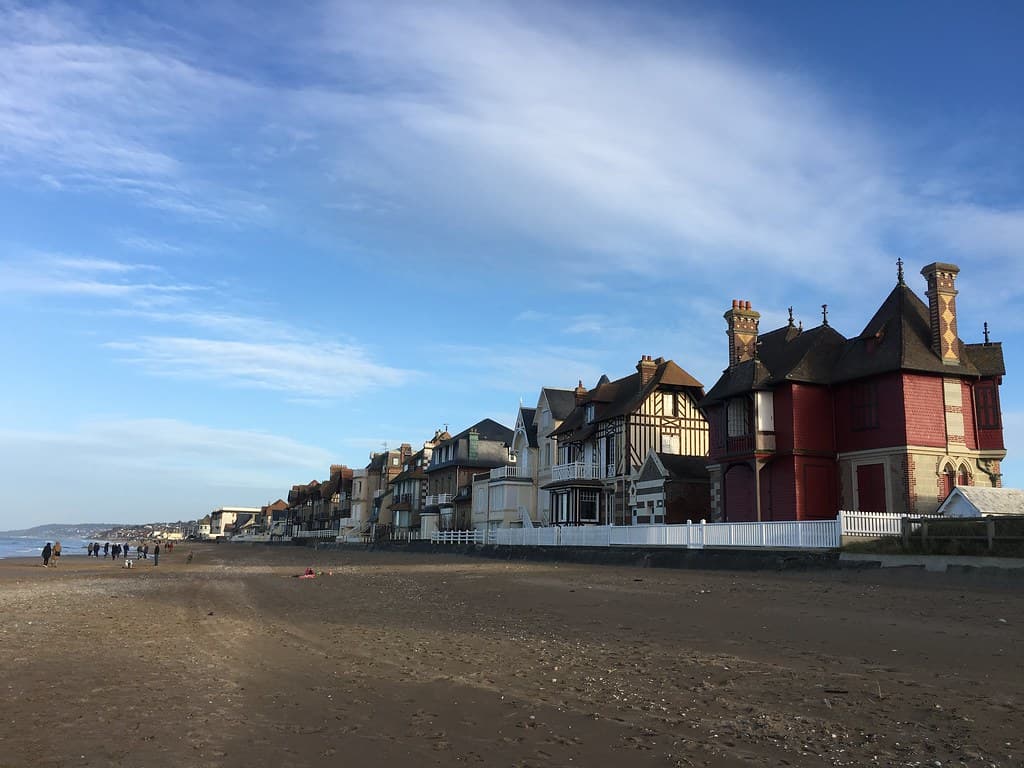
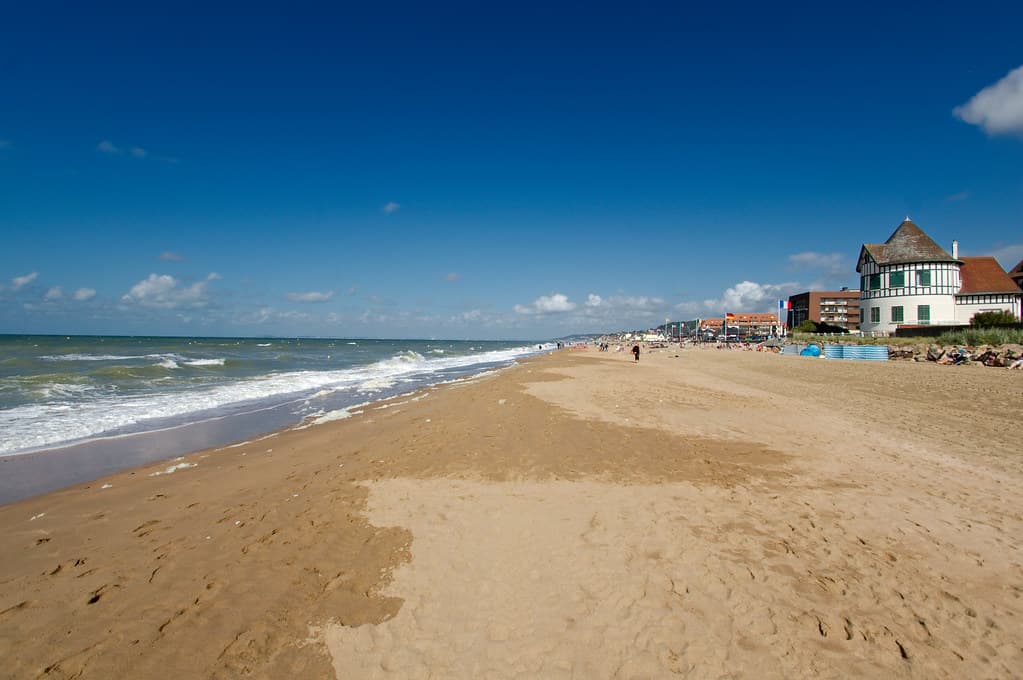
The beach at Villers-sur-Mer unfolds in a wide crescent beneath the Vaches Noires cliffs, their dark clay faces streaked with chalk and riddled with fossils dating back 160 million years. At low tide, the strand stretches nearly two hundred meters seaward, exposing rock shelves and shallow pools where periwinkles cling to slick stones. Families stake claim near the timber breakwaters, while dog-walkers trace the firm sand at the waterline, dodging the foam of small breakers rolling in from the Channel.
“This is the only Côte Fleurie beach where you can hunt Jurassic-era ammonites while your children build sandcastles.”
 Credit: Flickr
Plage de Villers-sur-Mer
The promenade runs parallel to the beach, lined with brasseries serving moules-frites and glass-fronted apartments that catch the afternoon sun. Unlike the glamour of neighboring Deauville, Villers retains a quieter, more accessible rhythm—pensioners read newspapers on benches, teenagers volley a football near the lifeguard station, and vendors sell waxed-paper cones of frites with mayonnaise. The beach clubs still rent candy-striped tentes, wooden changing huts that nod to the town's turn-of-the-century resort roots.
Come evening, the westward view opens toward Trouville, and the sinking sun paints the wet sand copper and rose. The tide reclaims the flats slowly, erasing footprints and filling the hollows around half-buried driftwood. You'll hear the clatter of boules from the esplanade, smell buttery crêpes from a nearby stand, and feel the cool offshore breeze that makes Normandy summers bearable.


