
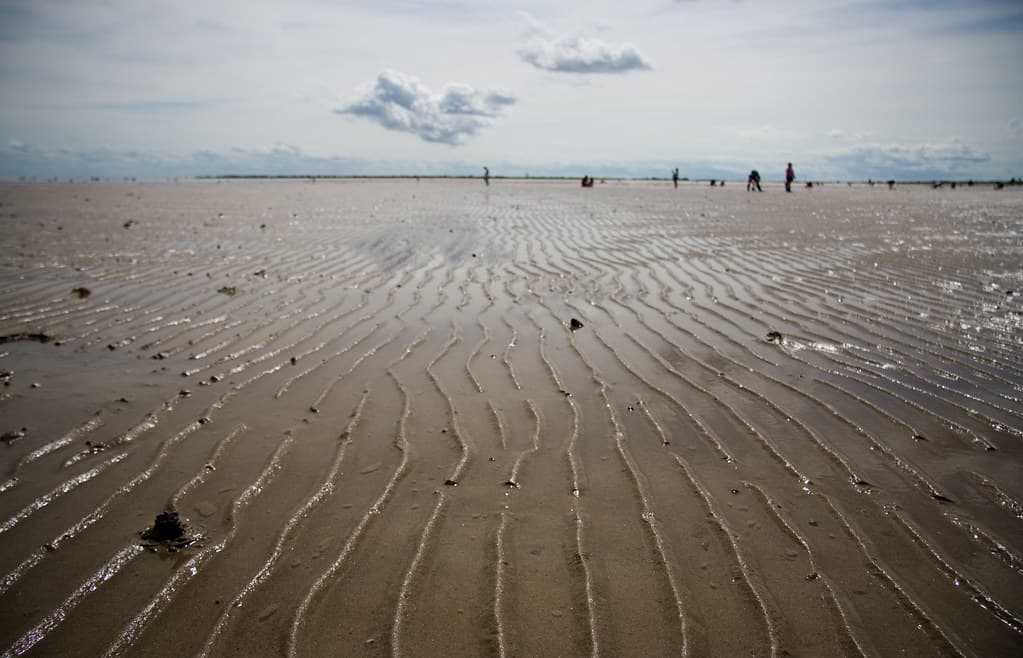
Plage de la Grange unfurls along the calmer western flank of Ars-en-Ré, shielded from the island's wilder Atlantic swells by a low headland. The sand here is fine and blonde, not the sugar-white of postcards but honest beach that sticks to your ankles and warms under your towel. At low tide, the water retreats hundreds of meters, leaving tide pools studded with mussels and revealing the wooden stakes of oyster parks that locals tend in rubber boots.
“The exposed oyster beds at low tide transform the beach into a working maritime landscape few visitors witness.”
 Credit: Flickr
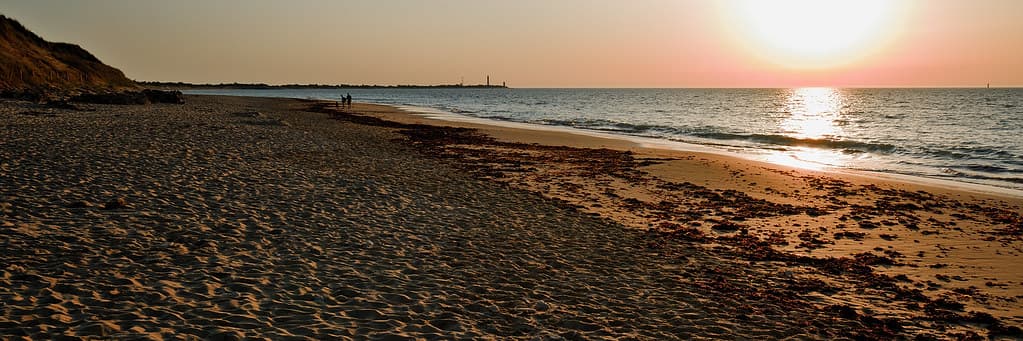
Plage de la Grange — photo by Laurent Simon
The village of Ars—with its church spire painted black-and-white as a sailors' landmark—sits five minutes inland by bicycle. You'll pass rose-covered stone walls and garden gates hung with fishing nets. Families arrive mid-morning with canvas totes and folding chairs; grandmothers wade knee-deep in cotton dresses, and dogs chase gulls along the wet sand. By late afternoon, the light turns amber, gilding the salt marshes that border the beach's southern end.
Unlike the busier strands at Saint-Martin or La Couarde, Plage de la Grange draws islanders more than daytrippers. There's a single beach bar serving moules-frites and local rosé, a handful of shaded benches, and not much else. The quiet feels intentional, the kind you earn by cycling the extra kilometer past the signposted beaches. When the sun drops behind the pines and the tide rushes back in, you'll understand why locals guard this spot quietly.


