
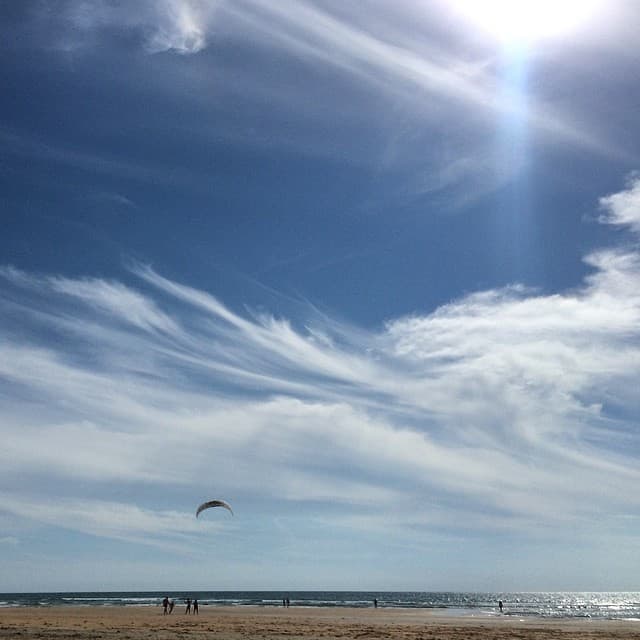
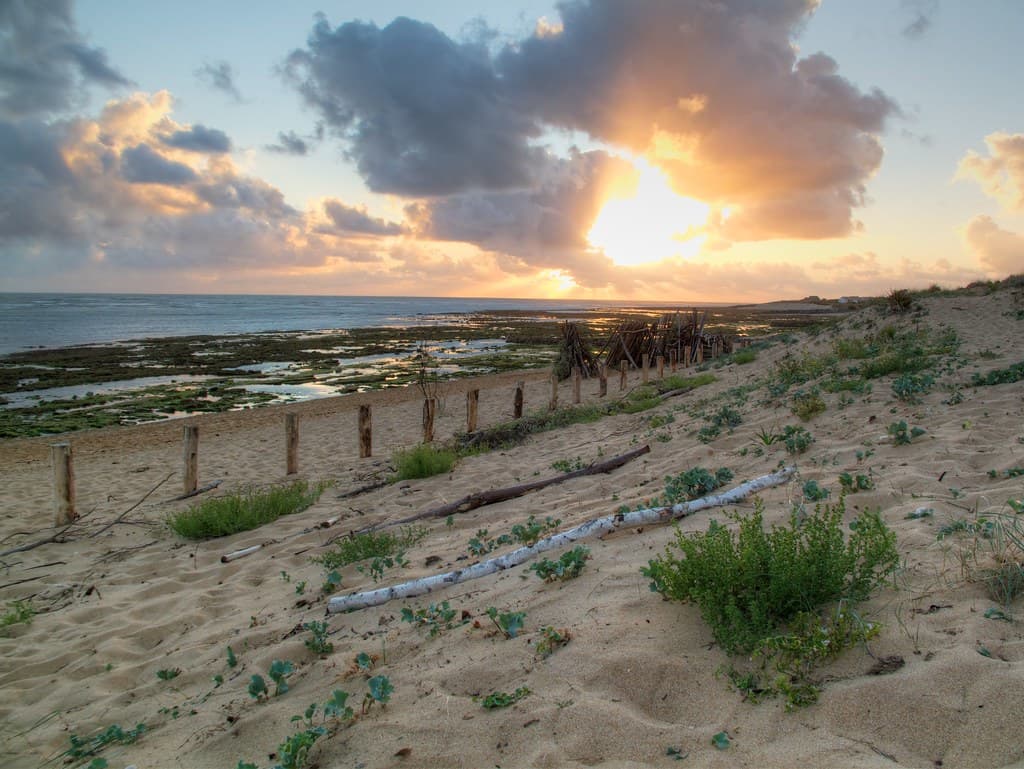
Plage de La Perroche occupies a gentle arc on Oléron's south-western shore, sheltered just enough by the island's body to soften the ocean's punch but open enough to catch every shaft of evening light. Pine forest spills nearly to the high-tide line, leaving narrow corridors of shade where you can spread a towel and watch gulls patrol the foam. The sand runs firm underfoot near the water, softer where beach grass anchors the dunes, and at low tide the exposed flats reveal mussels, barnacle-crusted rocks, and the occasional stranded jellyfish drying in the sun.
“One of the few Oléron beaches where maritime pines grow close enough to the shore that you can nap in their shade at high tide.”
 Credit: Flickr
Plage de La Perroche — photo by jfoto.fr
Most mornings bring a scattering of Dolus locals: retirees walking collies, teenagers kicking soccer balls, mothers with toddlers collecting shells in plastic buckets. The beach lacks commercial kiosks and branded umbrellas; instead you'll find weathered wooden posts marking the path through the dunes and a simple gravel lot shaded by the pines. By mid-afternoon the light slants gold, painting the Atlantic amber and throwing long shadows from the stunted oaks that dot the sand's edge.
Come dusk, the western horizon opens into bands of coral and violet, and the breeze carries salt and pine resin in equal measure. Families pack up slowly, shaking sand from towels, while a few stragglers linger to watch fishing boats slip past the distant silhouette of Fort Boyard. It's the sort of beach that asks nothing of you but rewards patience—a place to read, wade, breathe, and let the island's unhurried rhythm reset your own.


