
The drive through La Palmyre's maritime pine forest ends abruptly at a sandy car park, where salt air replaces resin. Beyond the boardwalk, Plage de la Coubre unfurls in both directions—a blonde crescent hemmed by low dunes and anchored at its northern tip by the red-and-white striped Phare de la Coubre. Built in 1905 after three predecessors succumbed to coastal erosion, the lighthouse still watches over swells that arrive unimpeded from the mid-Atlantic.
“One of the few French Atlantic beaches where a historic lighthouse still guides surfers riding swells visible from its gallery.”
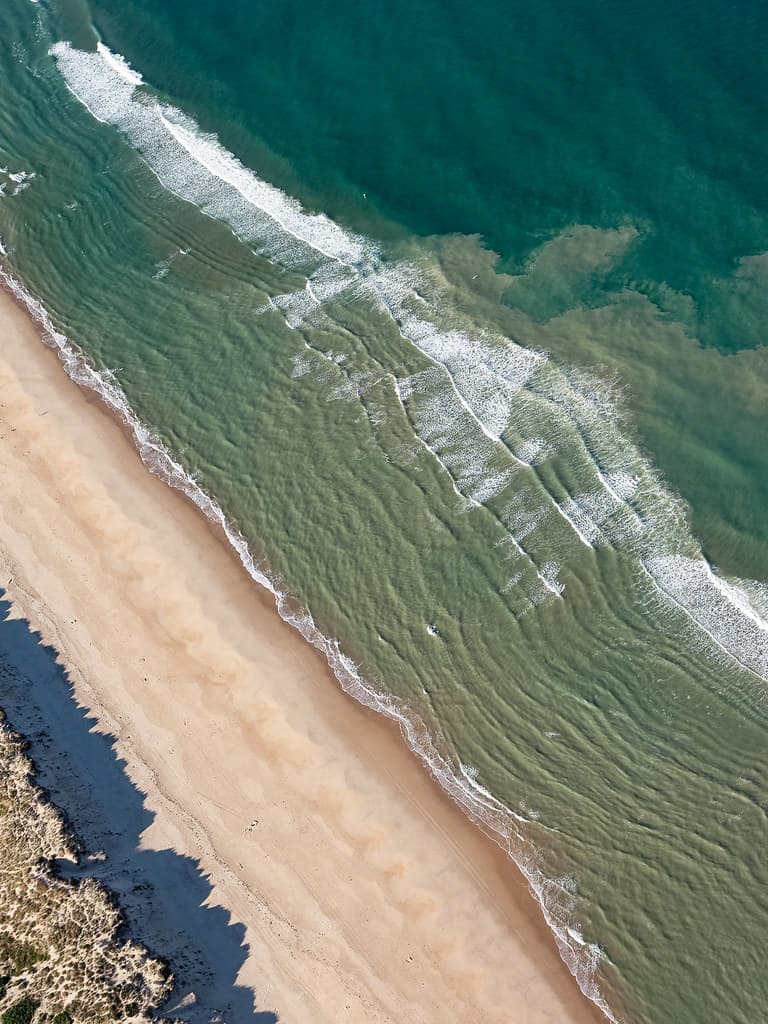 Credit: Flickr
Plage de la Coubre — photo by Les pieds dans le vide
Surfers dot the line-up year-round, reading the sandbars that shift with each spring tide. On calmer afternoons, families claim pockets of sand near the forest edge, though shade is scarce and the wind rarely relents. The beach empties as you walk south toward Bonne Anse, where driftwood tangles mark the high-tide line and oyster beds shimmer across the water in the Seudre estuary.
Sunset here is a study in minimalism: no cliffs, no harbour lights, just the disc of the sun sinking into grey-blue infinity while the lighthouse beam begins its sweep. Locals time their visits to the falling tide, when the beach doubles in width and tidal pools reflect the apricot sky. By dusk, you'll have sand in your shoes and the Atlantic's roar lodged firmly in your chest.


