

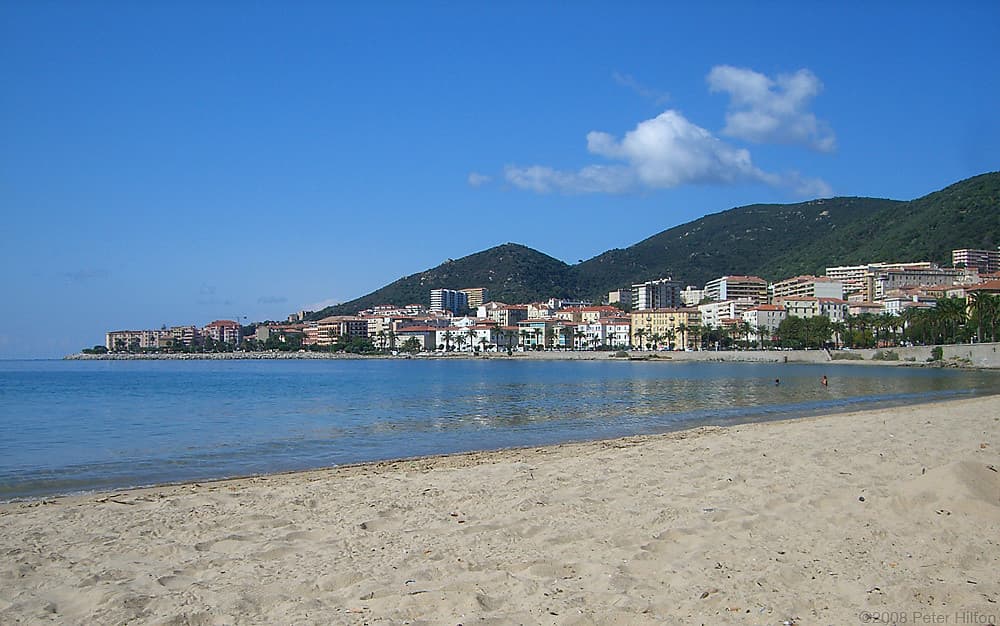
Plage de Trottel occupies prime real estate on Ajaccio's western edge, close enough to the city center that locals bike here before work for a morning swim. The beach stretches along the Route des Sanguinaires, backed by the kind of development that signals urban beach—apartments, small hotels, the infrastructure of a city that meets the sea. Yet the sand itself maintains quality, that fine Corsican grain that doesn't stick excessively or hide rocks, and the water delivers the same clean swim as beaches farther from town.
“It delivers genuine beach quality within walking distance of Ajaccio's center, refusing to sacrifice standards for convenience.”
 Credit: Flickr
Plage de Trottel — photo by Peter Hilton
You'll recognize the patterns of a well-used city beach. Regulars arrive early, claiming their customary spots with the confidence of long habit. By eleven the beach fills with a mix of tourists walking from nearby hotels and Ajaccio residents on lunch breaks, maximizing their beach time. Children dig holes that fill with seawater, teenagers claim territory near the water's edge, couples spread towels in the limited shade. The scene pulses with activity but maintains a certain order—this is a beach people use daily, not a holiday spectacle.
The light changes as afternoon advances, softening from harsh noon brightness to the warmer tones of late day. You'll notice the water's surface texturing with the reliable afternoon breeze, cooling the air just enough. Swimmers do their laps, cutting through the slight chop with practiced strokes. Behind the beach, Ajaccio goes about its business—traffic on the coast road, life continuing parallel to the beach without overwhelming it. By seven the families pack up, leaving the sand to evening walkers and the teenagers who'll stay until dark, squeezing the last minutes from the day.


