
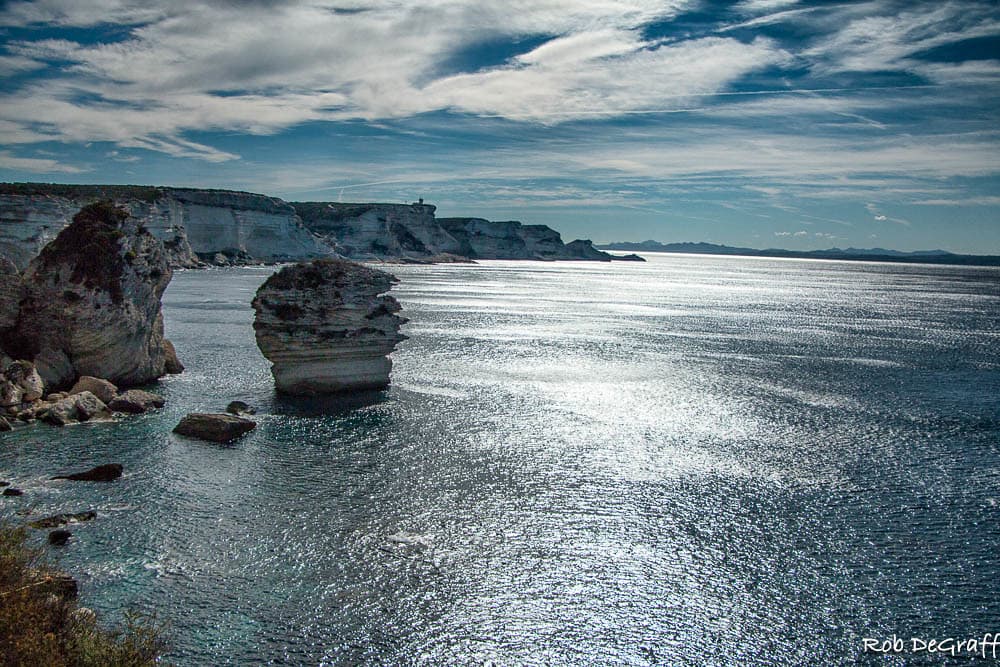
Grand Sperone feels untamed compared to its manicured neighbor. The beach curves broadly between rocky headlands, the sand coarser, scattered with small stones worn smooth by the relentless Bouches de Bonifacio wind. The water is the same impossible blue but less placid—you'll see ripples and small chop even on calm days, the current that funnels between Corsica and Sardinia brushing past the shoreline. Offshore, the Lavezzi archipelago floats on the horizon, a cluster of granite islets where day-trippers anchor and snorkelers explore underwater boulders.
“The wide exposure and proximity to the Lavezzi archipelago make this less a beach for lounging than a launch point into the strait's wildest geography.”
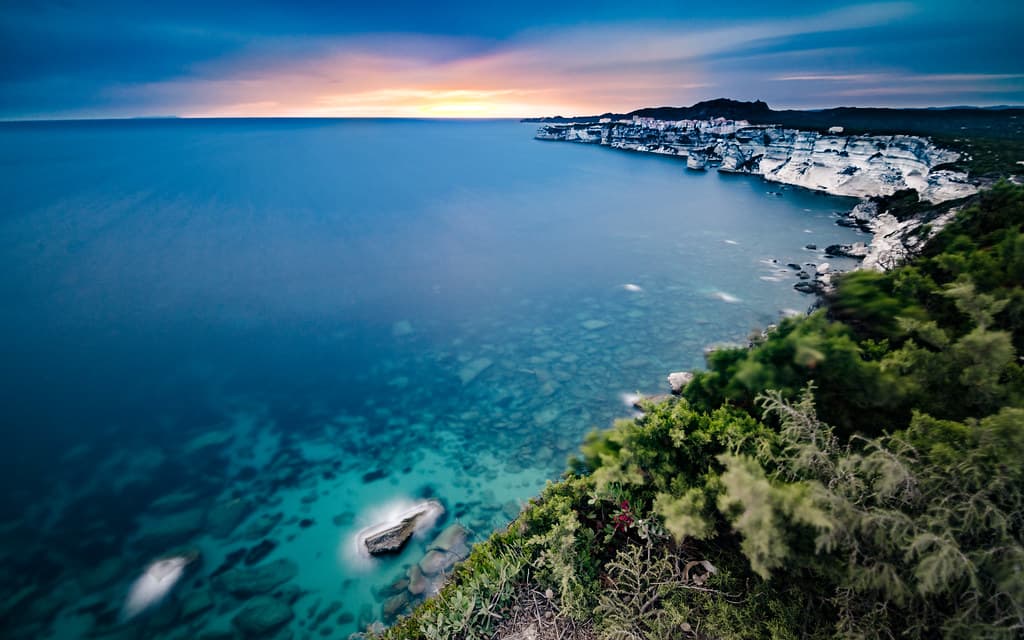 Credit: Flickr
Plage du Grand Sperone — photo by Mathieu Galoseau
The beach lacks the postcard symmetry of Rondinara or the sheltered intimacy of Petit Sperone. Instead it offers space—room to walk a hundred meters without passing another towel, room for the wind to move across open sand, room for the view to stretch uninterrupted to Sardinia's northern cliffs. The water deepens faster here, the swimming more committed, the waves occasional and small but present. A few hardy umbrellas lean into the breeze; most visitors bring windbreaks or claim the lee of rocks.
You'll come here not for convenience but for the raw edge Corsica's southern tip delivers. The maquis smells sharper, the sun feels hotter, the sea tastes saltier. Seabirds wheel overhead, and motorboats zip past en route to the Lavezzi marine reserve. By late afternoon the wind picks up in earnest, and the water turns from turquoise to steely blue, and you gather your things reluctantly, knowing that Grand Sperone doesn't coddle but rewards—with space, with wildness, with the strait's untamed energy pressing against your skin.


