
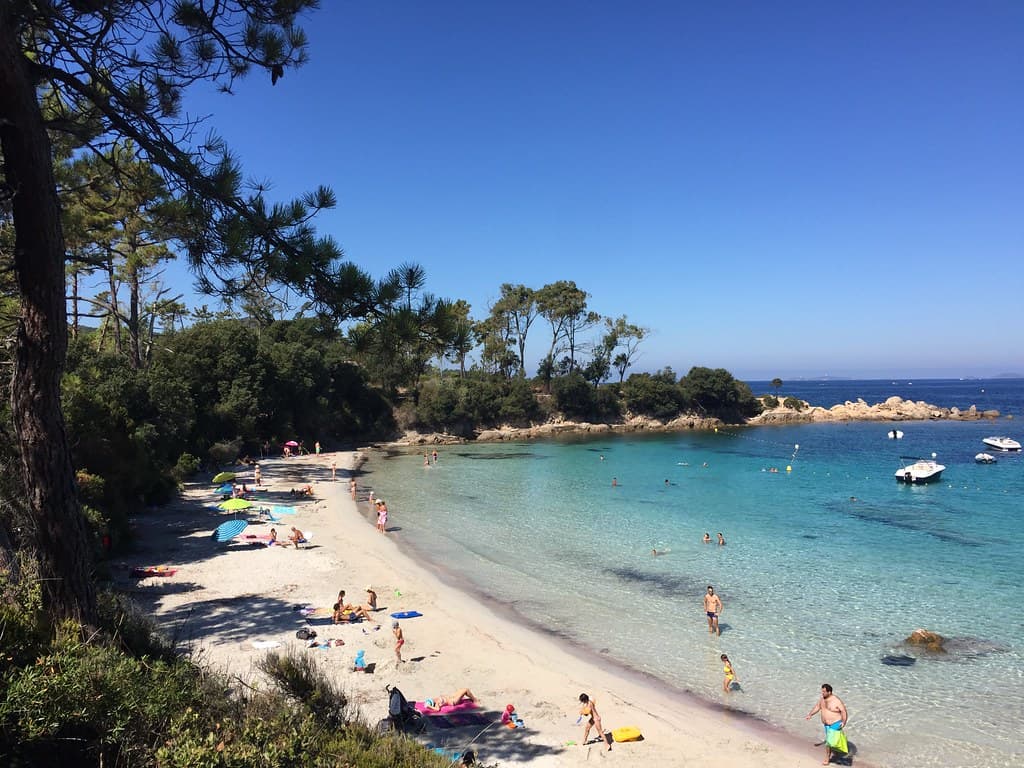
Verghia is small enough that you can count every towel on the sand. Granite boulders the size of cottages frame the cove, their surfaces smoothed by millennia of wind and salt. The beach itself is a narrow ribbon, maybe forty meters wide, where fine ivory sand meets water so clear you'll see your toes magnified on the bottom two meters down. Bring your mask. The rocky flanks harbor octopus dens, damselfish threading through submerged boulders, and occasionally a curious grouper eyeing you from the shadows.
“Verghia's steep access and complete lack of services preserve an intimacy that vanishes at roadside beaches.”
 Credit: Flickr
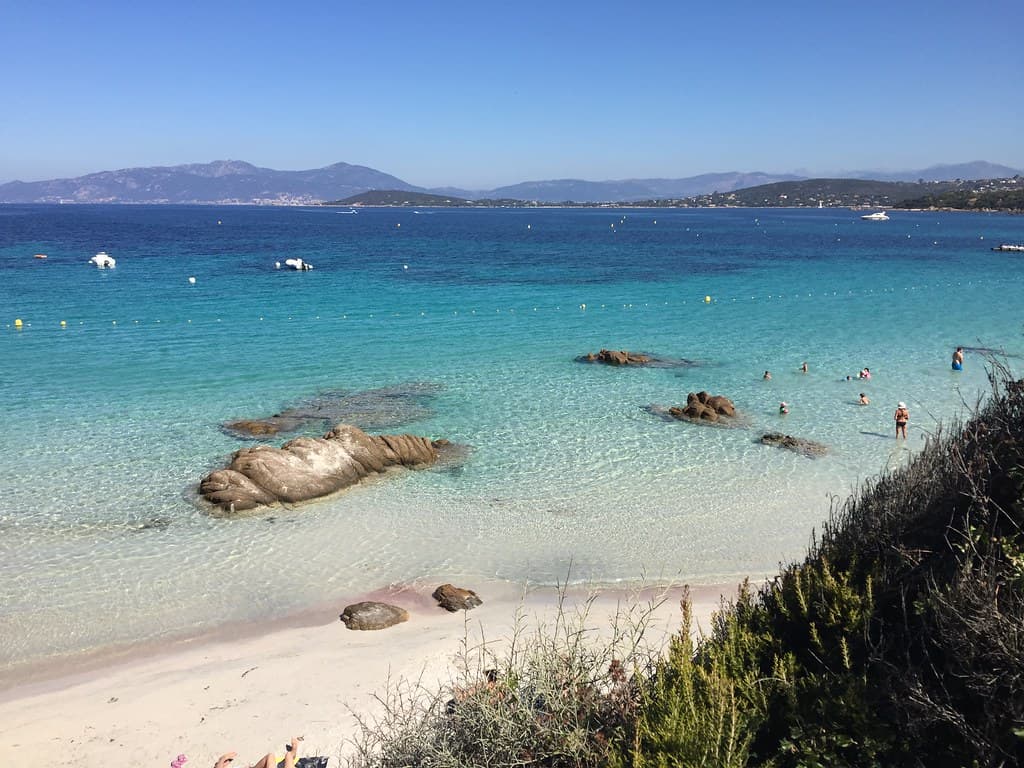
Plage de Verghia — photo by Pierre Metivier
The water temperature surprises—cooler than the gulf beaches, refreshed by currents sweeping the exposed southern coast. You'll gasp at entry, then settle into a rhythm, snorkeling along the eastern rocks where the seabed drops away in terraces of granite and posidonia meadows. Locals arrive mid-morning with fishing rods, casting from the western point while their children build stone towers in the shallows. No beach bar, no umbrellas for rent, no music. Just the rasp of wavelets on pebbles and the occasional cry of a yellow-legged gull.
By afternoon, the sun blazes directly overhead, turning the cove into a basin of reflected light. The maquis behind the beach shimmers in the heat, cicadas singing their relentless chorus. You'll retreat to a boulder's shadow, skin tight with salt, watching newcomers make the steep descent. Verghia asks more of you than most beaches—the hike, the lack of facilities, the self-reliance—but returns that effort as pure, undiluted immersion.


